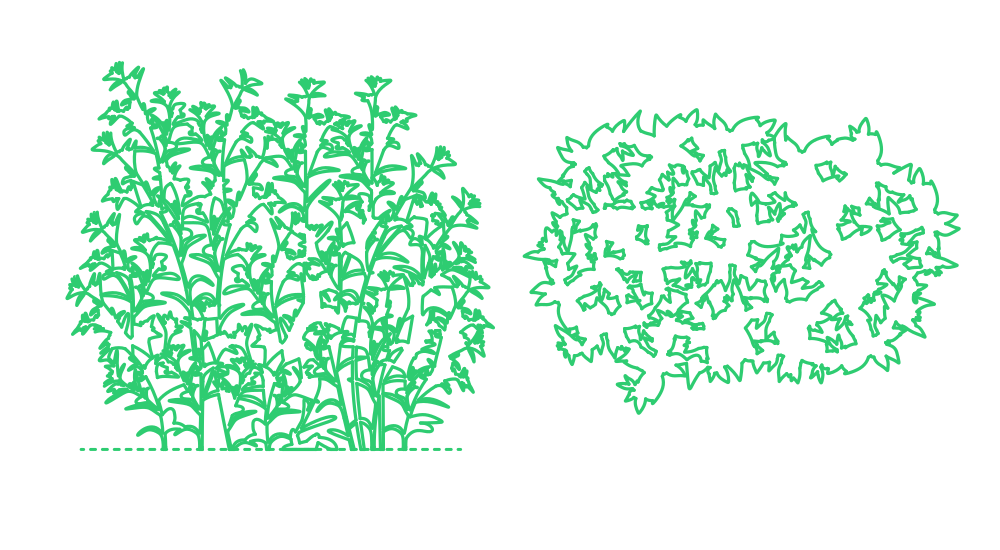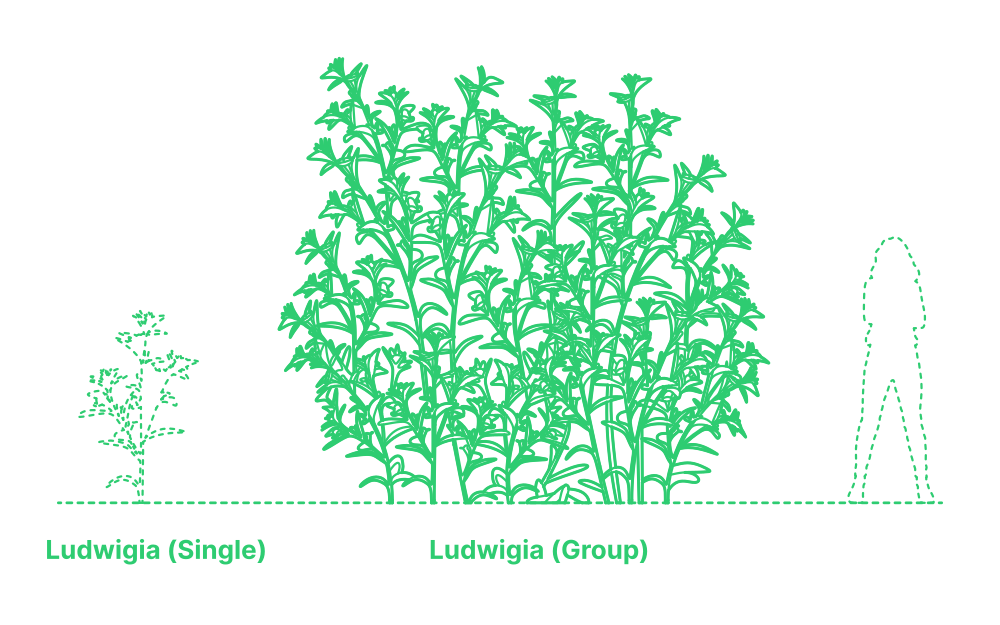
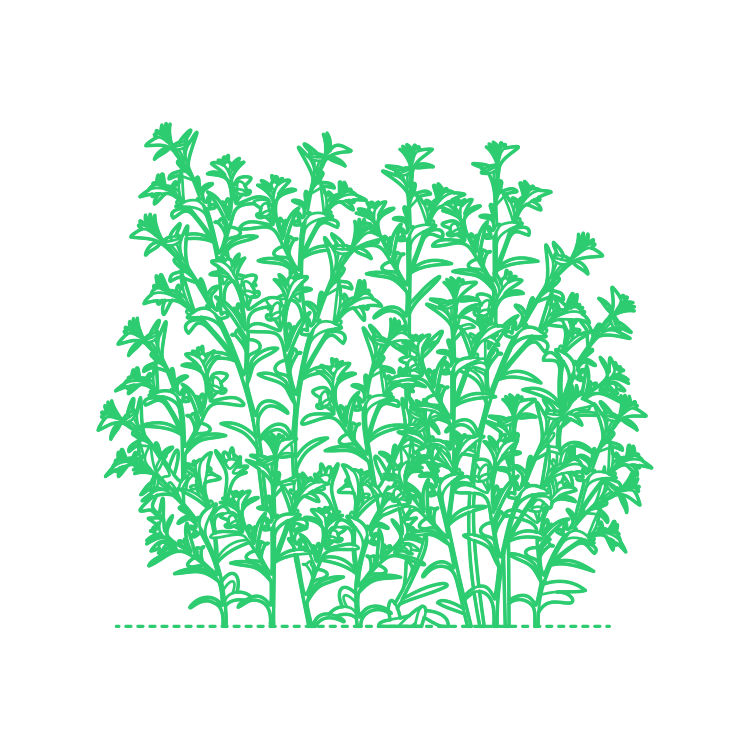
Ludwigia (Group), referring to clustered stands of Ludwigia peruviana, describes the plant as it appears when growing in dense, interconnected colonies along wetland edges. In this form, Ludwigia peruviana becomes a tall, thicket-forming presence with multiple stems rising together above shallow water or saturated soils. The collective growth creates a structural mass, shading out lower vegetation and shaping the character of marshes, canals, and slow-moving rivers.
Grouped Ludwigia peruviana spreads largely through vegetative expansion, allowing entire patches to advance as a unified block. This form is ecologically influential, altering hydrology, restricting native species, and creating pockets of habitat for birds and insects that rely on dense shrub-like wetlands. In many regions, grouped stands of Ludwigia peruviana are considered aggressive due to the way they dominate disturbed environments.
Ludwigia has a typical height above water between 6’-12’ (183-366 cm) and a spread diameter of 3’-10’ (91-305 cm).
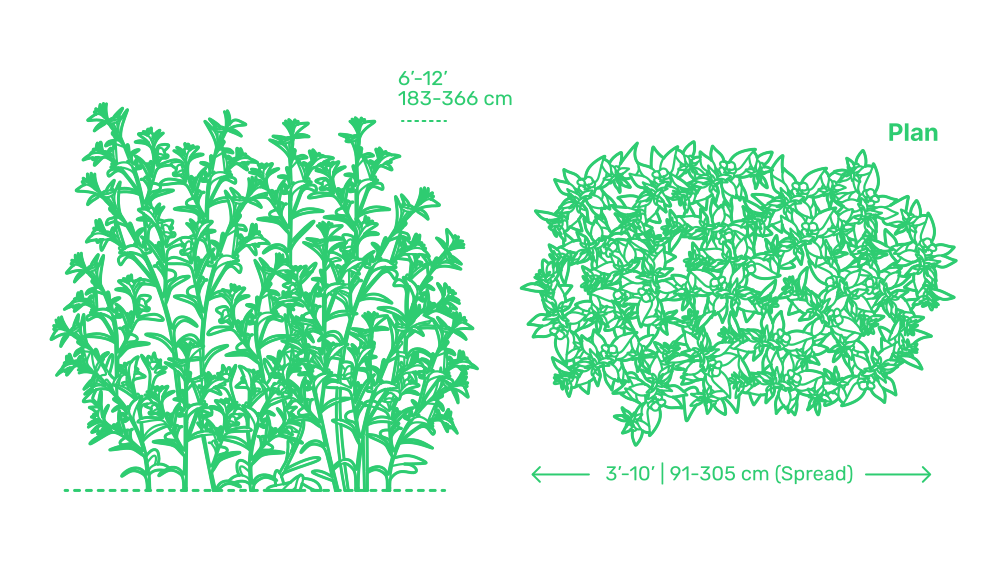
Ludwigia (Group), referring to clustered stands of Ludwigia peruviana, describes the plant as it appears when growing in dense, interconnected colonies along wetland edges. In this form, Ludwigia peruviana becomes a tall, thicket-forming presence with multiple stems rising together above shallow water or saturated soils. The collective growth creates a structural mass, shading out lower vegetation and shaping the character of marshes, canals, and slow-moving rivers.
Grouped Ludwigia peruviana spreads largely through vegetative expansion, allowing entire patches to advance as a unified block. This form is ecologically influential, altering hydrology, restricting native species, and creating pockets of habitat for birds and insects that rely on dense shrub-like wetlands. In many regions, grouped stands of Ludwigia peruviana are considered aggressive due to the way they dominate disturbed environments.
Ludwigia has a typical height above water between 6’-12’ (183-366 cm) and a spread diameter of 3’-10’ (91-305 cm).