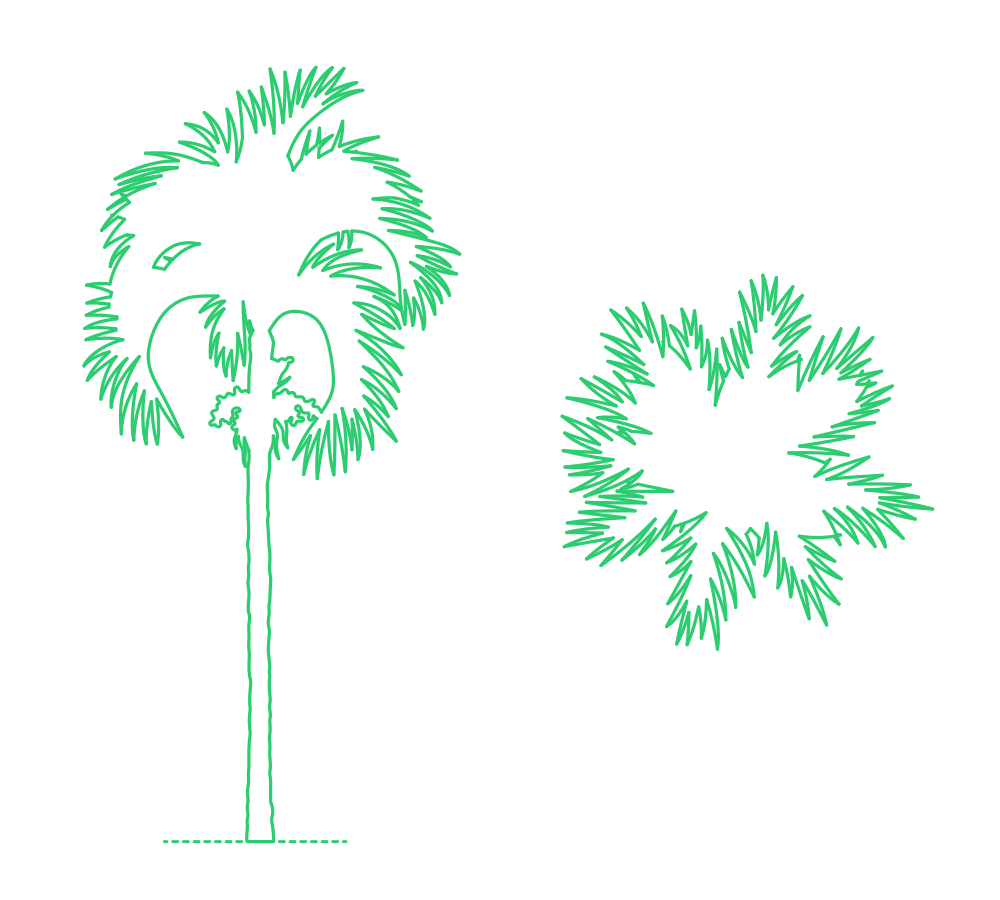
Manila Palm (Large) (Adonidia merrillii)
Manila Palm (Large) (Adonidia merrillii)
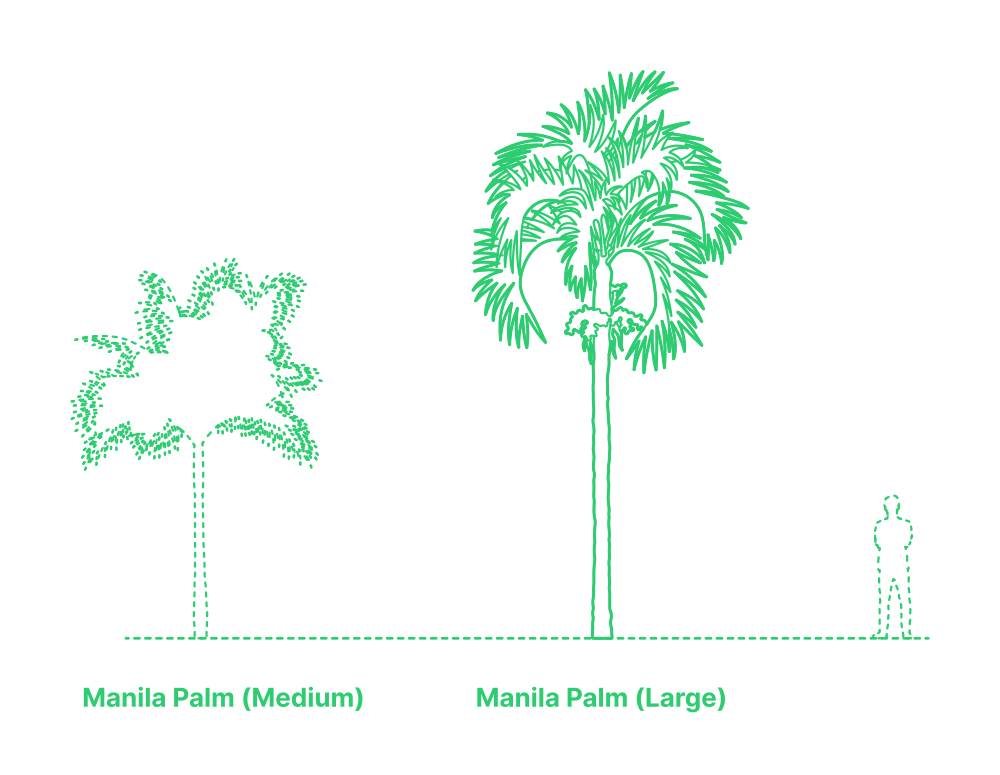
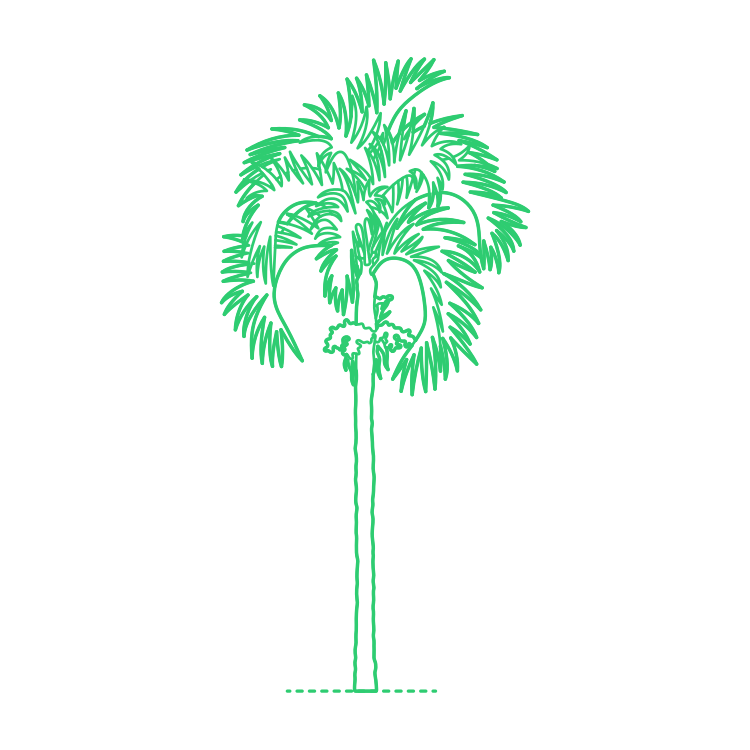
The Manila Palm (Large), scientifically Adonidia merrillii, presents a clean, upright trunk topped with a symmetrical crown of long, feather-like fronds that extend outward in soft, arching curves. This large expression reveals the species’ classic ornamental character, often associated with tropical plazas and coastal landscapes. The smooth, gray trunk of Adonidia merrillii displays faint ring patterns, supporting a crownshaft from which the fronds emerge in a tidy, well-arranged circle.
Each frond is composed of numerous evenly spaced leaflets that catch light in soft gradients, creating a bright, airy canopy. Originating from the Philippines, the species evolved in warm, humid environments where slender, upright growth allowed it to rise above low vegetation. The large form captures the palm’s full architectural presence—structured, balanced, and immediately recognizable—making it a favored feature in formal plantings and tropical avenues.
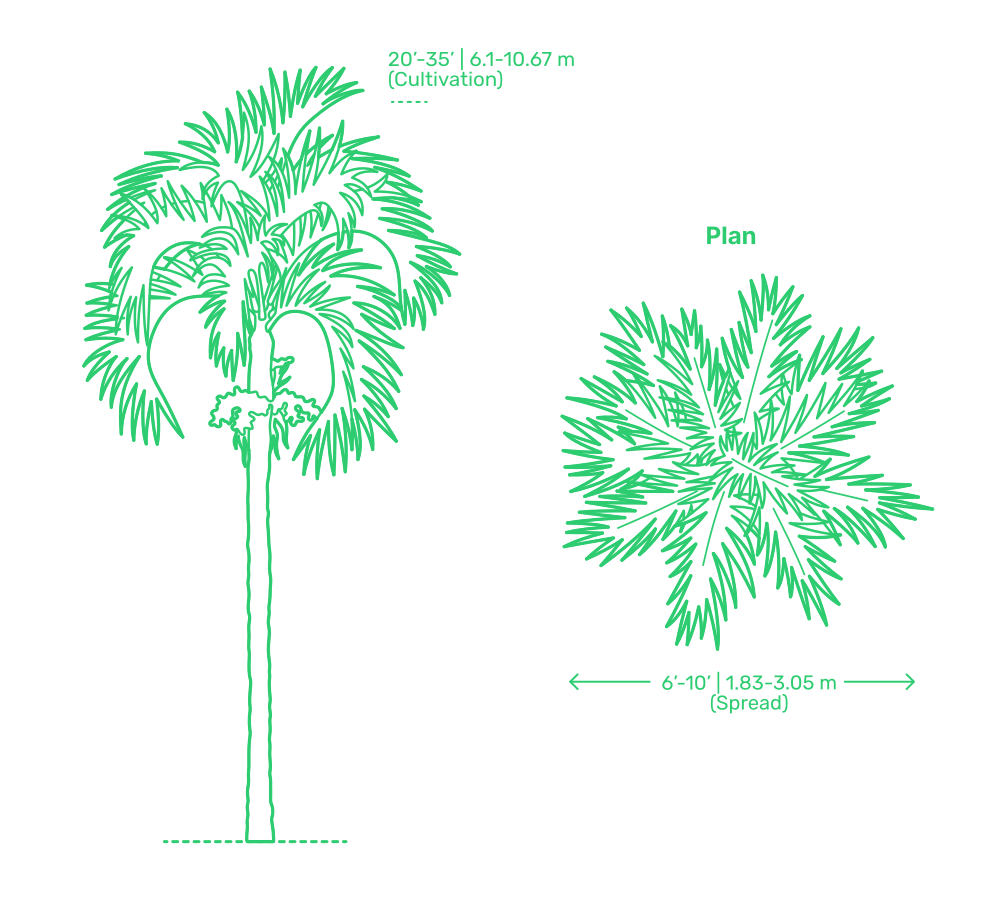
The Manila Palm (Large) has a cultivated height between 20’-35’ (6.1-10.67 m), spread diameter of 6’-10’ (1.83-3.05 m), and leaf lengths between 4’-6’ (1.22-1.83 m). In the wild, the Manila Palm (Large) has an overall height between 15’-50’ (4.57-15.24 m).
The Manila Palm (Large), scientifically Adonidia merrillii, presents a clean, upright trunk topped with a symmetrical crown of long, feather-like fronds that extend outward in soft, arching curves. This large expression reveals the species’ classic ornamental character, often associated with tropical plazas and coastal landscapes. The smooth, gray trunk of Adonidia merrillii displays faint ring patterns, supporting a crownshaft from which the fronds emerge in a tidy, well-arranged circle.
Each frond is composed of numerous evenly spaced leaflets that catch light in soft gradients, creating a bright, airy canopy. Originating from the Philippines, the species evolved in warm, humid environments where slender, upright growth allowed it to rise above low vegetation. The large form captures the palm’s full architectural presence—structured, balanced, and immediately recognizable—making it a favored feature in formal plantings and tropical avenues.
The Manila Palm (Large) has a cultivated height between 20’-35’ (6.1-10.67 m), spread diameter of 6’-10’ (1.83-3.05 m), and leaf lengths between 4’-6’ (1.22-1.83 m). In the wild, the Manila Palm (Large) has an overall height between 15’-50’ (4.57-15.24 m).