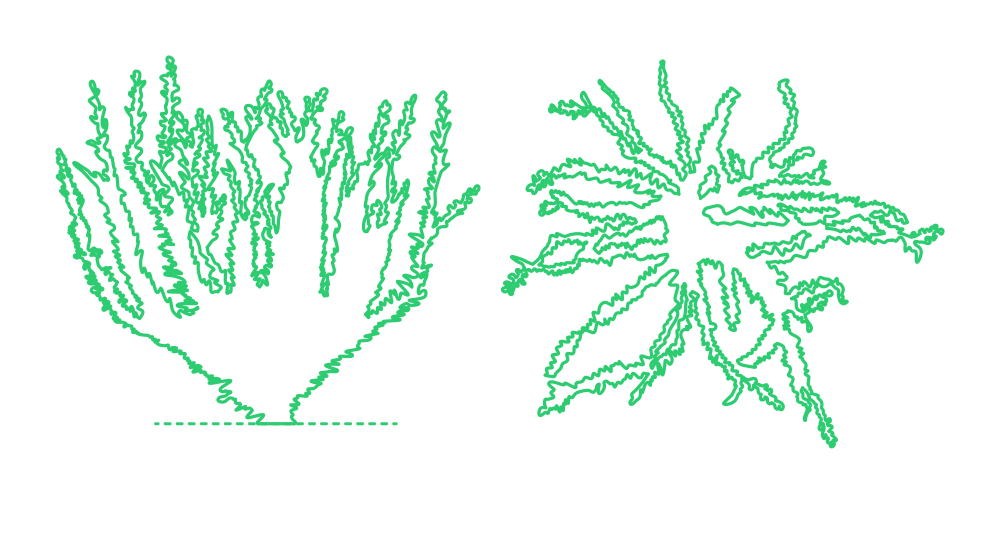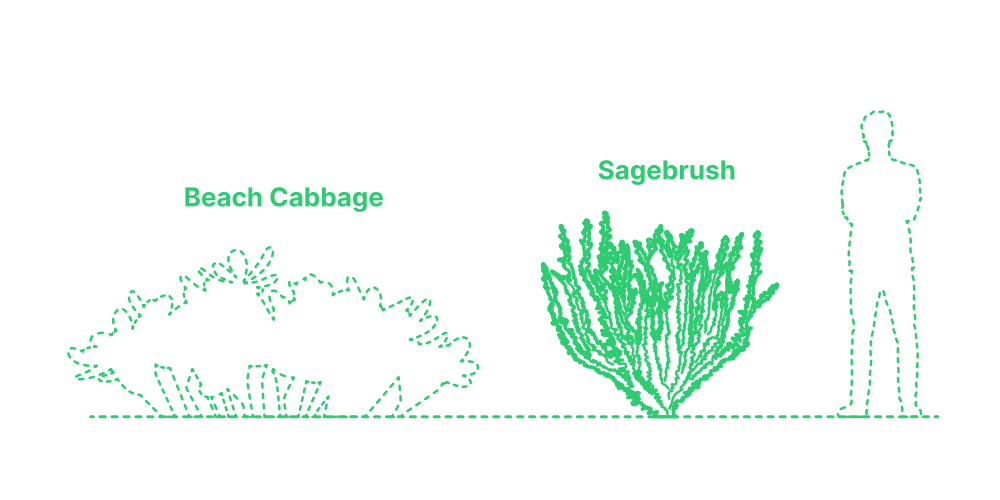
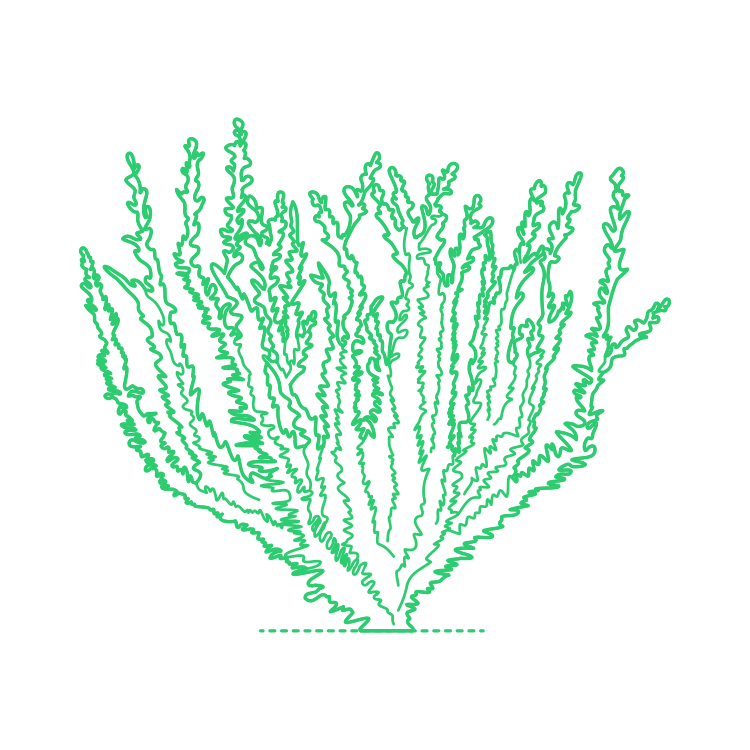
Sagebrush (Artemisia tridentata) is a woody shrub known for its soft, silvery-gray leaves and upright, irregular branching. Each plant has a bushy, rounded form with narrow, three-lobed leaves that emit a strong, distinctive aroma. Commonly referred to as Big Sagebrush or Great Basin Sage, this species is native to the arid interior regions of western North America, where it thrives in dry plains, plateaus, and desert margins.
As a colonizing shrubby weed, individual sagebrush plants are often pioneers in disturbed or degraded soils, establishing themselves independently before forming clusters. Their aromatic oils and bitter compounds discourage browsing, while deep roots allow access to moisture far below the surface. A single sagebrush plant can host a variety of insects and birds and serves as a microhabitat in harsh conditions. Its presence signals ecological resilience, and its seasonal flowering adds texture and movement to the open, dry landscapes it inhabits.
Sagebrush has a typical overall height between 3’-6’ (91-183 cm) and spread diameter of 4’-6’6” (122-198 cm).
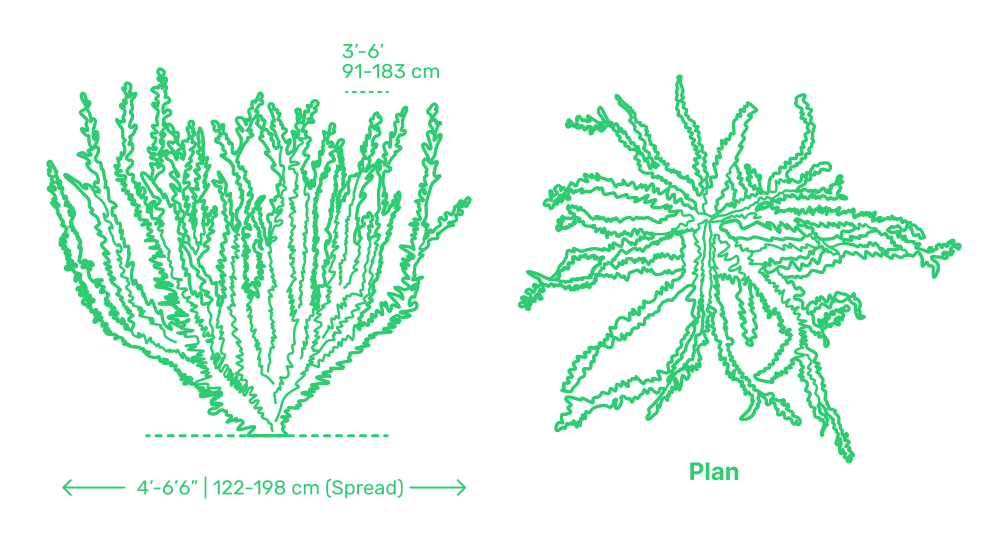
Sagebrush (Artemisia tridentata) is a woody shrub known for its soft, silvery-gray leaves and upright, irregular branching. Each plant has a bushy, rounded form with narrow, three-lobed leaves that emit a strong, distinctive aroma. Commonly referred to as Big Sagebrush or Great Basin Sage, this species is native to the arid interior regions of western North America, where it thrives in dry plains, plateaus, and desert margins.
As a colonizing shrubby weed, individual sagebrush plants are often pioneers in disturbed or degraded soils, establishing themselves independently before forming clusters. Their aromatic oils and bitter compounds discourage browsing, while deep roots allow access to moisture far below the surface. A single sagebrush plant can host a variety of insects and birds and serves as a microhabitat in harsh conditions. Its presence signals ecological resilience, and its seasonal flowering adds texture and movement to the open, dry landscapes it inhabits.
Sagebrush has a typical overall height between 3’-6’ (91-183 cm) and spread diameter of 4’-6’6” (122-198 cm).