
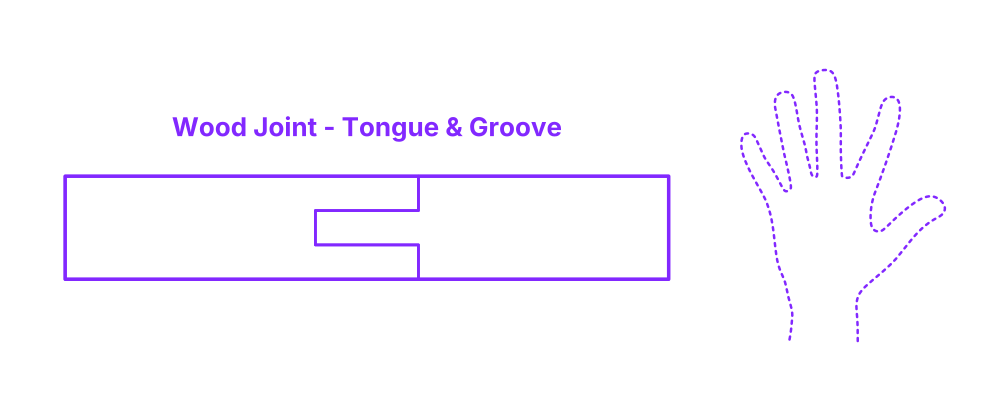

A tongue and groove joint involves two complementary pieces: one with a protruding tongue and the other with a receptive groove. When joined, they interlock seamlessly, ensuring a flat and continuous surface. This self-aligning feature makes the joint particularly effective for creating wide panels or flooring from narrower boards.
By distributing loads across the joint and increasing the surface area for adhesives, it offers both stability and a snug fit. Often used in wooden flooring, wall paneling, and tabletops, the tongue and groove design provides a reliable means of joining wood while minimizing visible seams, highlighting both aesthetic appeal and structural efficiency.
Tongue & Groove Wood Joints have 1/3 widths and full joint depths. Wood joints are typically used in wood members with widths between 1.5”-3.5” (3.8-8.9 cm) and depths between of .75”-3.5” (1.9-8.9 cm).

A tongue and groove joint involves two complementary pieces: one with a protruding tongue and the other with a receptive groove. When joined, they interlock seamlessly, ensuring a flat and continuous surface. This self-aligning feature makes the joint particularly effective for creating wide panels or flooring from narrower boards.
By distributing loads across the joint and increasing the surface area for adhesives, it offers both stability and a snug fit. Often used in wooden flooring, wall paneling, and tabletops, the tongue and groove design provides a reliable means of joining wood while minimizing visible seams, highlighting both aesthetic appeal and structural efficiency.
Tongue & Groove Wood Joints have 1/3 widths and full joint depths. Wood joints are typically used in wood members with widths between 1.5”-3.5” (3.8-8.9 cm) and depths between of .75”-3.5” (1.9-8.9 cm).

