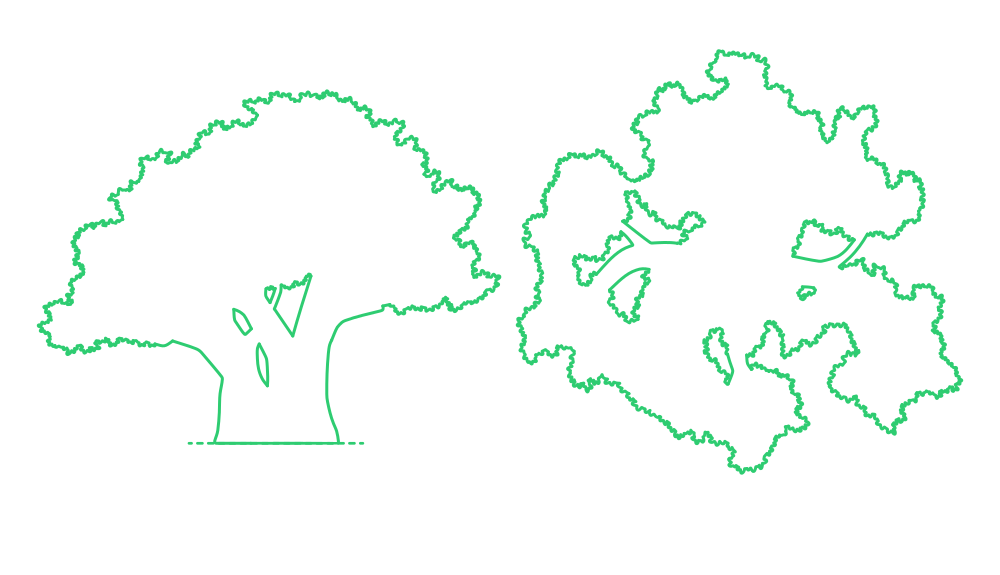
African Baobab (Large, Bushy) (Adansonia digitata)
African Baobab (Large, Bushy) (Adansonia digitata)
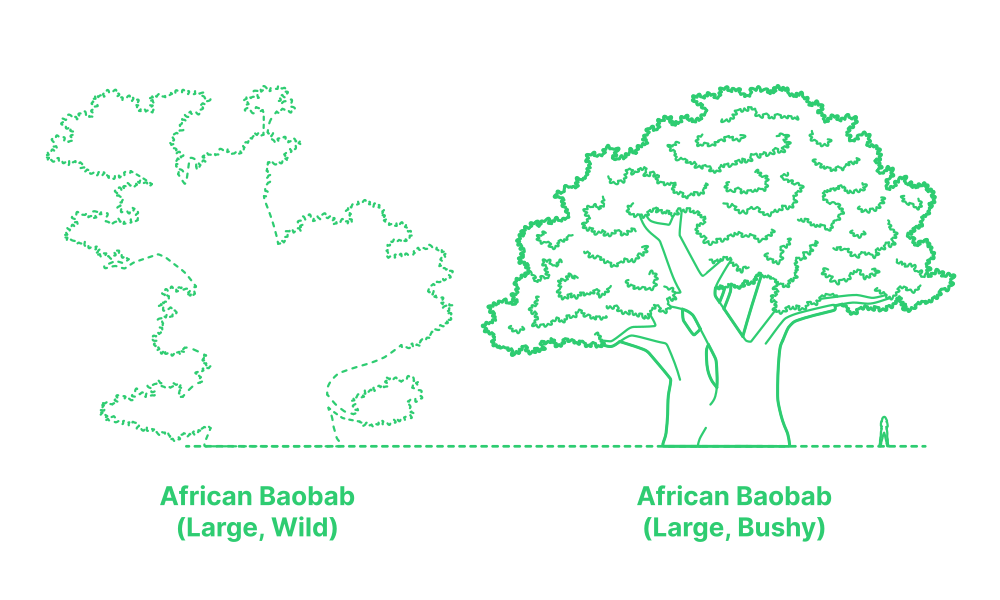
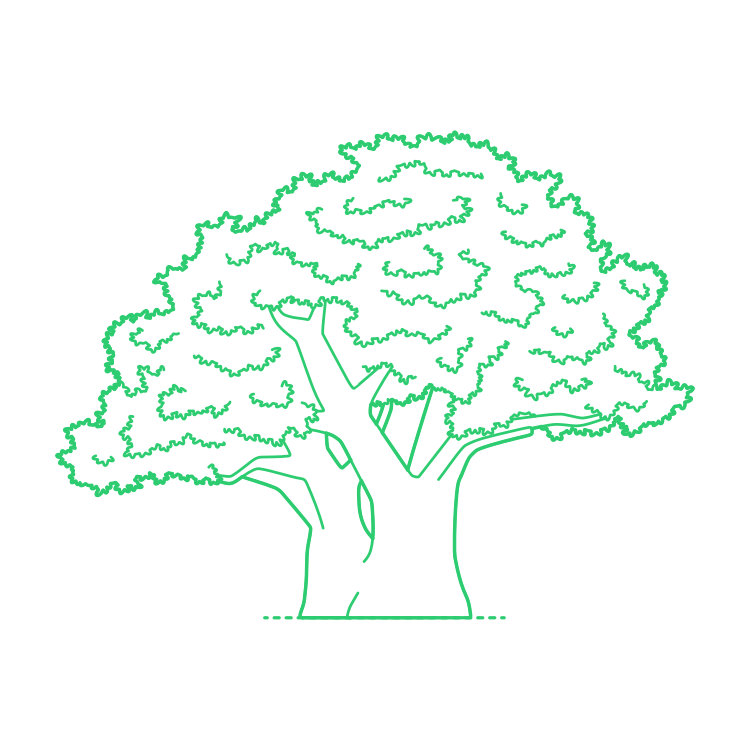
African baobab (Adansonia digitata) in a large bushy form is a monumental deciduous tree distinguished by its immense swollen trunk, broad irregular crown, and dense network of thick branching limbs. The trunk serves as a massive water-storing structure, often appearing bottle-like or cylindrical, while the upper canopy expands into a wide spread of coarse branches supporting palmate leaves during the growing season.
Also known as the upside-down tree due to its stark branch silhouette when leafless, Adansonia digitata is native to sub-Saharan Africa’s savannas and seasonally dry woodlands. The species is biologically notable for extraordinary longevity, drought adaptation, and ecological importance, providing food, shelter, and water resources for numerous organisms. In this bushy form, the canopy is fuller and more laterally expansive, emphasizing broad vegetative mass above the iconic trunk. This variation highlights Adansonia digitata as one of the most structurally dramatic and ecologically significant architectural trees on Earth.
African Baobab (Large, Bushy) has a typical overall height between 60’-80’ (18.29-24.38 m) and spread diameter of 50’-80’ (15.24-24.38 m). The leaves have a typical length between 2”-6” (5-15 cm).
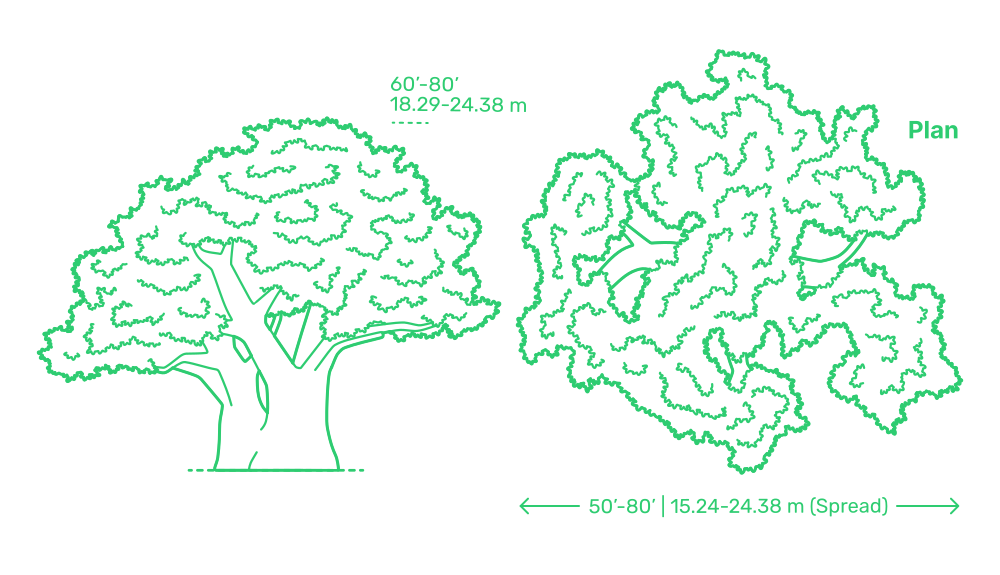
African baobab (Adansonia digitata) in a large bushy form is a monumental deciduous tree distinguished by its immense swollen trunk, broad irregular crown, and dense network of thick branching limbs. The trunk serves as a massive water-storing structure, often appearing bottle-like or cylindrical, while the upper canopy expands into a wide spread of coarse branches supporting palmate leaves during the growing season.
Also known as the upside-down tree due to its stark branch silhouette when leafless, Adansonia digitata is native to sub-Saharan Africa’s savannas and seasonally dry woodlands. The species is biologically notable for extraordinary longevity, drought adaptation, and ecological importance, providing food, shelter, and water resources for numerous organisms. In this bushy form, the canopy is fuller and more laterally expansive, emphasizing broad vegetative mass above the iconic trunk. This variation highlights Adansonia digitata as one of the most structurally dramatic and ecologically significant architectural trees on Earth.
African Baobab (Large, Bushy) has a typical overall height between 60’-80’ (18.29-24.38 m) and spread diameter of 50’-80’ (15.24-24.38 m). The leaves have a typical length between 2”-6” (5-15 cm).