African Baobab (Large, Wild) (Adansonia digitata)
African Baobab (Large, Wild) (Adansonia digitata)
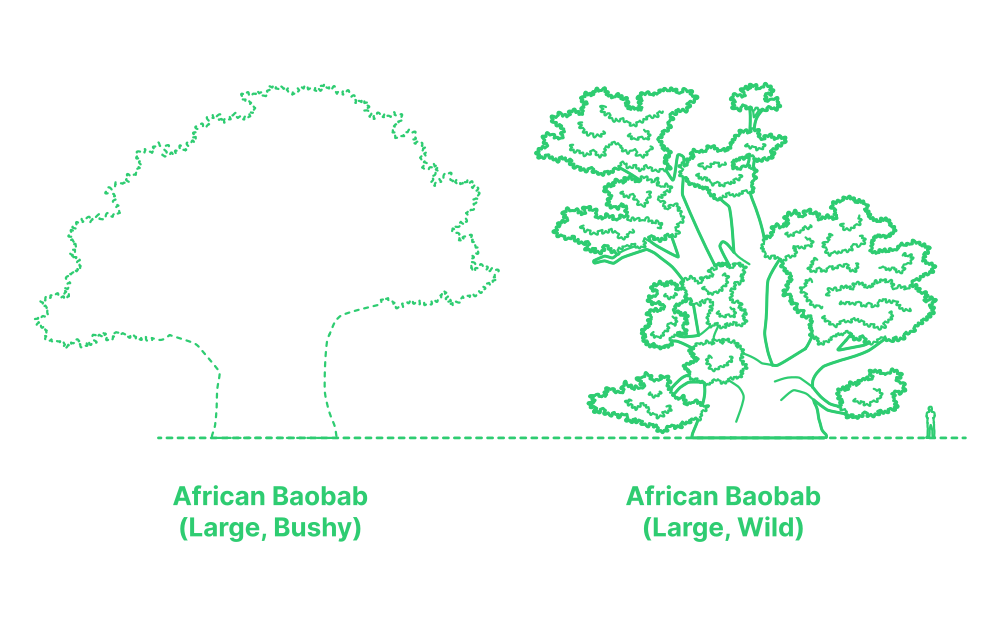
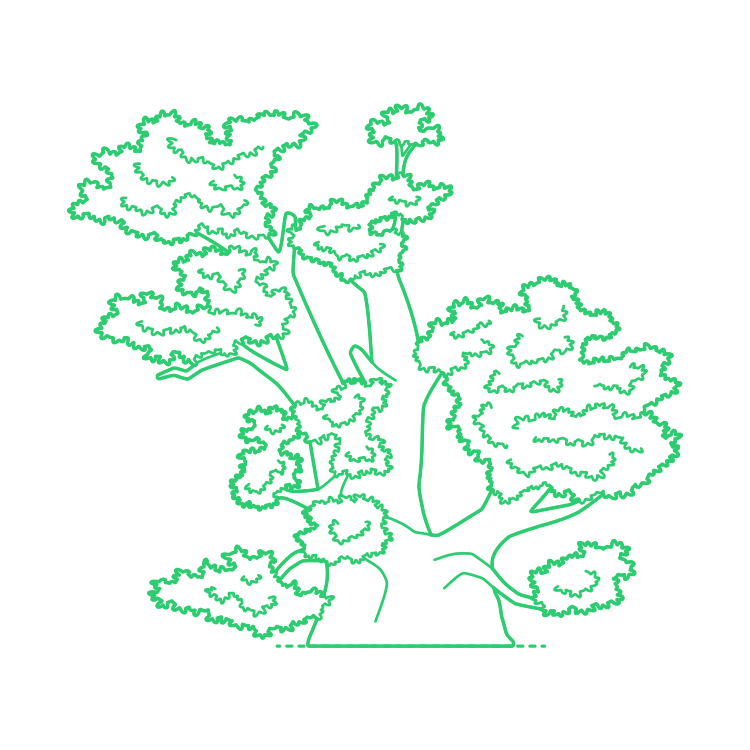
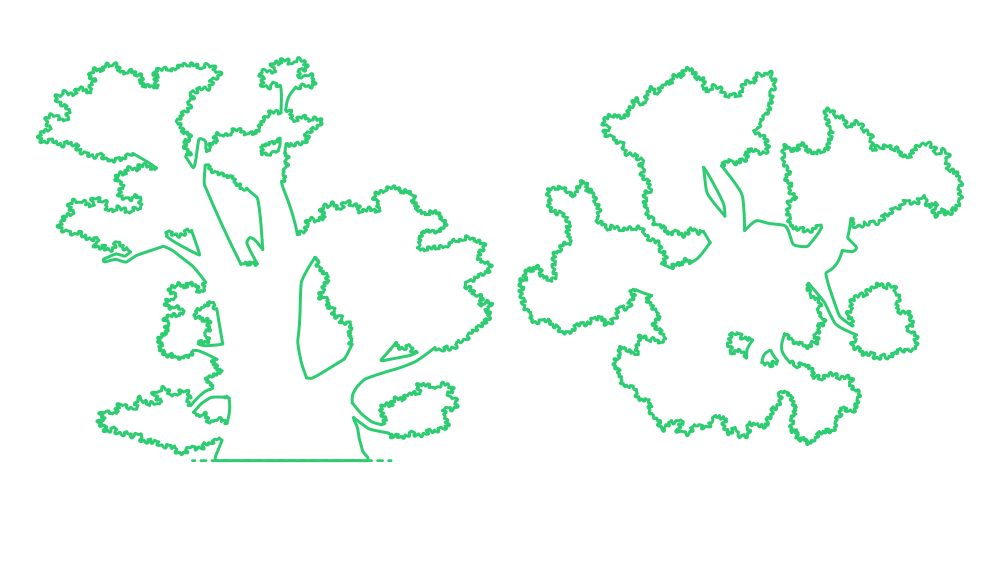
African baobab (Adansonia digitata) in a large wild form develops as a vast, irregular deciduous tree with an enormous trunk and a sprawling, asymmetrical branching structure shaped by environmental pressures over time. The crown is expansive but uneven, with massive limbs extending unpredictably in varied directions, creating a rugged and ancient silhouette. The bark is smooth and fibrous, while the trunk stores significant water reserves essential for survival in arid climates.
Native to Africa’s dry savannas and semi-arid ecosystems, Adansonia digitata thrives in harsh seasonal environments. A defining biological trait is its capacity for extreme age and resilience, with some specimens surviving for centuries or longer. In wild form, the tree emphasizes natural irregularity, ecological endurance, and untamed structural complexity, presenting a more organic and weathered expression than denser bushier forms while preserving its unmistakable monumental presence.
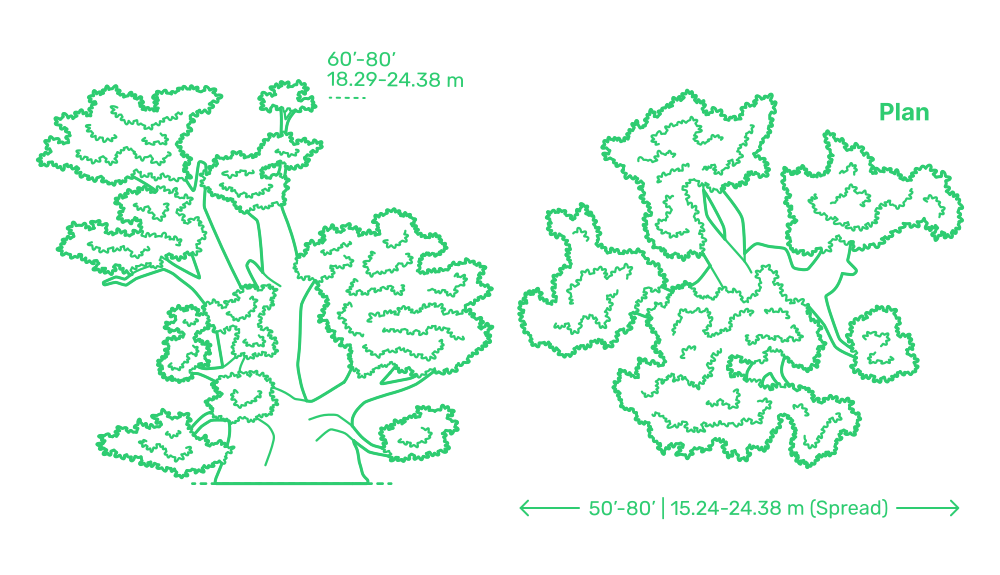
African Baobab (Large, Wild) has a typical overall height between 60’-80’ (18.29-24.38 m) and spread diameter of 50’-80’ (15.24-24.38 m). The leaves have a typical length between 2”-6” (5-15 cm).
African baobab (Adansonia digitata) in a large wild form develops as a vast, irregular deciduous tree with an enormous trunk and a sprawling, asymmetrical branching structure shaped by environmental pressures over time. The crown is expansive but uneven, with massive limbs extending unpredictably in varied directions, creating a rugged and ancient silhouette. The bark is smooth and fibrous, while the trunk stores significant water reserves essential for survival in arid climates.
Native to Africa’s dry savannas and semi-arid ecosystems, Adansonia digitata thrives in harsh seasonal environments. A defining biological trait is its capacity for extreme age and resilience, with some specimens surviving for centuries or longer. In wild form, the tree emphasizes natural irregularity, ecological endurance, and untamed structural complexity, presenting a more organic and weathered expression than denser bushier forms while preserving its unmistakable monumental presence.
African Baobab (Large, Wild) has a typical overall height between 60’-80’ (18.29-24.38 m) and spread diameter of 50’-80’ (15.24-24.38 m). The leaves have a typical length between 2”-6” (5-15 cm).