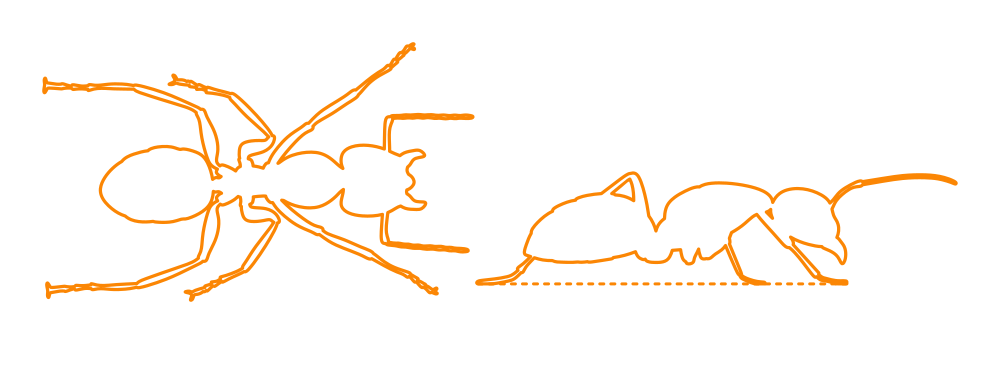

The Carpenter Ant (Camponotus) is a large ant species that is indigenous to many forested areas of the world. They occupy nests inside wood that they have chewed out with their mandibles, and sometimes they will hollow out sections of trees. Certain parts of a house that are more vulnerable to moisture (under windows, decks, and porches) are more likely to be infested by Carpenter Ants. They are known to construct extensive underground tunneling systems that often lead to an end at some food source. As both predators and scavengers Carpenter Ants eat parts of other dead insects, and also sugary liquids like honey, syrup, and ”honeydew” produced by aphids.
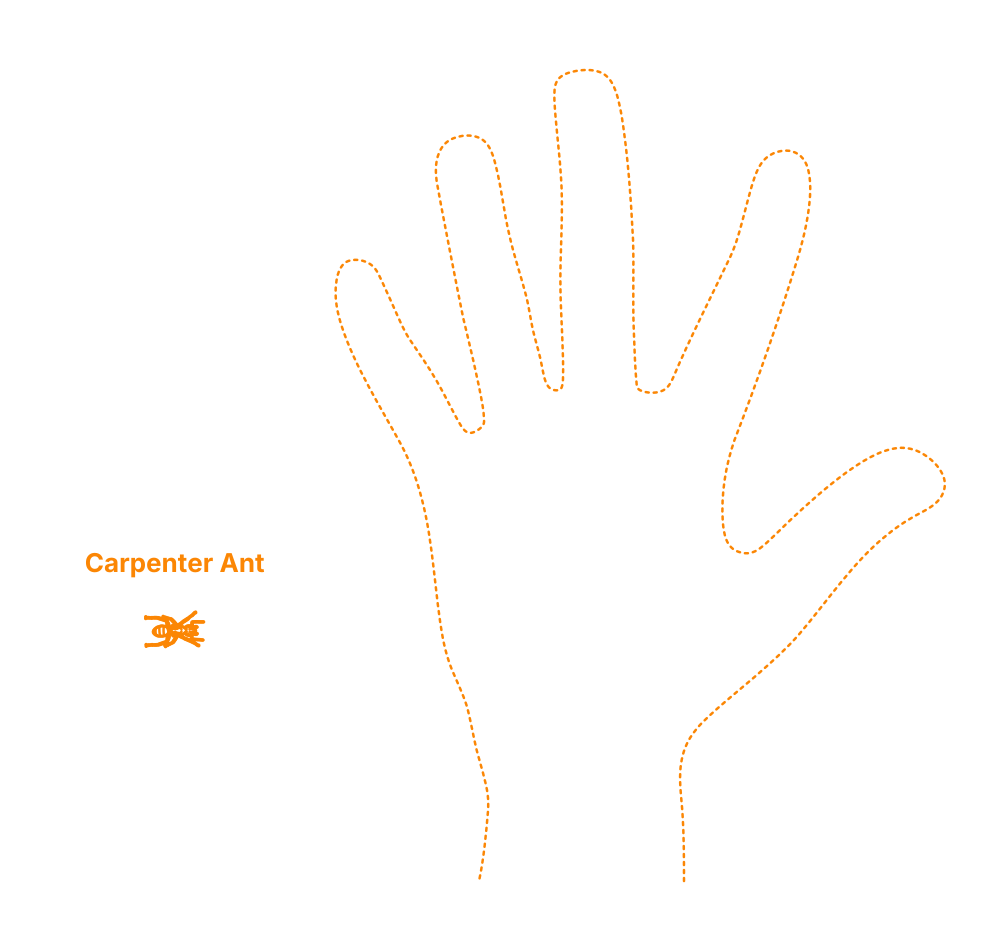
The Carpenter Ant has an overall body length between .24”-.55” (6-14 mm) for workers and .63”-.71” (16-18 mm) for the Queen. The body width is .06”-.14” (1.5-3.5 mm), and the body height is .05”-.12” (1.3-3 mm). The typical lifespan of the Carpenter Ant is between 4-7 years for workers and 10-15 years for the Queen.

The Carpenter Ant (Camponotus) is a large ant species that is indigenous to many forested areas of the world. They occupy nests inside wood that they have chewed out with their mandibles, and sometimes they will hollow out sections of trees. Certain parts of a house that are more vulnerable to moisture (under windows, decks, and porches) are more likely to be infested by Carpenter Ants. They are known to construct extensive underground tunneling systems that often lead to an end at some food source. As both predators and scavengers Carpenter Ants eat parts of other dead insects, and also sugary liquids like honey, syrup, and ”honeydew” produced by aphids.
The Carpenter Ant has an overall body length between .24”-.55” (6-14 mm) for workers and .63”-.71” (16-18 mm) for the Queen. The body width is .06”-.14” (1.5-3.5 mm), and the body height is .05”-.12” (1.3-3 mm). The typical lifespan of the Carpenter Ant is between 4-7 years for workers and 10-15 years for the Queen.