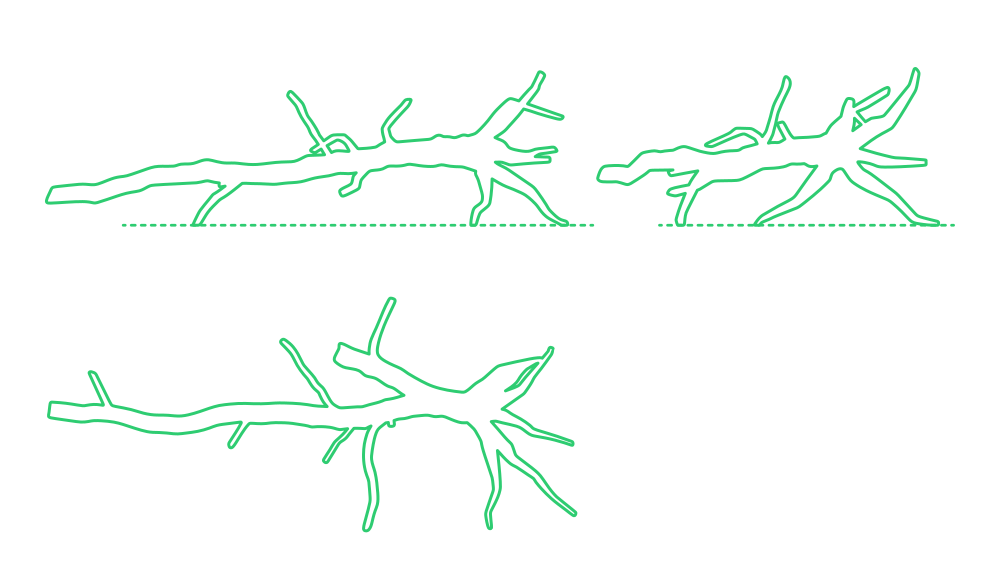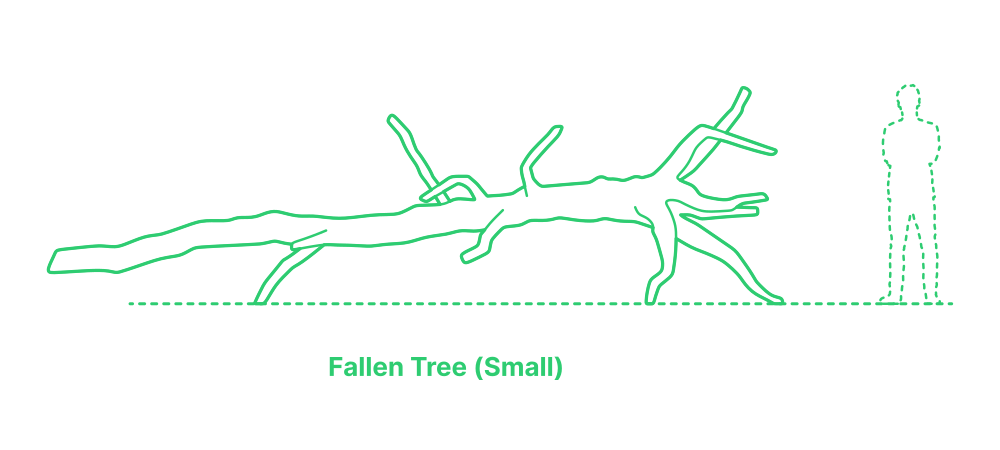
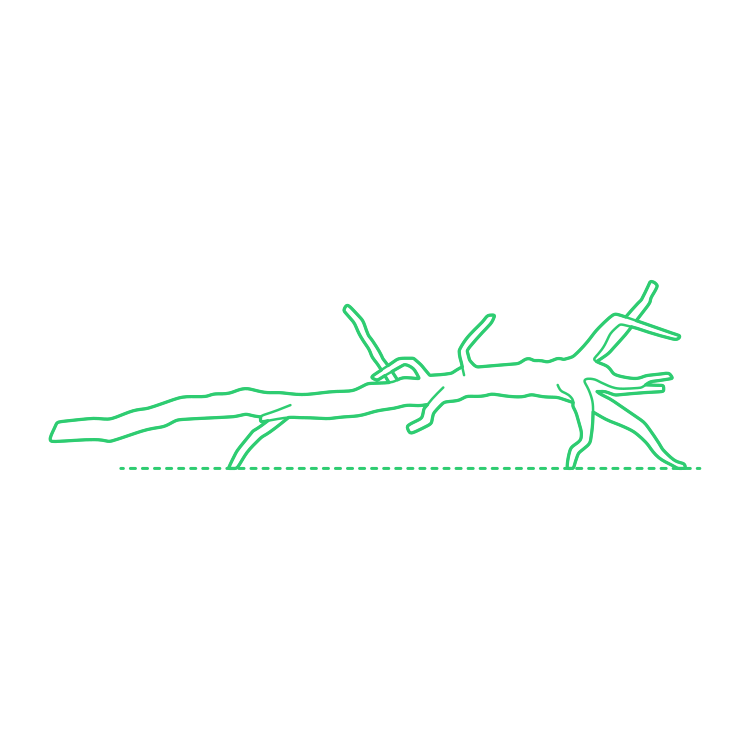
A Fallen Tree (Small) is a downed portion of a tree that has come to rest on the ground, typically shorter or narrower than larger examples. It may consist of a slender trunk, a large branch, or the broken top of a tree. Also called “fallen wood” or “deadfall,” it is a familiar feature in forests, woodland clearings, and river margins, where wind, age, or human activity cause trees to collapse.
Small fallen trees differ from massive trunks by their scale and integration into surrounding undergrowth, often weaving between shrubs or lying partially hidden in grasses and leaf litter. Their surfaces quickly become host to mosses, lichens, and fungi, accelerating the natural process of decomposition. Cavities and crevices form habitat for insects, amphibians, and small mammals. Beyond their ecological value, they contribute to the layered texture of landscapes, marking the transition between living growth and organic renewal in the forest floor.
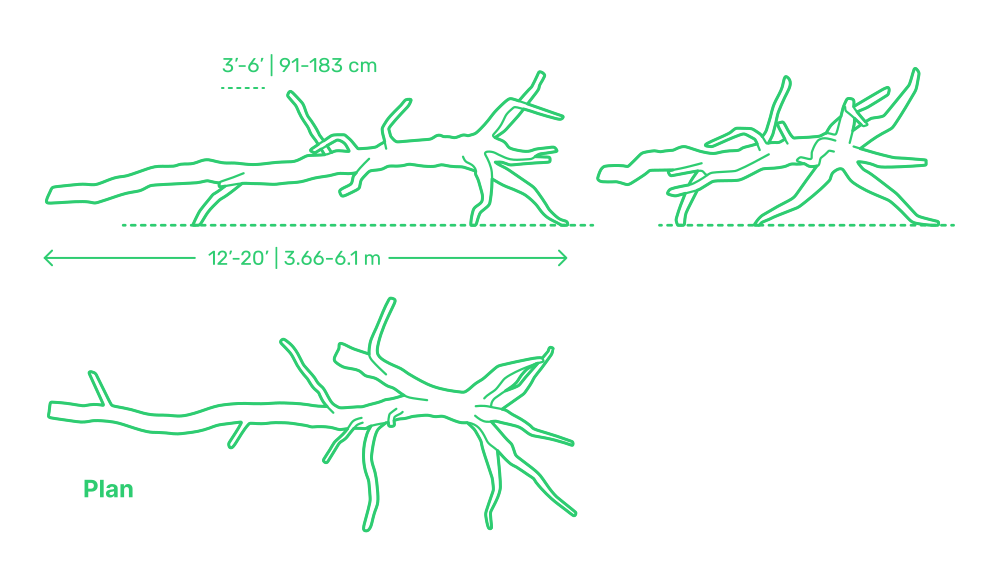
Fallen Trees (Small) have varied heights between 3’-6’ (91-183 cm) and varied lengths in the range of 12’-20’ (3.66-6.1 m).
A Fallen Tree (Small) is a downed portion of a tree that has come to rest on the ground, typically shorter or narrower than larger examples. It may consist of a slender trunk, a large branch, or the broken top of a tree. Also called “fallen wood” or “deadfall,” it is a familiar feature in forests, woodland clearings, and river margins, where wind, age, or human activity cause trees to collapse.
Small fallen trees differ from massive trunks by their scale and integration into surrounding undergrowth, often weaving between shrubs or lying partially hidden in grasses and leaf litter. Their surfaces quickly become host to mosses, lichens, and fungi, accelerating the natural process of decomposition. Cavities and crevices form habitat for insects, amphibians, and small mammals. Beyond their ecological value, they contribute to the layered texture of landscapes, marking the transition between living growth and organic renewal in the forest floor.
Fallen Trees (Small) have varied heights between 3’-6’ (91-183 cm) and varied lengths in the range of 12’-20’ (3.66-6.1 m).