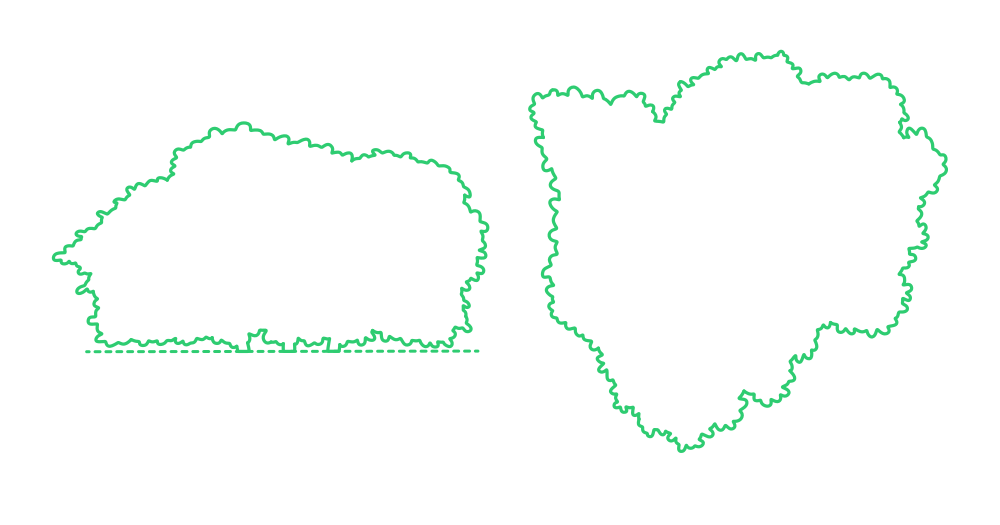
Japanese Cheesewood (Large) (Pittosporum tobira)
Japanese Cheesewood (Large) (Pittosporum tobira)
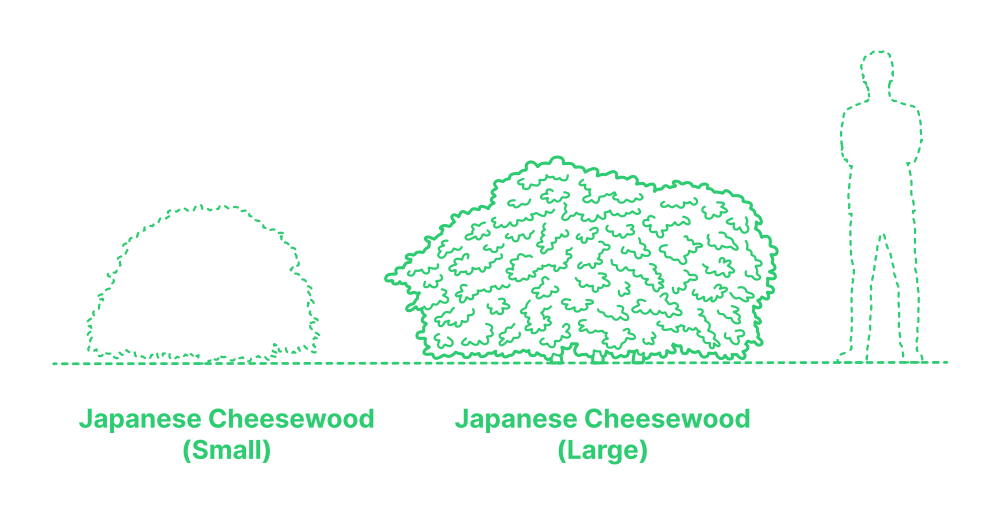

Japanese cheesewood (Pittosporum tobira) in a large form develops as a broad evergreen shrub with thick branching and dense clusters of foliage at the ends of its stems. The leaves are leathery, oval, and glossy, often forming rosette-like groupings along the branches. The canopy appears layered and compact, with new growth emerging from terminal buds. Native to coastal regions of East Asia, including Japan and China, Pittosporum tobira commonly grows along shorelines, forest edges, and rocky slopes where exposure to wind and salt is common.
The species produces small clusters of fragrant flowers followed by capsule-like fruits that release seeds when mature. Biologically, the plant belongs to the Pittosporaceae family and is adapted to warm climates and coastal environments. In its large form, Japanese cheesewood emphasizes dense evergreen foliage and strong structural branching.
Japanese Cheesewood (Large) has a typical overall height between 2’-4’ (.61-1.22 m) and spread diameter of 4’-8’ (1.22-2.44 m).
Japanese cheesewood (Pittosporum tobira) in a large form develops as a broad evergreen shrub with thick branching and dense clusters of foliage at the ends of its stems. The leaves are leathery, oval, and glossy, often forming rosette-like groupings along the branches. The canopy appears layered and compact, with new growth emerging from terminal buds. Native to coastal regions of East Asia, including Japan and China, Pittosporum tobira commonly grows along shorelines, forest edges, and rocky slopes where exposure to wind and salt is common.
The species produces small clusters of fragrant flowers followed by capsule-like fruits that release seeds when mature. Biologically, the plant belongs to the Pittosporaceae family and is adapted to warm climates and coastal environments. In its large form, Japanese cheesewood emphasizes dense evergreen foliage and strong structural branching.
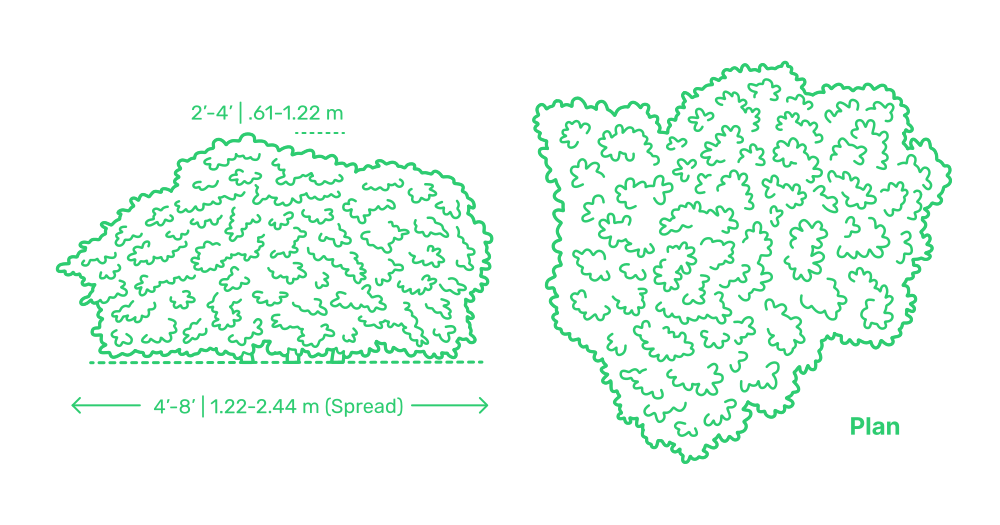
Japanese Cheesewood (Large) has a typical overall height between 2’-4’ (.61-1.22 m) and spread diameter of 4’-8’ (1.22-2.44 m).