

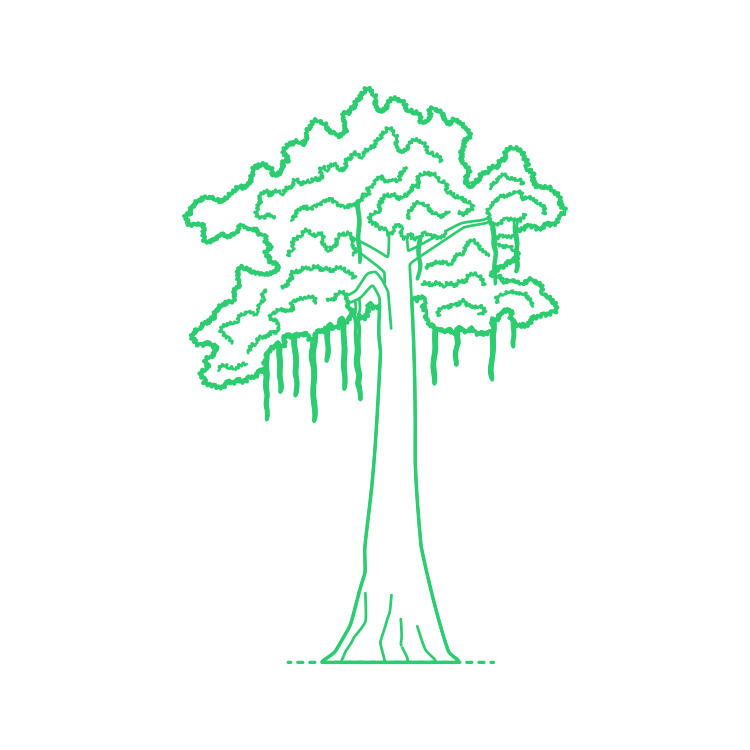
Kapok tree (Ceiba pentandra) in a medium form develops as a structurally powerful tropical tree with a thick trunk, developing buttress roots, and a broad but more moderate canopy. The branching pattern remains expansive, though less massive than mature emergent forms, and supports large palmately compound leaves that contribute to a layered tropical silhouette.
Native to wet tropical forests and floodplains, Ceiba pentandra is adapted to warm climates with abundant seasonal moisture. The species is biologically notable for its fast growth, towering potential, and ecological importance as a habitat-supporting canopy tree. In medium form, kapok emphasizes strong structural architecture and broadleaf tropical presence while presenting a more proportionally restrained expression of its famously monumental mature form.
Kapok (Medium) has a typical overall height between 60’-80’ (18.29-24.38 m) and spread diameter of 30’-60’ (9.14-18.29 m). The leaves have a typical length between 2”-8” (5-20 cm).
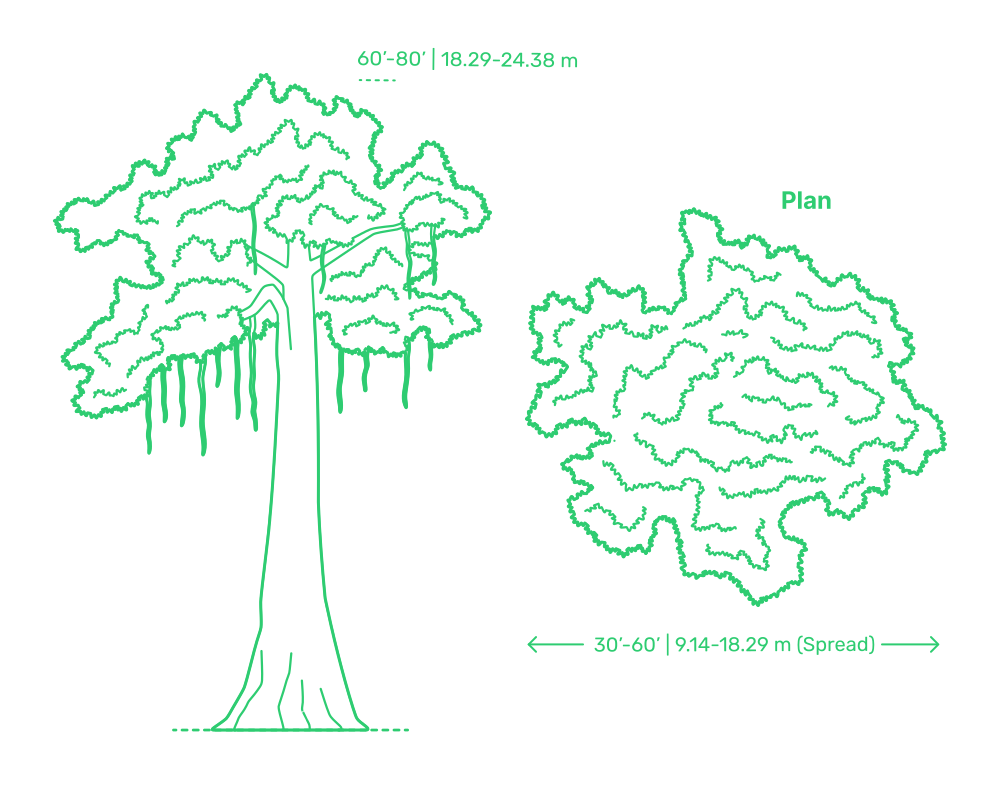
Kapok tree (Ceiba pentandra) in a medium form develops as a structurally powerful tropical tree with a thick trunk, developing buttress roots, and a broad but more moderate canopy. The branching pattern remains expansive, though less massive than mature emergent forms, and supports large palmately compound leaves that contribute to a layered tropical silhouette.
Native to wet tropical forests and floodplains, Ceiba pentandra is adapted to warm climates with abundant seasonal moisture. The species is biologically notable for its fast growth, towering potential, and ecological importance as a habitat-supporting canopy tree. In medium form, kapok emphasizes strong structural architecture and broadleaf tropical presence while presenting a more proportionally restrained expression of its famously monumental mature form.
Kapok (Medium) has a typical overall height between 60’-80’ (18.29-24.38 m) and spread diameter of 30’-60’ (9.14-18.29 m). The leaves have a typical length between 2”-8” (5-20 cm).
