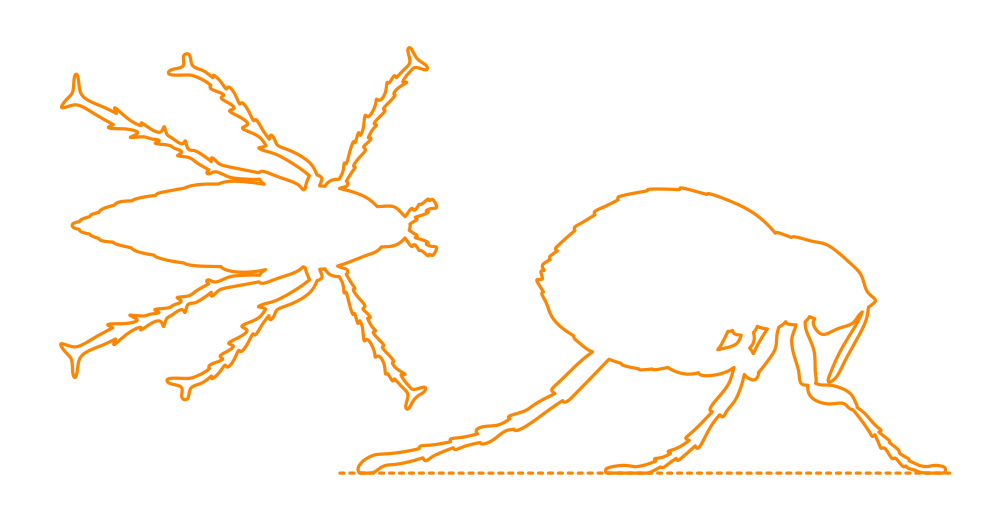

The Sand Flea (Tunga penetrans) is a parasitic insect that occupies tropical and sub-tropical climates; it is native to Central and South America, and inadvertently introduced by humans to sub-Saharan Africa. The species mostly lives two to five centimeters below the sand, and the temperature is too hot for the larvae to develop on the surface. As the smallest known flea, it is the most recognizable in its parasite phase. During the first or second day of infestation, the host may feel itching or irritation which then passes as the area around the flea becomes a callus.
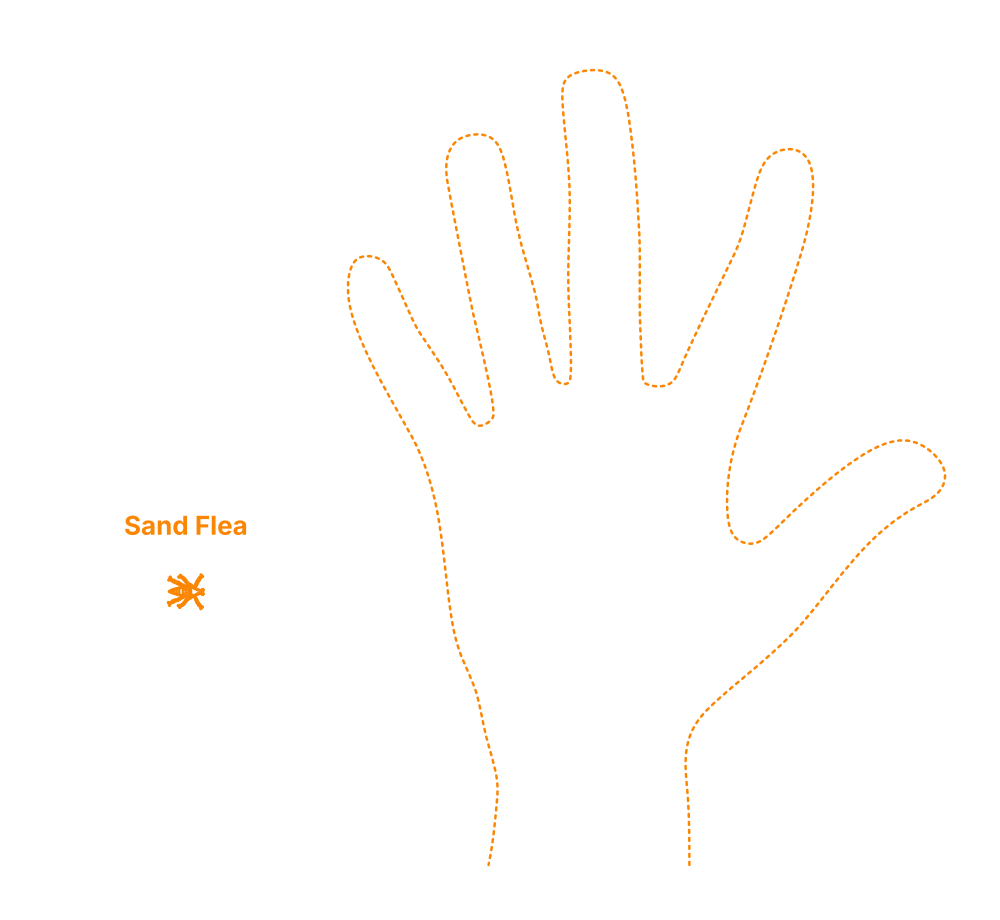
The Sand Flea has an overall body length between .03”-.04” (.8-1 mm), body width of .008”-.01” (.2-.3 mm), and body height of .016”-.024” (.4-.6 mm). The typical lifespan of the Sand Flea is between 4-6 weeks.

The Sand Flea (Tunga penetrans) is a parasitic insect that occupies tropical and sub-tropical climates; it is native to Central and South America, and inadvertently introduced by humans to sub-Saharan Africa. The species mostly lives two to five centimeters below the sand, and the temperature is too hot for the larvae to develop on the surface. As the smallest known flea, it is the most recognizable in its parasite phase. During the first or second day of infestation, the host may feel itching or irritation which then passes as the area around the flea becomes a callus.
The Sand Flea has an overall body length between .03”-.04” (.8-1 mm), body width of .008”-.01” (.2-.3 mm), and body height of .016”-.024” (.4-.6 mm). The typical lifespan of the Sand Flea is between 4-6 weeks.