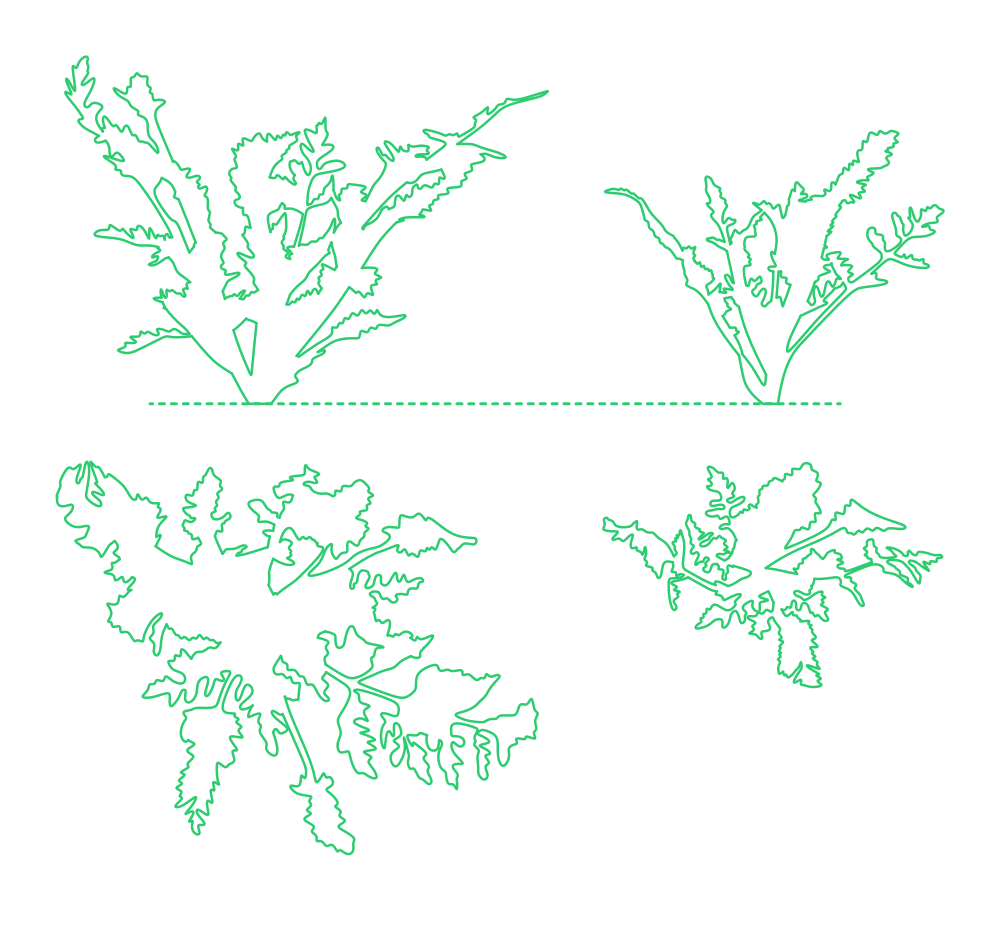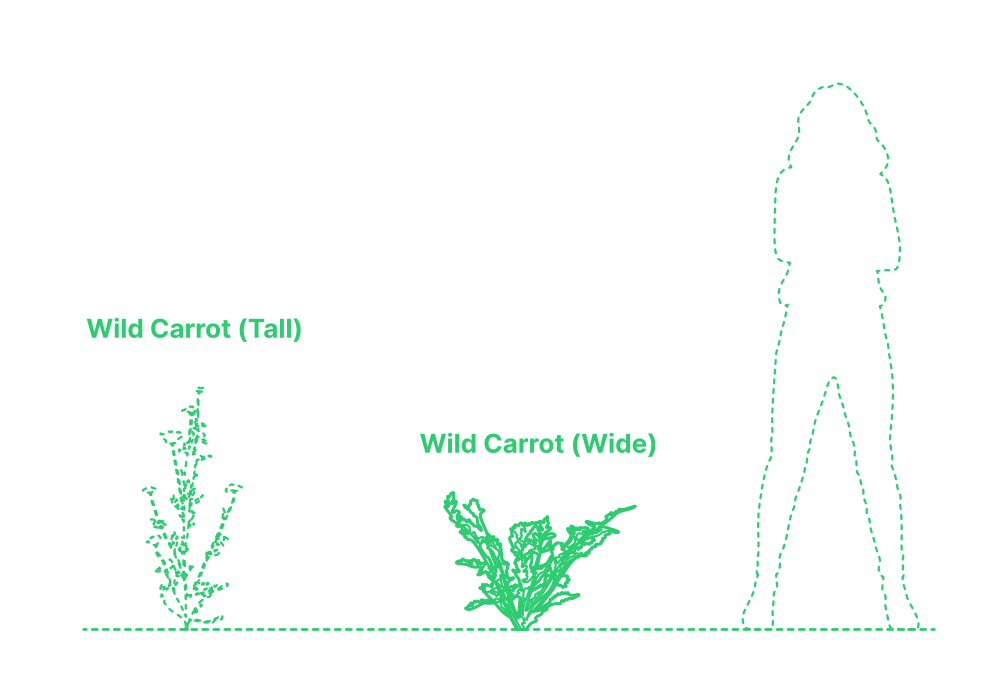
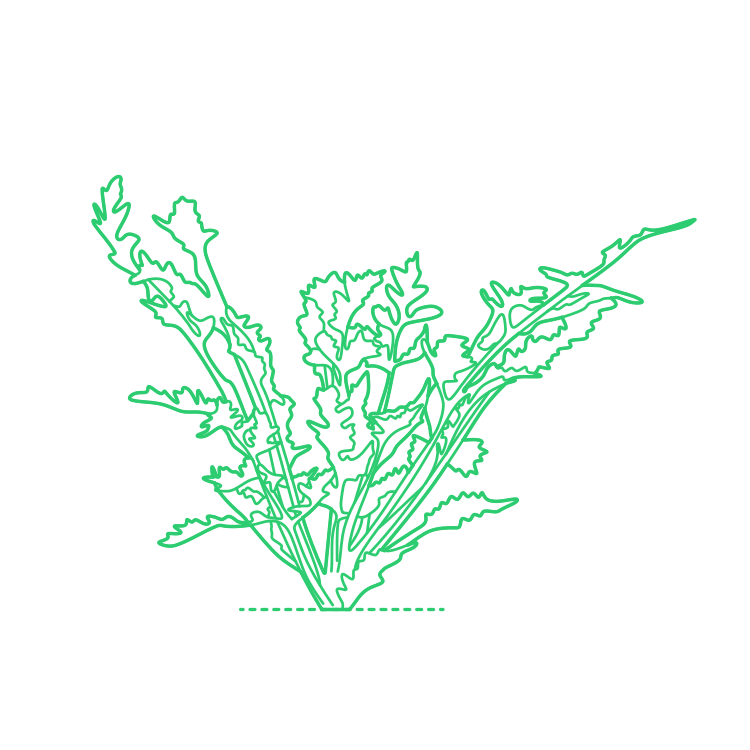
Wild Carrot (Wide) (Daucus carota) is a biennial native weed recognized for its spreading, umbrella-like clusters of tiny white flowers that create a broad, lace-like canopy. Its umbels are often wider than they are tall, forming a delicate, horizontal plane that hovers above finely divided, fern-like foliage. Frequently called Queen Anne’s lace, it sometimes bears a single dark floret at the center, thought to attract insects.
Native to Europe and Asia but now naturalized in many temperate regions, it thrives in open meadows, grasslands, and disturbed soils along roadsides and fields. As the wild ancestor of the cultivated carrot, its taproot is pale and woody rather than edible. The plant has cultural significance through its folk name “bird’s nest,” describing the way the umbels curl inward after flowering to protect developing seeds. With its wide-spreading floral form, Wild Carrot plays an important ecological role by providing nectar to a wide range of pollinators.
Wild Carrot (Wide) has a typical overall height between 1’-1’6” (30-46 cm) and spread diameter of 14”-20” (35-50 cm).
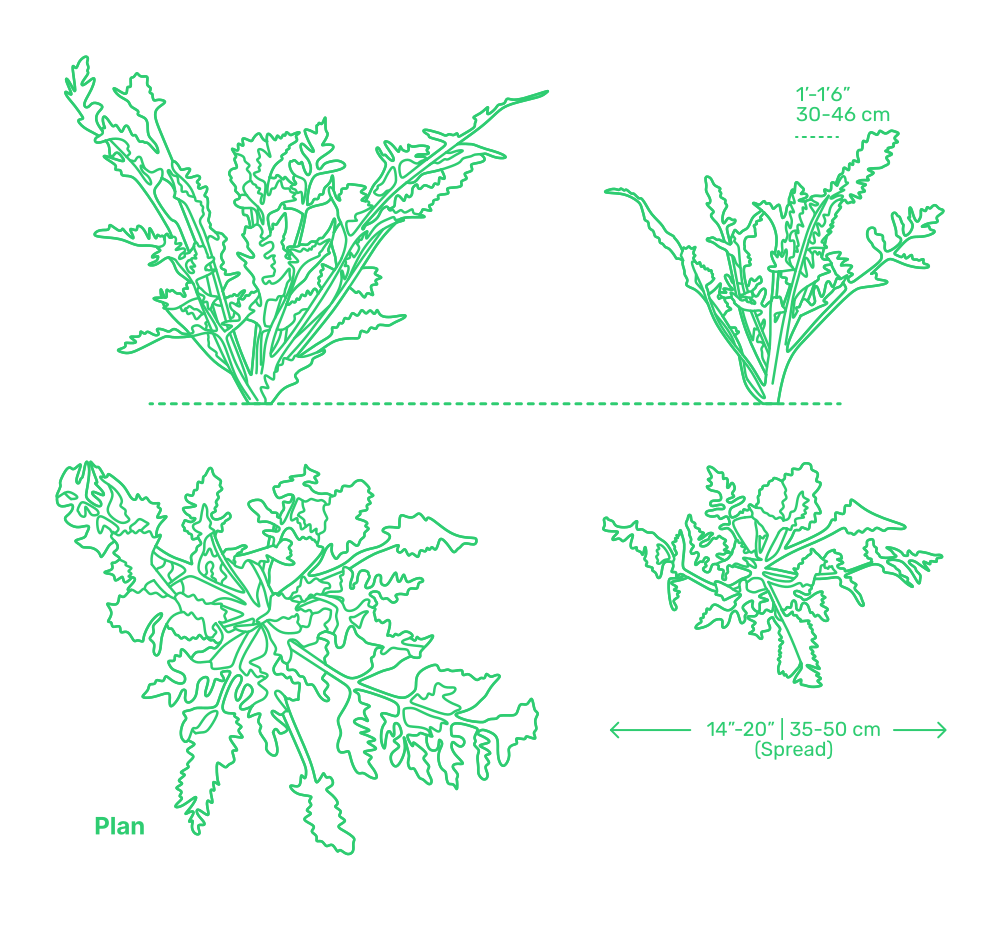
Wild Carrot (Wide) (Daucus carota) is a biennial native weed recognized for its spreading, umbrella-like clusters of tiny white flowers that create a broad, lace-like canopy. Its umbels are often wider than they are tall, forming a delicate, horizontal plane that hovers above finely divided, fern-like foliage. Frequently called Queen Anne’s lace, it sometimes bears a single dark floret at the center, thought to attract insects.
Native to Europe and Asia but now naturalized in many temperate regions, it thrives in open meadows, grasslands, and disturbed soils along roadsides and fields. As the wild ancestor of the cultivated carrot, its taproot is pale and woody rather than edible. The plant has cultural significance through its folk name “bird’s nest,” describing the way the umbels curl inward after flowering to protect developing seeds. With its wide-spreading floral form, Wild Carrot plays an important ecological role by providing nectar to a wide range of pollinators.
Wild Carrot (Wide) has a typical overall height between 1’-1’6” (30-46 cm) and spread diameter of 14”-20” (35-50 cm).