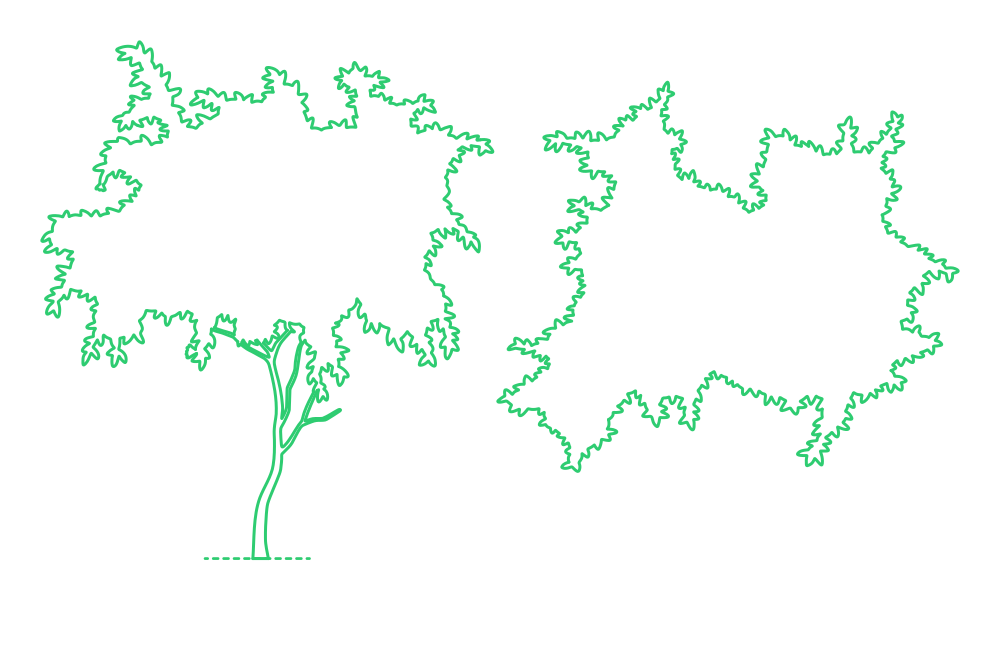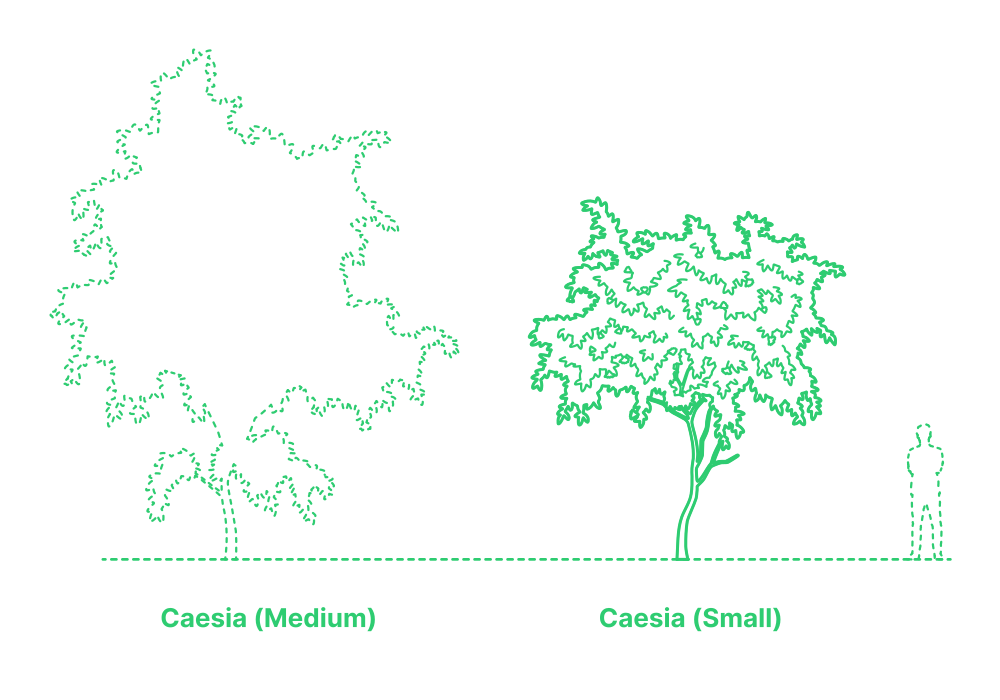
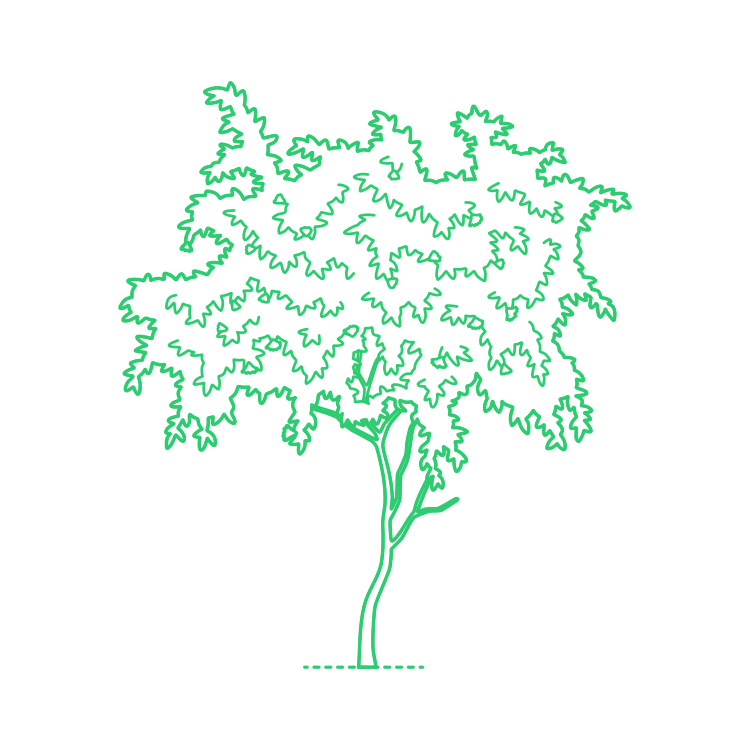
Caesia (Eucalyptus caesia) in a small form develops as a compact flowering eucalyptus with delicate drooping stems, narrow foliage, and an airy irregular canopy. The branches curve outward and downward in loose formations, producing a lightweight silhouette that highlights both flowers and bark texture. Leaves are elongated and muted blue-green, spaced along thin stems that sway softly with movement.
Native to dry rocky regions of Western Australia, Eucalyptus caesia naturally inhabits exposed landscapes where drought tolerance and efficient water use are essential for survival. A defining biological characteristic is the species’ smooth peeling bark, which sheds seasonally and exposes lighter layers beneath. Flower clusters emerge prominently along the stems, creating vivid accents against the subdued foliage tones. In small form, Eucalyptus caesia emphasizes graceful branch movement, open floral spacing, and compact architectural character while preserving the species’ distinctive pendulous habit.
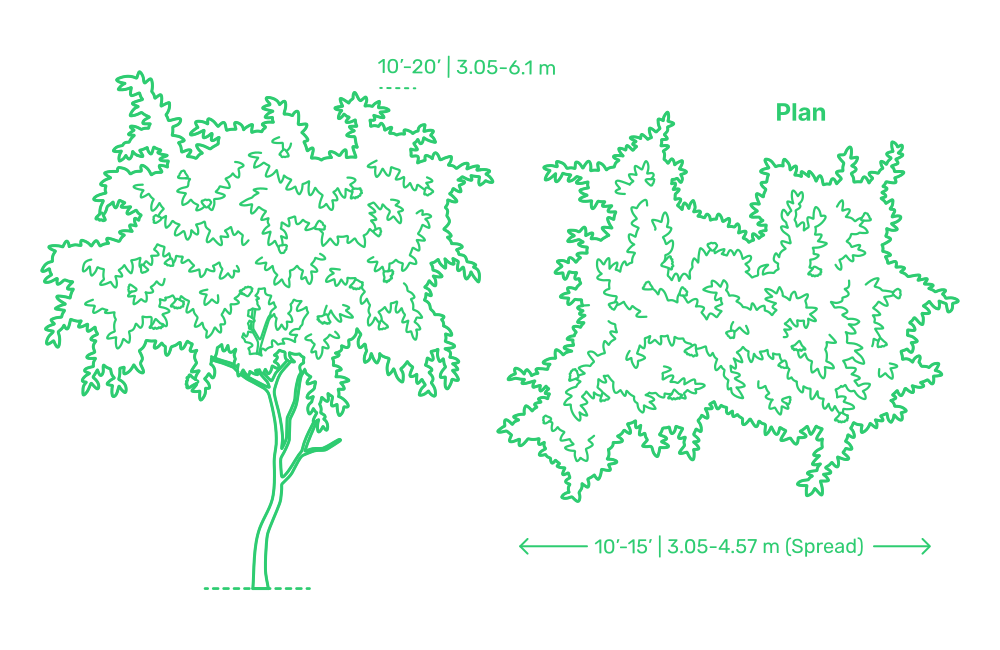
Caesia (Small) have a typical overall height between 10’-20’ (3.05-6.1 m) and spread diameter of 10’-15’ (3.05-4.57 m). The leaves have a typical length between 4”-6” (10-16 cm).
Caesia (Eucalyptus caesia) in a small form develops as a compact flowering eucalyptus with delicate drooping stems, narrow foliage, and an airy irregular canopy. The branches curve outward and downward in loose formations, producing a lightweight silhouette that highlights both flowers and bark texture. Leaves are elongated and muted blue-green, spaced along thin stems that sway softly with movement.
Native to dry rocky regions of Western Australia, Eucalyptus caesia naturally inhabits exposed landscapes where drought tolerance and efficient water use are essential for survival. A defining biological characteristic is the species’ smooth peeling bark, which sheds seasonally and exposes lighter layers beneath. Flower clusters emerge prominently along the stems, creating vivid accents against the subdued foliage tones. In small form, Eucalyptus caesia emphasizes graceful branch movement, open floral spacing, and compact architectural character while preserving the species’ distinctive pendulous habit.
Caesia (Small) have a typical overall height between 10’-20’ (3.05-6.1 m) and spread diameter of 10’-15’ (3.05-4.57 m). The leaves have a typical length between 4”-6” (10-16 cm).