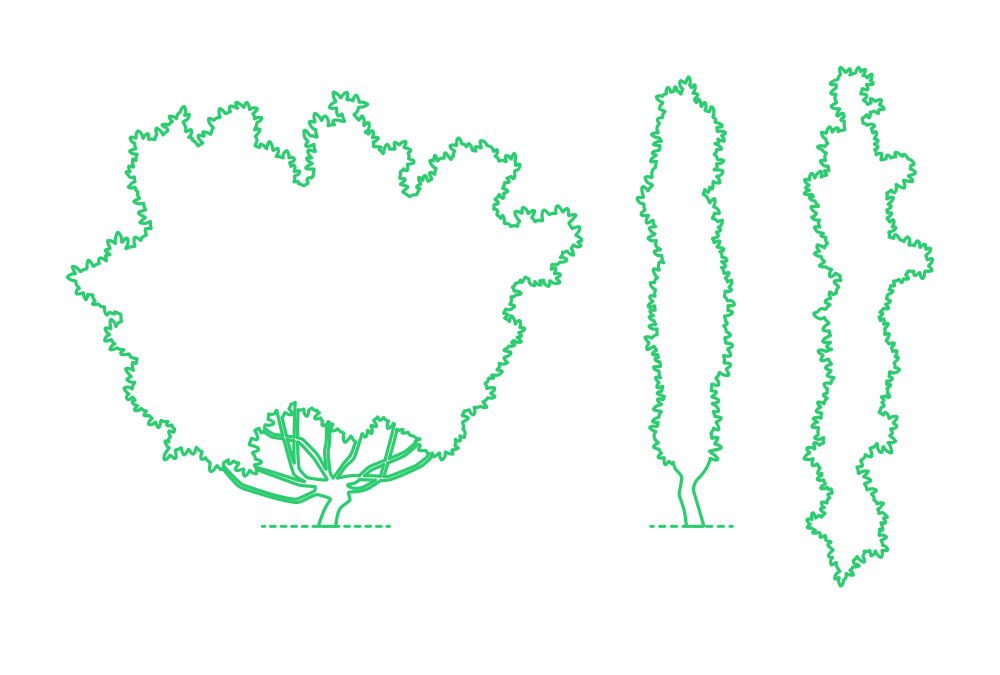
Common Ivy (Climbing, Bottom) (Hedera helix)
Common Ivy (Climbing, Bottom) (Hedera helix)
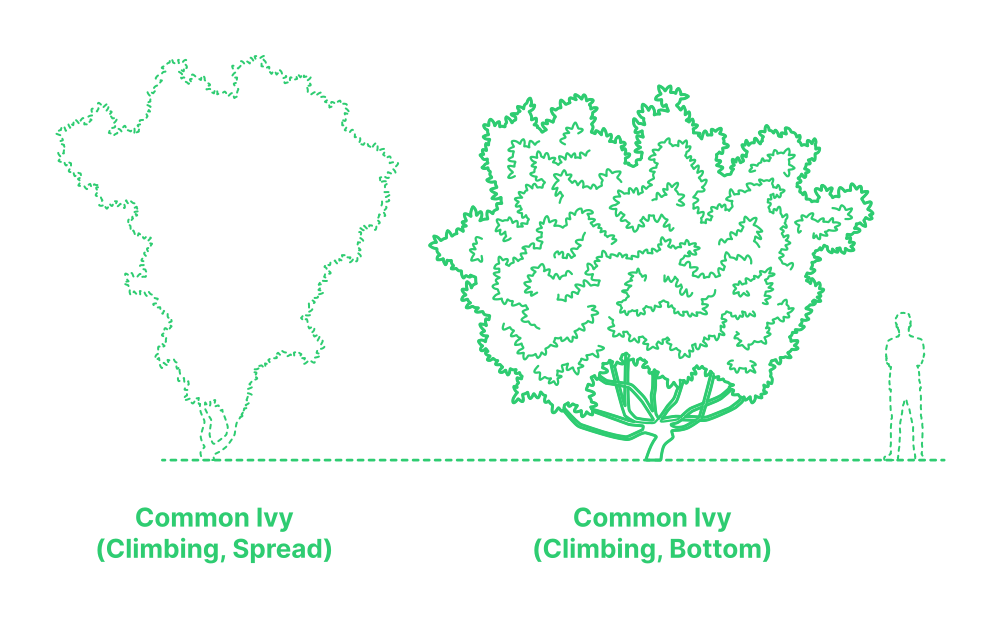
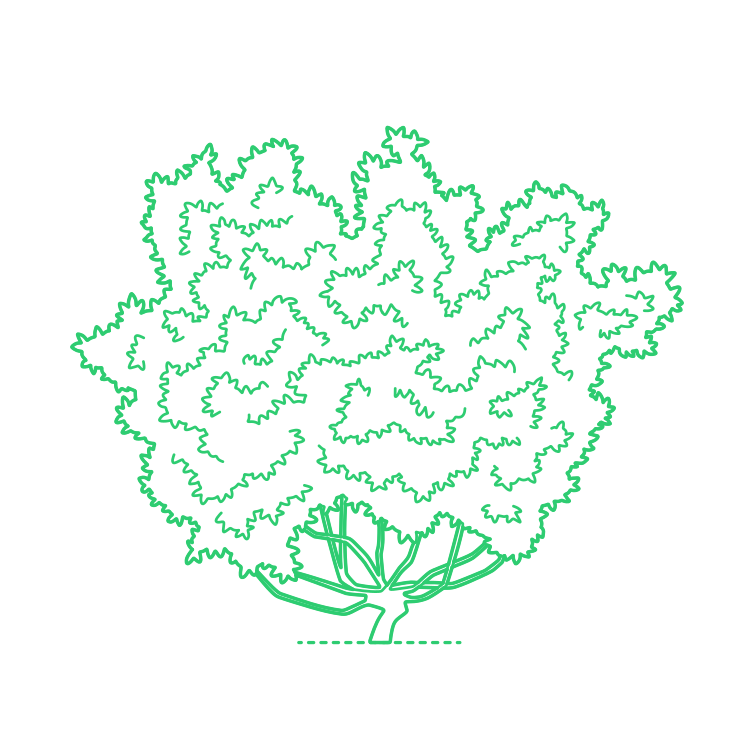
Common ivy (Hedera helix) in a climbing bottom form develops as a woody evergreen vine originating at ground level and ascending upward along vertical surfaces. The stems produce numerous aerial rootlets that attach directly to walls, tree trunks, or rock, forming a tight, surface-hugging structure. Leaves are typically lobed and arranged alternately along the stems, creating a dense vertical layer of foliage.
Also known as English ivy, Hedera helix is native to Europe and western Asia, where it inhabits forest understories, cliffs, and shaded environments. The species is biologically notable for its dual growth phases, with juvenile climbing foliage and mature flowering structures. In this bottom-up form, the plant emphasizes upward expansion and strong attachment, reflecting its natural tendency to climb from the forest floor toward available light.
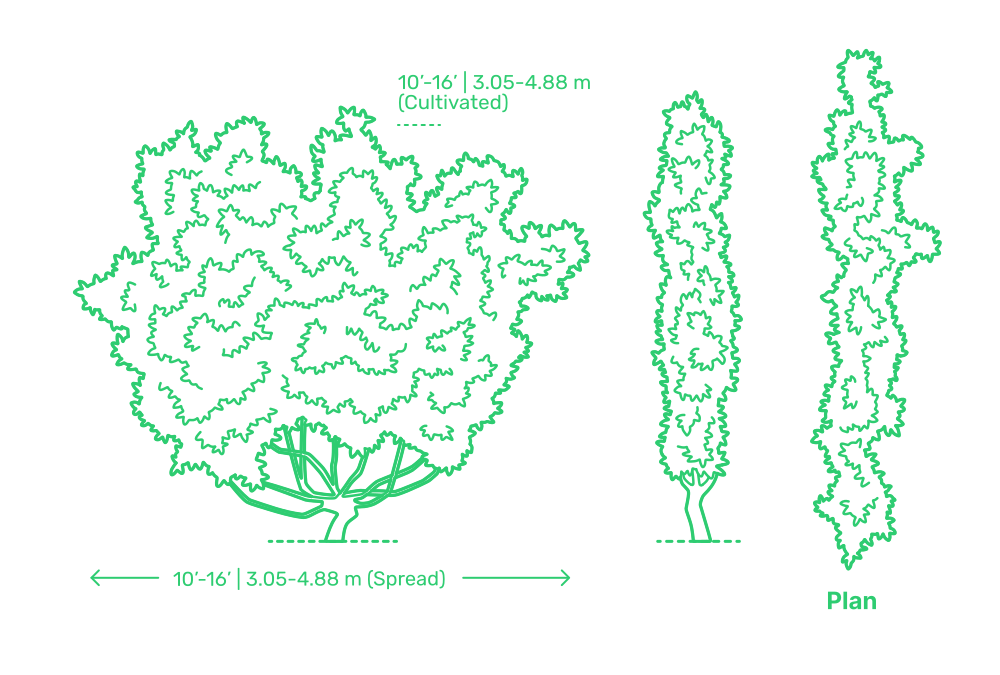
Common Ivy (Climbing, Bottom) has a typical cultivated height between 10’-16’ (3.05-4.88 m) and spread of 10’-16’ (3.05-4.88 m). The leaf length is between 2”-4” (5-10 cm).
Common ivy (Hedera helix) in a climbing bottom form develops as a woody evergreen vine originating at ground level and ascending upward along vertical surfaces. The stems produce numerous aerial rootlets that attach directly to walls, tree trunks, or rock, forming a tight, surface-hugging structure. Leaves are typically lobed and arranged alternately along the stems, creating a dense vertical layer of foliage.
Also known as English ivy, Hedera helix is native to Europe and western Asia, where it inhabits forest understories, cliffs, and shaded environments. The species is biologically notable for its dual growth phases, with juvenile climbing foliage and mature flowering structures. In this bottom-up form, the plant emphasizes upward expansion and strong attachment, reflecting its natural tendency to climb from the forest floor toward available light.
Common Ivy (Climbing, Bottom) has a typical cultivated height between 10’-16’ (3.05-4.88 m) and spread of 10’-16’ (3.05-4.88 m). The leaf length is between 2”-4” (5-10 cm).