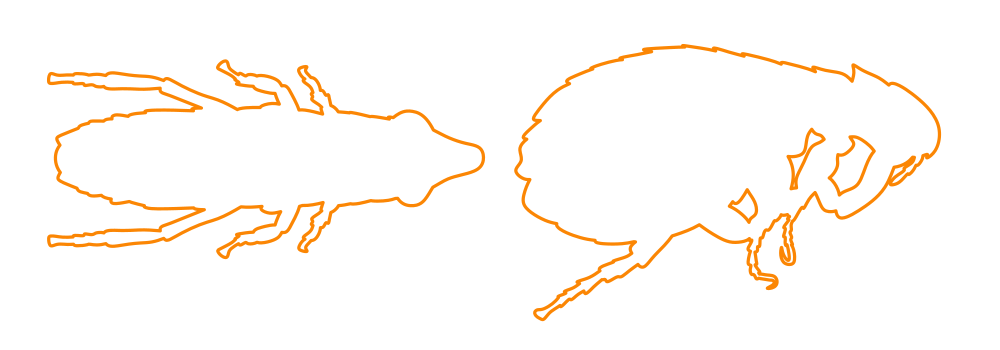
The Dog Flea (Ctenocephalides canis) is a flea species that lives as an ectoparasite on mammals, particularly the domestic dog and cat. While they feed on the blood of dogs and cats, the Dog Flea will sometimes bite humans, and the female flea must have a blood meal before they can produce eggs. Their mouthparts are adapted for piercing skin and blood. They do not have wings, and their hard bodies that are compressed laterally have hairs and spines which make it easy for them to travel through hair. Dog Fleas can cause problems from mild to severe itching and skin problems and infections.
The Dog Flea has an overall body length between .12”-.16” (3-4 mm), body width of .03”-.04” (.8-1 mm), and body height of .04”-.07” (1-1.8 mm). The typical lifespan of the Dog Flea is between 2-3 weeks.

The Dog Flea (Ctenocephalides canis) is a flea species that lives as an ectoparasite on mammals, particularly the domestic dog and cat. While they feed on the blood of dogs and cats, the Dog Flea will sometimes bite humans, and the female flea must have a blood meal before they can produce eggs. Their mouthparts are adapted for piercing skin and blood. They do not have wings, and their hard bodies that are compressed laterally have hairs and spines which make it easy for them to travel through hair. Dog Fleas can cause problems from mild to severe itching and skin problems and infections.
The Dog Flea has an overall body length between .12”-.16” (3-4 mm), body width of .03”-.04” (.8-1 mm), and body height of .04”-.07” (1-1.8 mm). The typical lifespan of the Dog Flea is between 2-3 weeks.