Greater Blue-Ringed Octopus (Hapalochlaena lunulata)
Greater Blue-Ringed Octopus (Hapalochlaena lunulata)
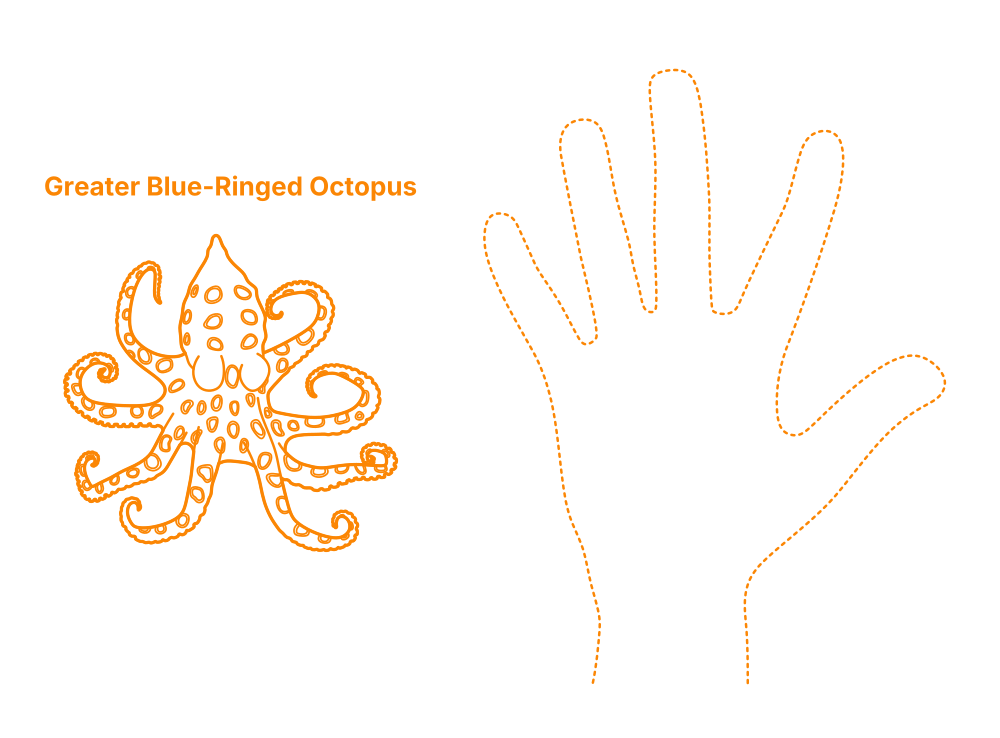

The Greater Blue-Ringed Octopus (Hapalochlaena lunulate) is a highly venomous cephalopod and is known as one of the most toxic marine animals in the world. This species is small, has a slightly flattened head, and has bright blue ring patterns that gave it its name. The Greater Blue-Ringed Octopus flashes its rings as a warning signal when threatened. They live a solitary life and are found in subtropical waters of the Indo-West Pacific Ocean and prefer shallow waters with rubble, reefs, and sandy areas. The diet of the Greater Blue-Ringed Octopus consists of small crabs, shrimps, and small fish.
The Greater Blue-Ringed Octopus has an overall length between 4.7”-5.9” (12-15 cm), mantle length of 1.2”-2” (3-5 cm), and weight of .02-.22 lb (.01-.1 kg). The typical lifespan of the Greater Blue-Ringed Octopus is between 2-3 years.

The Greater Blue-Ringed Octopus (Hapalochlaena lunulate) is a highly venomous cephalopod and is known as one of the most toxic marine animals in the world. This species is small, has a slightly flattened head, and has bright blue ring patterns that gave it its name. The Greater Blue-Ringed Octopus flashes its rings as a warning signal when threatened. They live a solitary life and are found in subtropical waters of the Indo-West Pacific Ocean and prefer shallow waters with rubble, reefs, and sandy areas. The diet of the Greater Blue-Ringed Octopus consists of small crabs, shrimps, and small fish.
The Greater Blue-Ringed Octopus has an overall length between 4.7”-5.9” (12-15 cm), mantle length of 1.2”-2” (3-5 cm), and weight of .02-.22 lb (.01-.1 kg). The typical lifespan of the Greater Blue-Ringed Octopus is between 2-3 years.