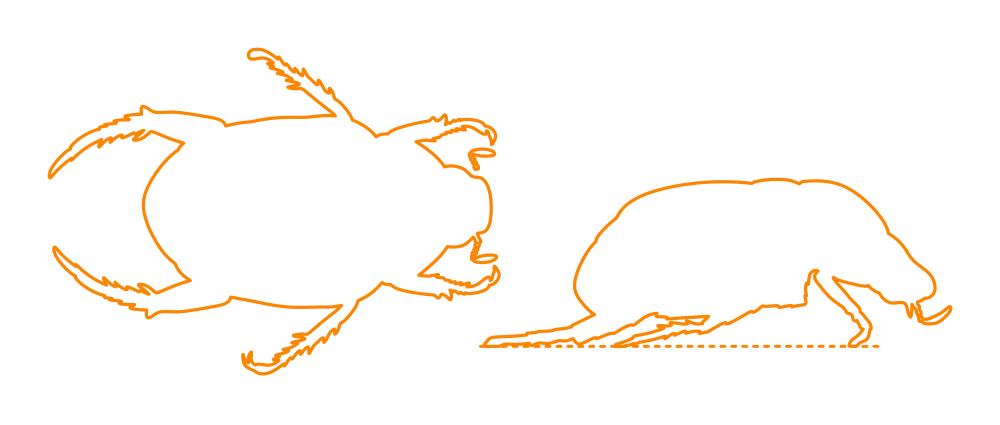

The Japanese Beetle (Popillia japonica) is a scarab beetle species. While not destructive in Japan where it is controlled by natural predators, in North America they are a noted pest of about 300 species of plants. They damage plants by consuming only the leaf material between the veins; this skeletonizes the foliage. The larvae feeds on the roots of the grasses. Physically the Japanese Beetle has an iridescent copper-colored elytra and a green thorax and head. There are rows of white tufts of hair that project from under the wing covers on each side of the body.
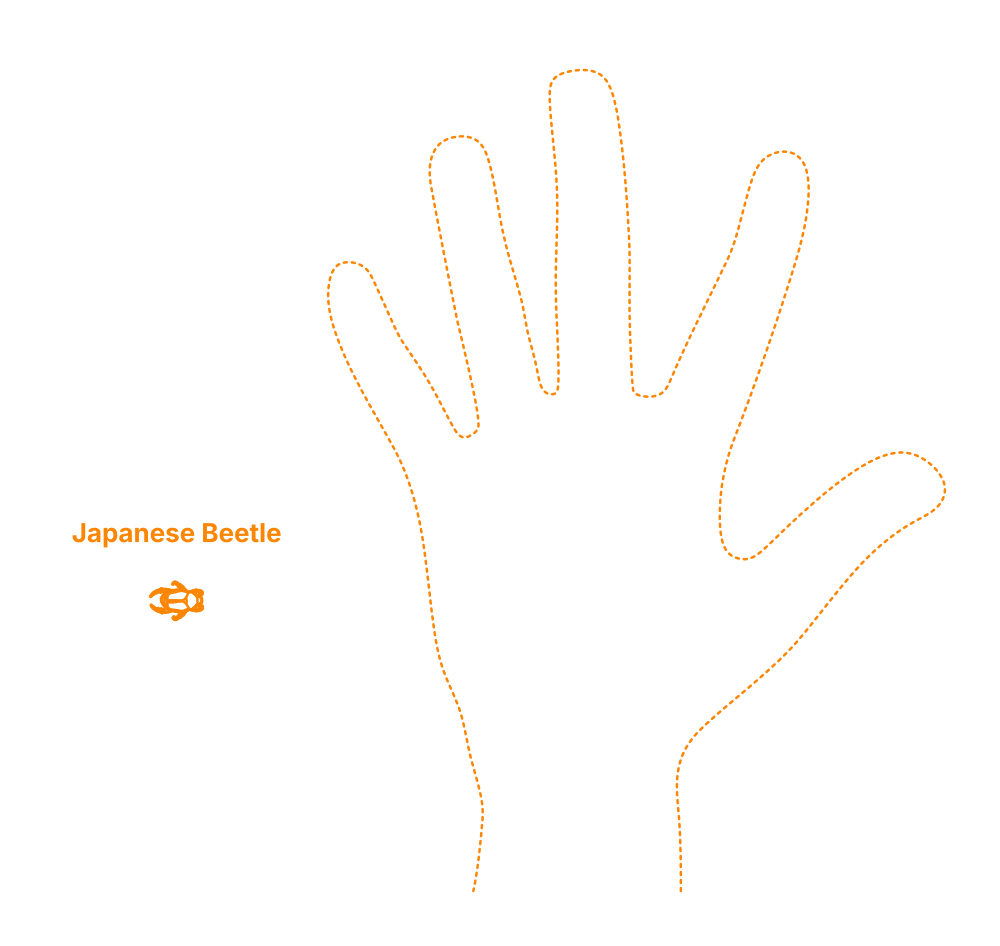
The Japanese Beetle has an overall body length between .35”-.55” (9-14 mm), body width of .2”-.3” (5-7.5 mm), and body height of .12”-.2” (3-5 mm). The typical lifespan of the Japanese Beetle is 1 year.

The Japanese Beetle (Popillia japonica) is a scarab beetle species. While not destructive in Japan where it is controlled by natural predators, in North America they are a noted pest of about 300 species of plants. They damage plants by consuming only the leaf material between the veins; this skeletonizes the foliage. The larvae feeds on the roots of the grasses. Physically the Japanese Beetle has an iridescent copper-colored elytra and a green thorax and head. There are rows of white tufts of hair that project from under the wing covers on each side of the body.
The Japanese Beetle has an overall body length between .35”-.55” (9-14 mm), body width of .2”-.3” (5-7.5 mm), and body height of .12”-.2” (3-5 mm). The typical lifespan of the Japanese Beetle is 1 year.