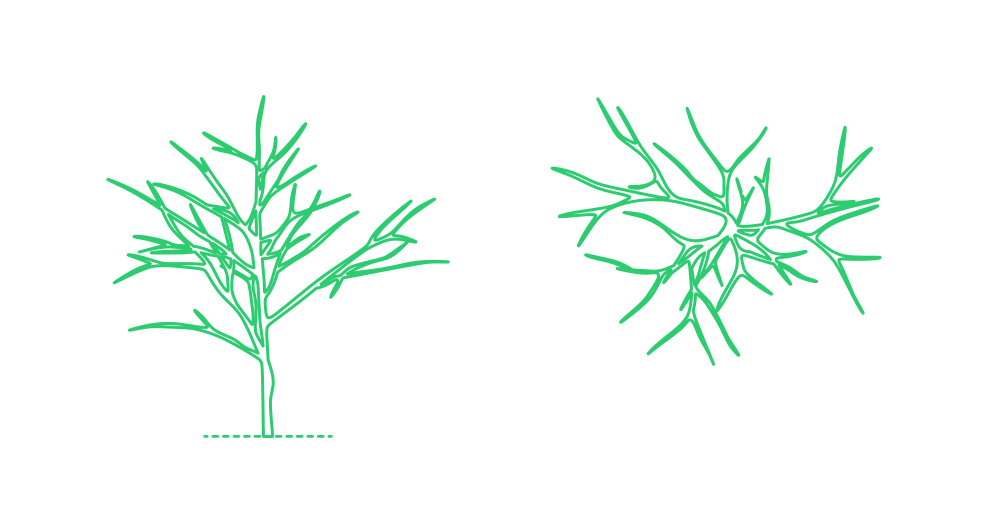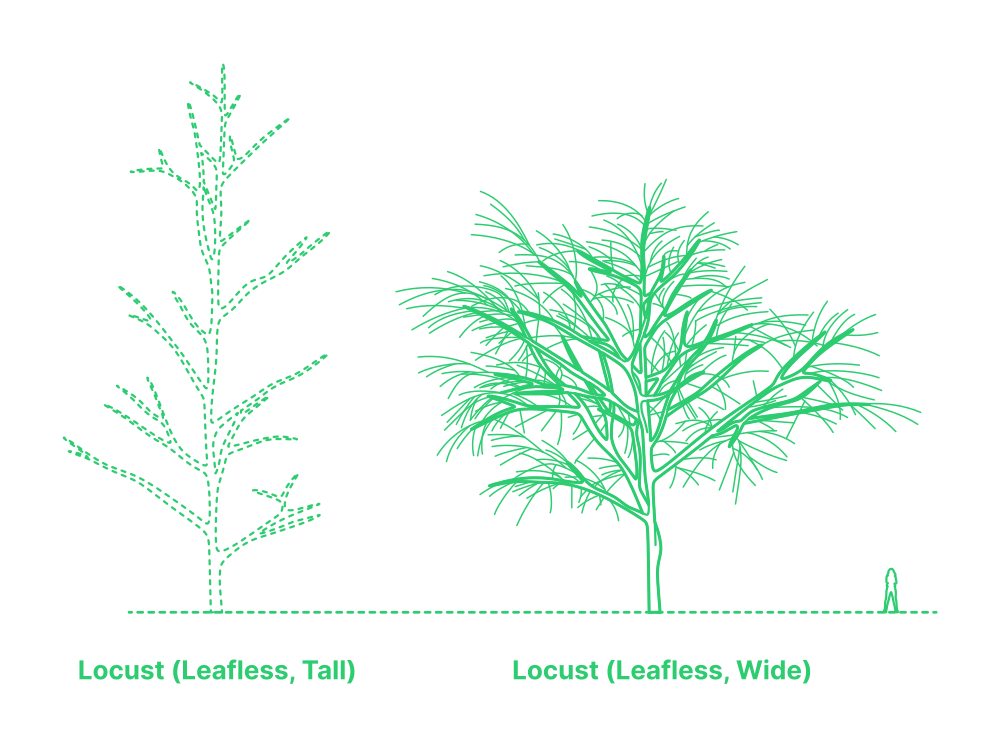
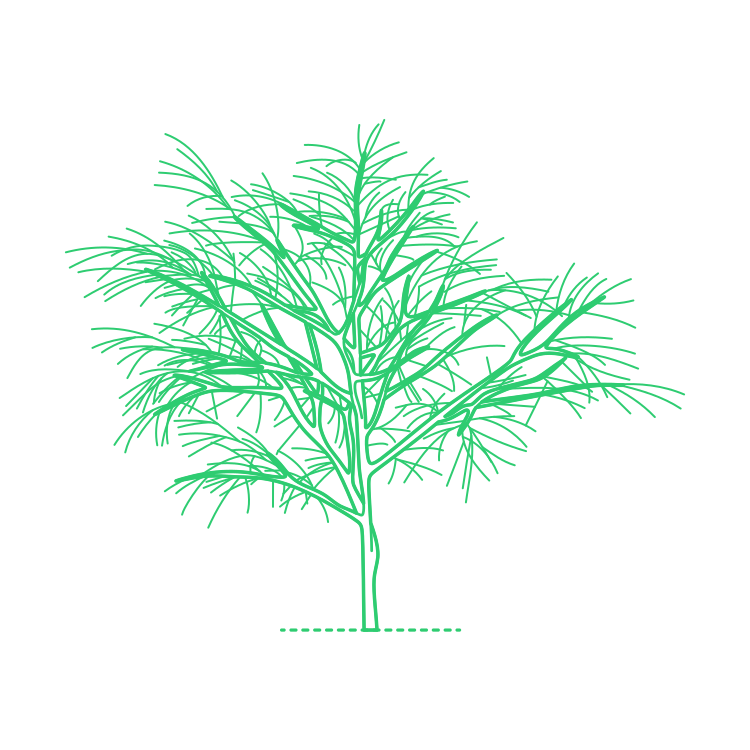
Wide leafless locust trees, belonging to the genus Robinia, display an expansive branching habit defined by long, outward-reaching limbs and an open internal structure. Without foliage, the crown is composed of angular primary branches that extend horizontally before subdividing into irregular secondary limbs, creating significant negative space within the canopy. Robinia species are native to North America but have been widely introduced elsewhere due to their adaptability and rapid growth.
They commonly inhabit open woodlands, floodplains, grassland margins, and disturbed sites. A key biological trait of Robinia is nitrogen fixation through symbiotic root bacteria, allowing colonization of nutrient-poor soils. In leafless condition, wide Robinia forms emphasize lateral reach and skeletal openness, reflecting evolutionary strategies focused on rapid spatial expansion and resilience in variable environments.
Locust (Leafless, Wide) has a typical overall height between 40’-80’ (12.19-24.38 m) and spread diameter of 20’-50’ (6.1-15.24 m).
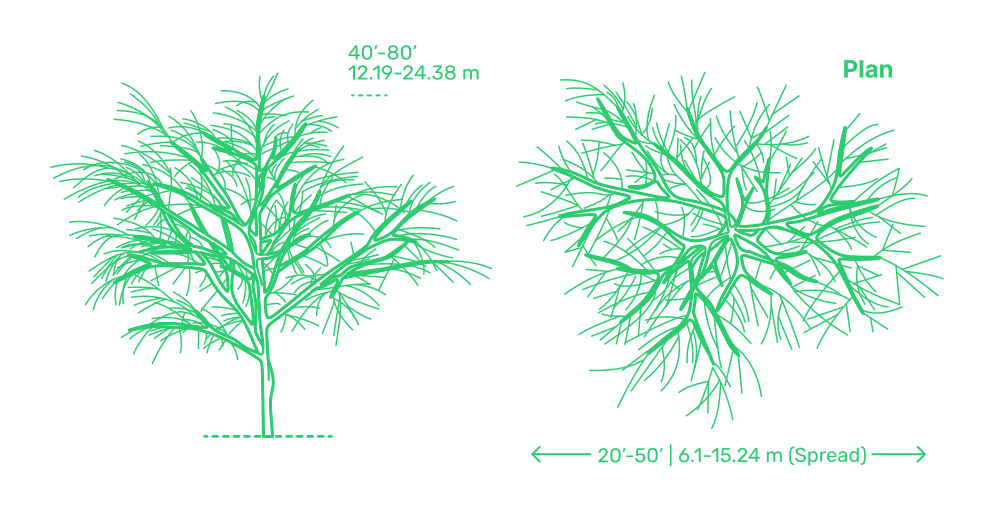
Wide leafless locust trees, belonging to the genus Robinia, display an expansive branching habit defined by long, outward-reaching limbs and an open internal structure. Without foliage, the crown is composed of angular primary branches that extend horizontally before subdividing into irregular secondary limbs, creating significant negative space within the canopy. Robinia species are native to North America but have been widely introduced elsewhere due to their adaptability and rapid growth.
They commonly inhabit open woodlands, floodplains, grassland margins, and disturbed sites. A key biological trait of Robinia is nitrogen fixation through symbiotic root bacteria, allowing colonization of nutrient-poor soils. In leafless condition, wide Robinia forms emphasize lateral reach and skeletal openness, reflecting evolutionary strategies focused on rapid spatial expansion and resilience in variable environments.
Locust (Leafless, Wide) has a typical overall height between 40’-80’ (12.19-24.38 m) and spread diameter of 20’-50’ (6.1-15.24 m).