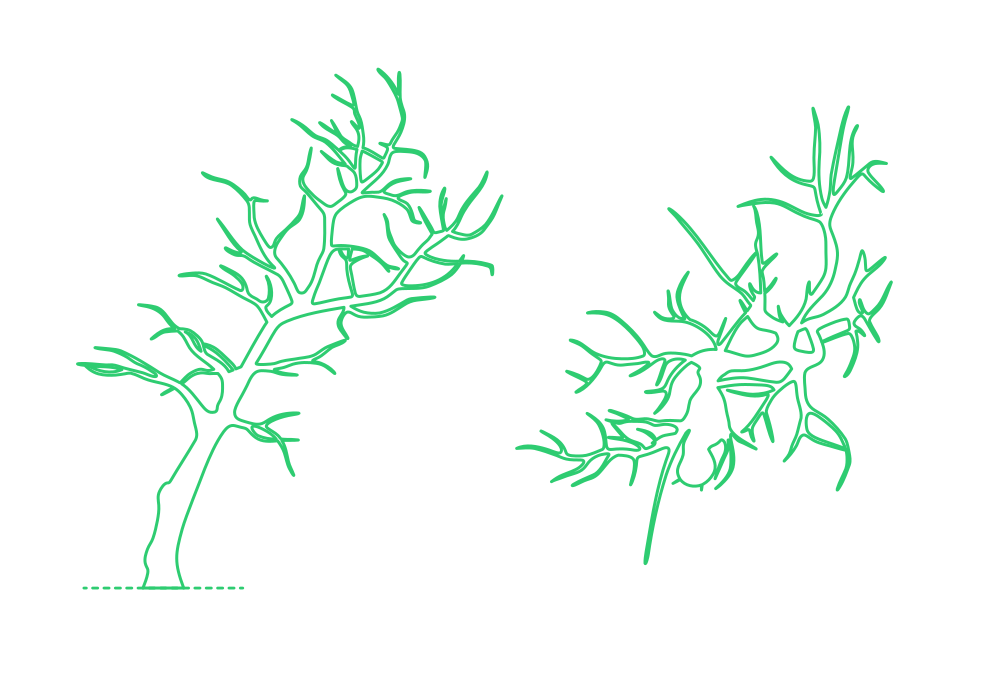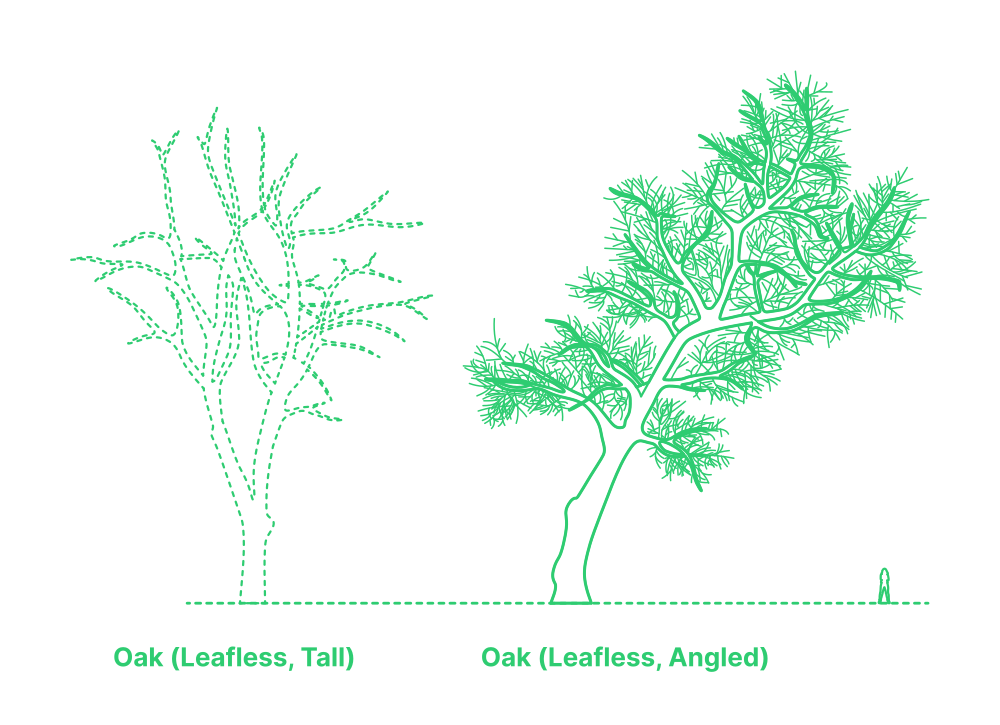
Angled leafless oaks of the genus Quercus are deciduous trees distinguished by powerful trunks and irregularly oriented primary branches that diverge at pronounced angles. In the absence of leaves, the oak’s internal structure becomes prominent, revealing thick limbs that twist and change direction as they extend outward from the main stem. This angled branching pattern produces a complex, asymmetrical crown that reflects long-term growth influenced by wind, light competition, and age.
Oaks are native across much of the Northern Hemisphere and occupy a wide range of habitats, including upland forests, savannas, and mixed woodlands. The genus Quercus is biologically notable for dense, durable wood, long life spans, and the production of acorns, which play a major ecological role. In leafless condition, angled oaks emphasize structural strength, adaptive branching, and resilience, traits that have allowed them to persist across diverse and often challenging environments.
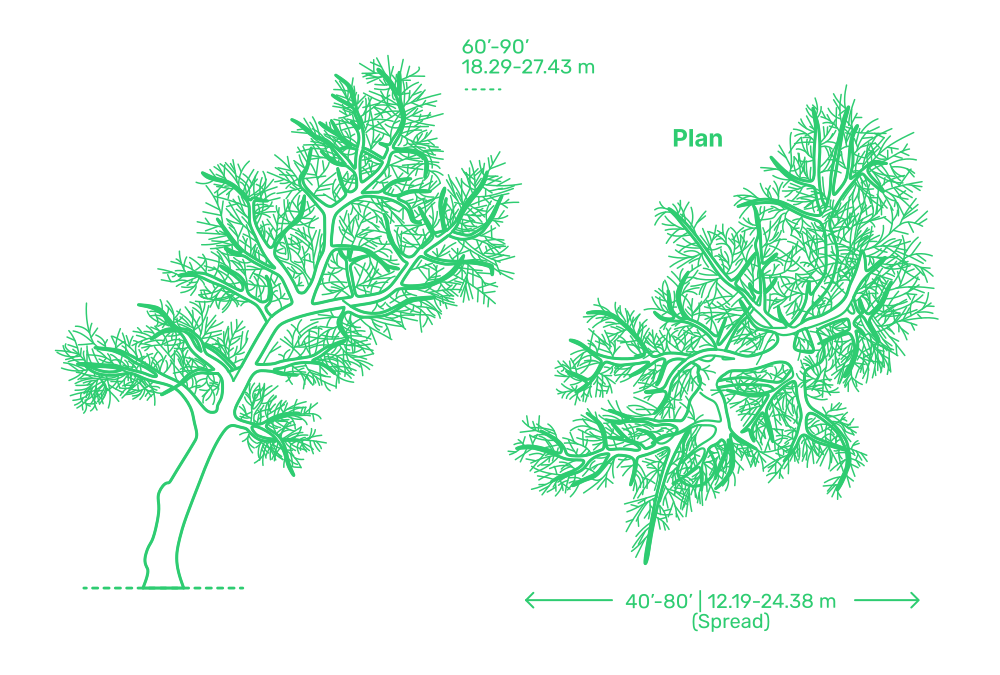
Oak (Leafless, Angled) has a typical overall height between 60’-90’ (18.29-27.43 m) and spread diameter of 40’-80’ (12.19-24.38 m).
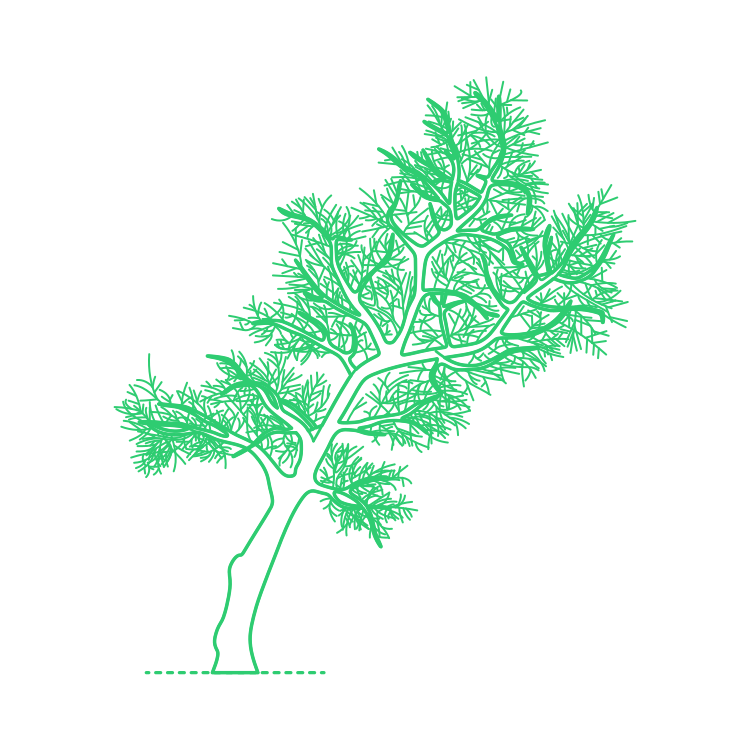
Angled leafless oaks of the genus Quercus are deciduous trees distinguished by powerful trunks and irregularly oriented primary branches that diverge at pronounced angles. In the absence of leaves, the oak’s internal structure becomes prominent, revealing thick limbs that twist and change direction as they extend outward from the main stem. This angled branching pattern produces a complex, asymmetrical crown that reflects long-term growth influenced by wind, light competition, and age.
Oaks are native across much of the Northern Hemisphere and occupy a wide range of habitats, including upland forests, savannas, and mixed woodlands. The genus Quercus is biologically notable for dense, durable wood, long life spans, and the production of acorns, which play a major ecological role. In leafless condition, angled oaks emphasize structural strength, adaptive branching, and resilience, traits that have allowed them to persist across diverse and often challenging environments.
Oak (Leafless, Angled) has a typical overall height between 60’-90’ (18.29-27.43 m) and spread diameter of 40’-80’ (12.19-24.38 m).