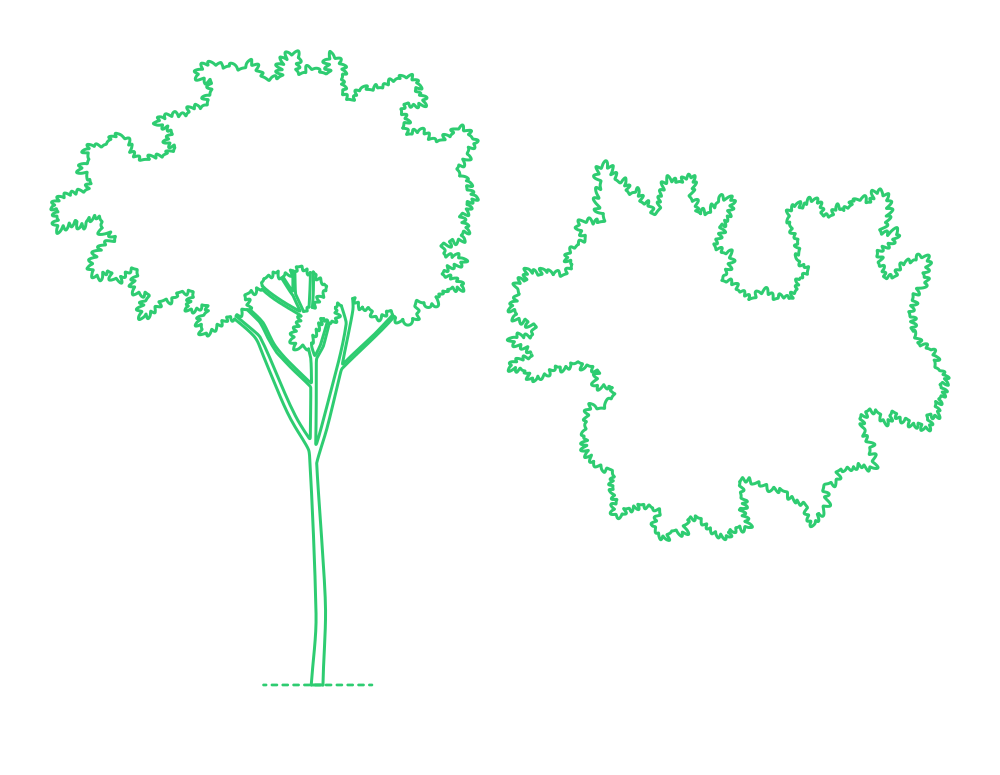
Star fruit (Averrhoa carambola) in a thin form presents as a lightly structured tropical tree with slender branching and a more open canopy arrangement. The stems extend with greater spacing between foliage clusters, allowing individual branch patterns and compound leaves to remain visible through the crown. The leaves consist of multiple oval leaflets arranged along flexible stems, contributing a delicate texture to the overall silhouette.
Native to tropical Southeast Asia, Averrhoa carambola grows in warm, humid climates with seasonal rainfall patterns. Biologically, the species is notable for producing ribbed yellow fruit and clusters of small pinkish flowers directly along branches. In thin form, the tree emphasizes airy branching structure, reduced canopy density, and elegant tropical lightness, presenting a more refined and open expression compared to fuller bushier variants.
Star Fruit (Thin) have a typical cultivated height between 12’-20’ (3.66-6.1 m) and spread diameter of 10’-15’ (3.05-4.57 m). The leaves have a typical length between 6”-12” (15-30 cm).
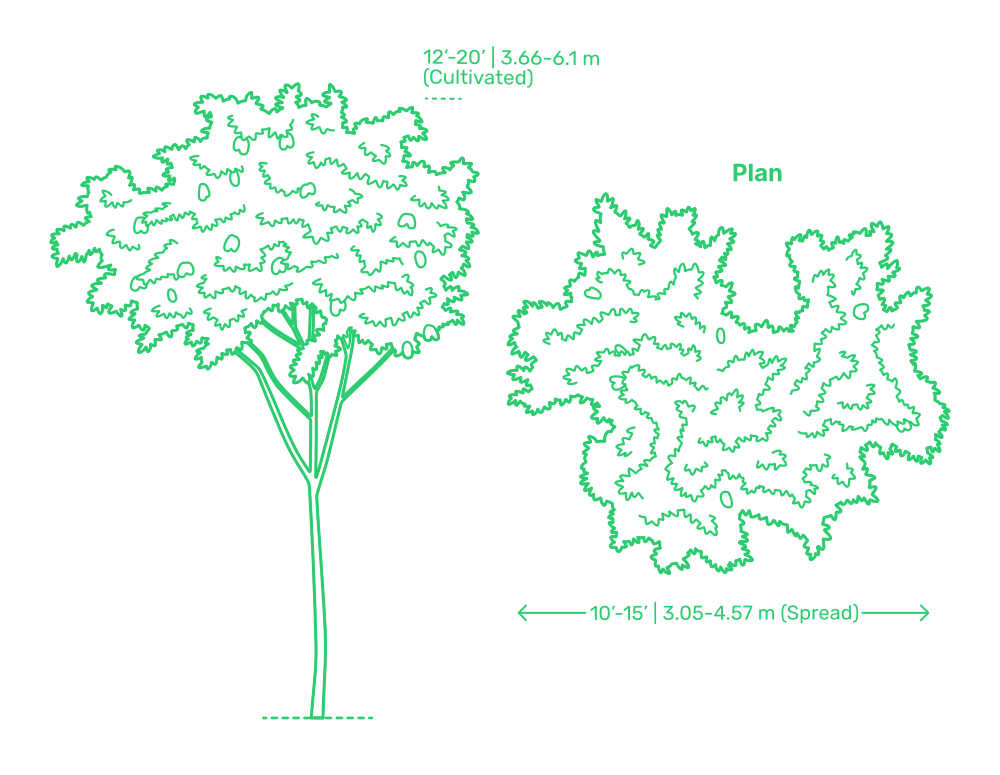
Star fruit (Averrhoa carambola) in a thin form presents as a lightly structured tropical tree with slender branching and a more open canopy arrangement. The stems extend with greater spacing between foliage clusters, allowing individual branch patterns and compound leaves to remain visible through the crown. The leaves consist of multiple oval leaflets arranged along flexible stems, contributing a delicate texture to the overall silhouette.
Native to tropical Southeast Asia, Averrhoa carambola grows in warm, humid climates with seasonal rainfall patterns. Biologically, the species is notable for producing ribbed yellow fruit and clusters of small pinkish flowers directly along branches. In thin form, the tree emphasizes airy branching structure, reduced canopy density, and elegant tropical lightness, presenting a more refined and open expression compared to fuller bushier variants.
Star Fruit (Thin) have a typical cultivated height between 12’-20’ (3.66-6.1 m) and spread diameter of 10’-15’ (3.05-4.57 m). The leaves have a typical length between 6”-12” (15-30 cm).