
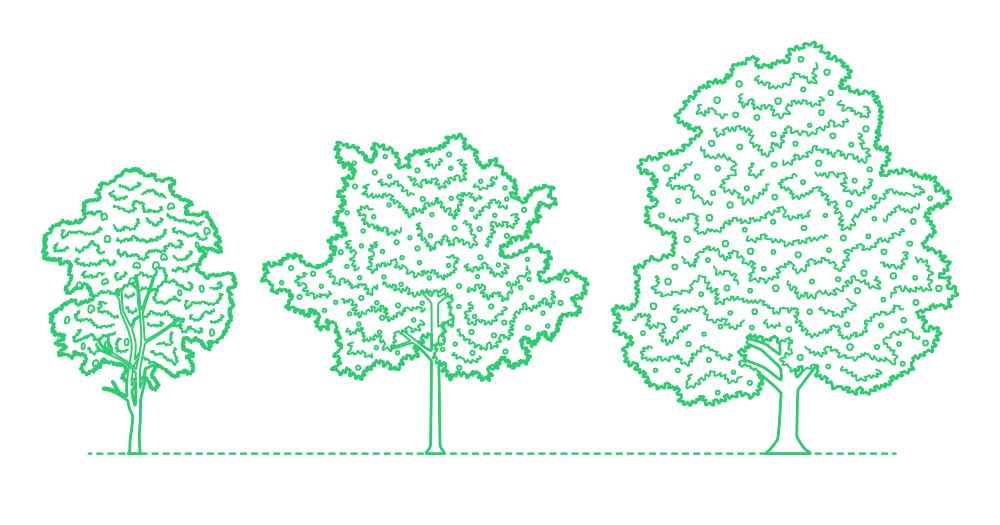
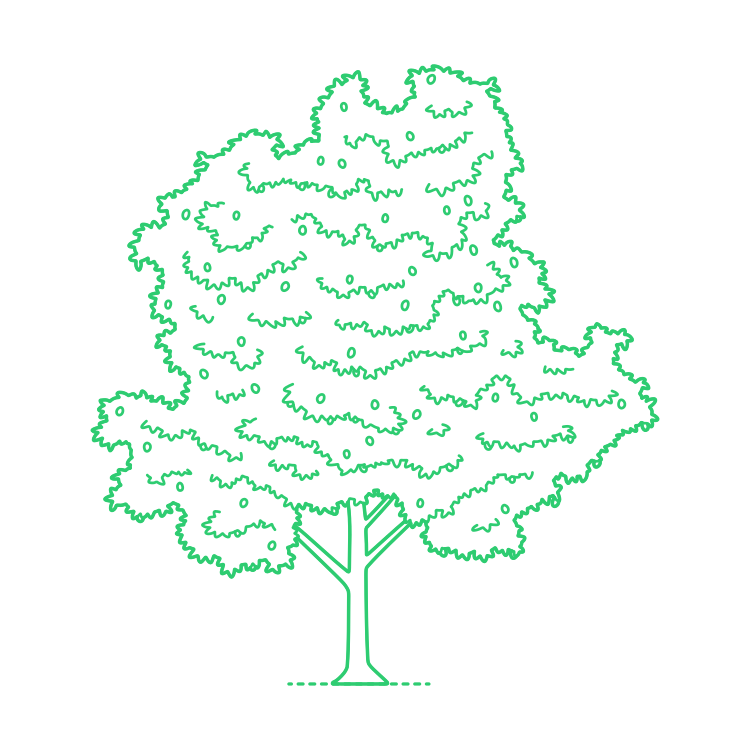
Fruit trees are woody perennial plants that produce edible fruits, typically developing from flowering structures after pollination. Found in temperate, tropical, and subtropical regions, these trees have adapted to a variety of climates and soils over time. Their evolution is closely tied to animal and insect interactions, which help disperse seeds and ensure pollination.
Most fruit trees belong to angiosperms—flowering plants that developed during the Cretaceous period—and they range from small orchard species to towering tropical specimens. Their natural habitats include forests, savannas, and cultivated agricultural land. Commonly grown species include apple, cherry, mango, fig, and citrus trees, each suited to specific environmental conditions. These trees typically require consistent sunlight, seasonal cycles, and well-draining soil to thrive and bear fruit effectively.
Fruit trees have a sturdy trunk that supports a framework of branches and leaves, where most of the energy-producing photosynthesis takes place. From their branches grow flowers, which after pollination, turn into fruits containing seeds. These seeds are the tree’s way of reproducing. The roots anchor the tree and absorb water and nutrients from the soil. Many fruit trees grow in a seasonal rhythm—flowering in spring, producing fruit in summer or fall, and becoming dormant in winter.
Some varieties are deciduous, shedding leaves annually, while others stay green year-round. Growth often depends on the tree's age, health, and environment. Many are grafted onto rootstock to control size and increase productivity. With proper care, fruit trees can live for decades, producing food year after year.

Fruit trees have shaped human culture for thousands of years, providing nourishment, symbolism, and economic value across civilizations. Ancient societies cultivated apples, figs, and olives not just for sustenance but for ritual and trade. In religious texts, fruit trees often represent life, temptation, or abundance. Home gardens frequently include fruit trees for their beauty and utility, offering seasonal harvests and shade.
Orchards support agricultural economies worldwide, with apples, citrus, and cherries among the most commercially significant. Farmers rely on careful pruning, grafting, and crossbreeding to enhance yield and flavor. In urban settings, fruit trees are used in community gardens and permaculture designs. Their presence promotes self-sufficiency, tradition, and connection to nature, bridging daily living with cultural memory and the global food supply chain.
Apple, fig, lemon, and peach trees are among the easiest fruit trees to grow at home. These varieties adapt well to different soil types, tolerate pruning, and are available in dwarf or semi-dwarf forms ideal for small spaces. With proper sunlight, watering, and occasional feeding, they thrive in home gardens or containers. Some, like figs and lemons, also perform well indoors in bright, sunny spots.
Most fruit trees need at least six to eight hours of direct sunlight daily to produce healthy flowers and fruit. Sunlight helps drive the photosynthesis process, which fuels growth and ripening. Without adequate light, trees may grow slowly, produce fewer blooms, or yield underdeveloped fruit. Choose a planting location with full sun exposure to ensure optimal fruiting and overall plant health throughout the growing season.
Pruning fruit trees improves yield by allowing more sunlight and air to reach the inner branches. Start by removing dead, damaged, or crossing limbs, then thin out crowded areas to open the canopy. Shape the tree to encourage strong, outward growth and prevent overproduction of small fruits. Proper timing—typically in late winter or early spring—helps direct energy toward fruit-bearing branches and supports overall plant health.