Star Fruit (Vertical) (Averrhoa carambola)
Star Fruit (Vertical) (Averrhoa carambola)


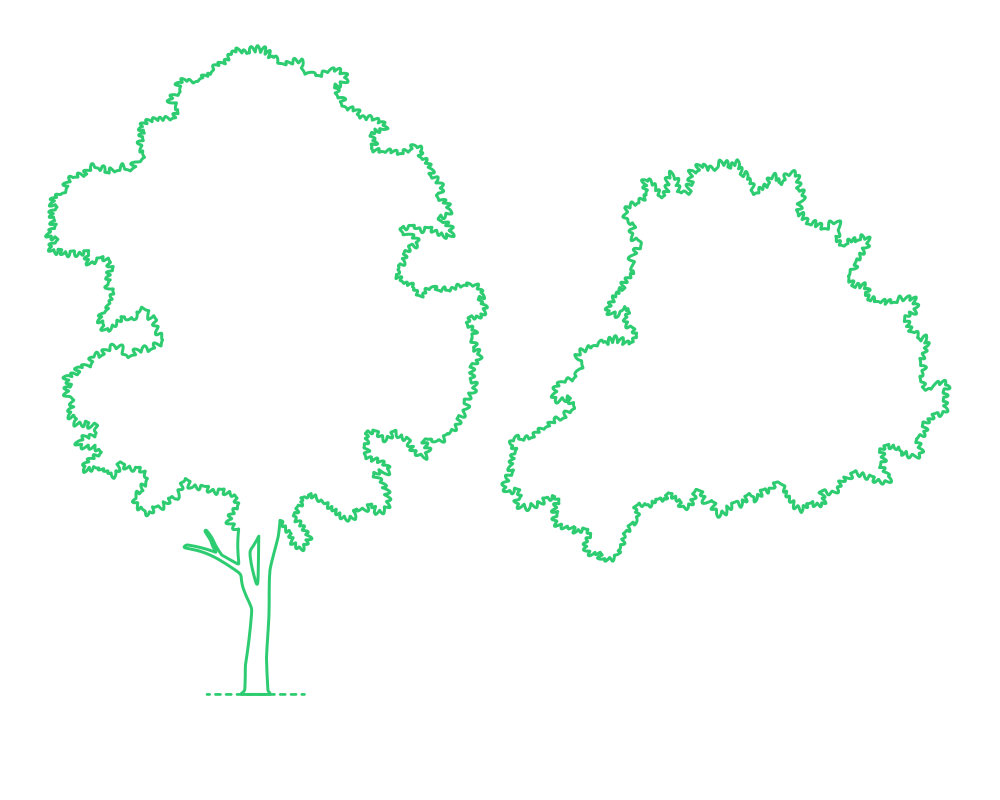
Star fruit (Averrhoa carambola) in a vertical form develops with a narrow upright structure and strongly ascending branching habit that creates a tall tropical silhouette. The canopy remains compressed laterally, with compound foliage concentrated close to the central stems rather than spreading broadly outward. Leaves are composed of soft oval leaflets that fold slightly under changing light conditions, contributing subtle movement and texture to the crown.
Native to Southeast Asia, Averrhoa carambola inhabits humid tropical environments and cultivated orchard systems. The species is biologically notable for its star-shaped fruit structure and prolific flowering behavior in warm climates. In this vertical form, the tree emphasizes upward growth, slender proportion, and concentrated foliage distribution, creating a more columnar and architecturally upright expression of the species.
Star Fruit (Vertical) have a typical cultivated height between 12’-20’ (3.66-6.1 m) and spread diameter of 10’-15’ (3.05-4.57 m). The leaves have a typical length between 6”-12” (15-30 cm).

Star fruit (Averrhoa carambola) in a vertical form develops with a narrow upright structure and strongly ascending branching habit that creates a tall tropical silhouette. The canopy remains compressed laterally, with compound foliage concentrated close to the central stems rather than spreading broadly outward. Leaves are composed of soft oval leaflets that fold slightly under changing light conditions, contributing subtle movement and texture to the crown.
Native to Southeast Asia, Averrhoa carambola inhabits humid tropical environments and cultivated orchard systems. The species is biologically notable for its star-shaped fruit structure and prolific flowering behavior in warm climates. In this vertical form, the tree emphasizes upward growth, slender proportion, and concentrated foliage distribution, creating a more columnar and architecturally upright expression of the species.
Star Fruit (Vertical) have a typical cultivated height between 12’-20’ (3.66-6.1 m) and spread diameter of 10’-15’ (3.05-4.57 m). The leaves have a typical length between 6”-12” (15-30 cm).