
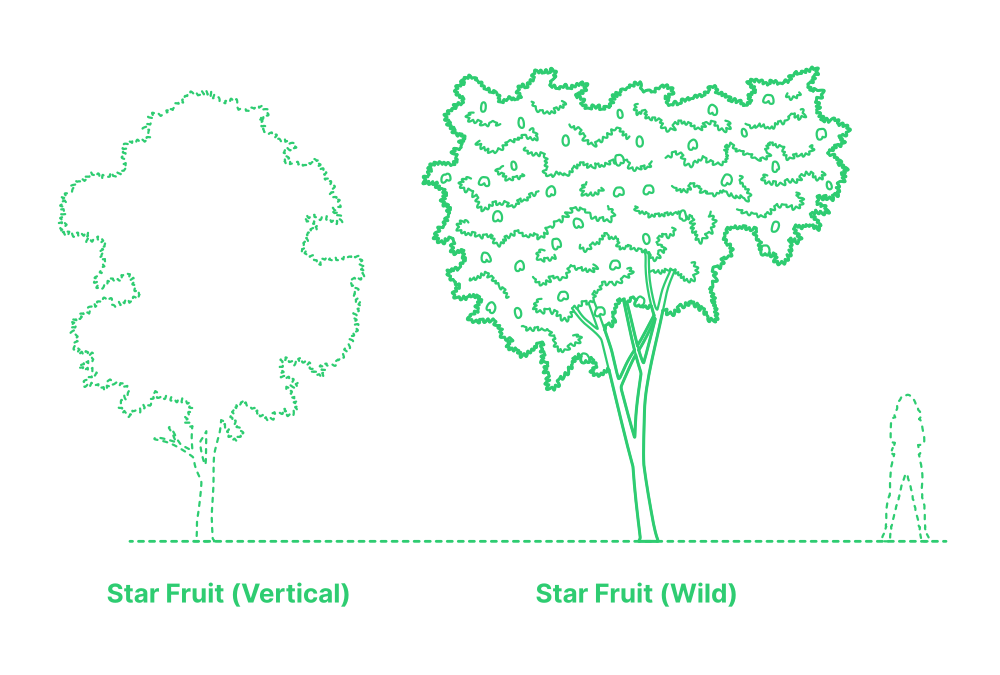

Star fruit (Averrhoa carambola) in a wild form develops with irregular branching, uneven canopy spread, and a loosely organized tropical structure shaped by natural growth conditions. The limbs extend unpredictably, producing asymmetrical foliage clusters and variable branch spacing throughout the crown. Compound leaves emerge in layered formations along twisting stems, while small flowers and ribbed fruits appear sporadically across the canopy.
Native to tropical Southeast Asia, Averrhoa carambola naturally occupies humid lowland environments and disturbed tropical habitats. A defining biological trait is its rapid vegetative growth combined with continuous reproductive cycles in favorable climates. In this wild form, the tree emphasizes organic irregularity, untamed canopy expression, and spontaneous branching behavior, presenting a more naturalized and ecologically driven interpretation of the species than controlled orchard-like forms.
Star Fruit (Wild) have a typical cultivated height between 12’-20’ (3.66-6.1 m) and spread diameter of 10’-15’ (3.05-4.57 m). The leaves have a typical length between 6”-12” (15-30 cm).

Star fruit (Averrhoa carambola) in a wild form develops with irregular branching, uneven canopy spread, and a loosely organized tropical structure shaped by natural growth conditions. The limbs extend unpredictably, producing asymmetrical foliage clusters and variable branch spacing throughout the crown. Compound leaves emerge in layered formations along twisting stems, while small flowers and ribbed fruits appear sporadically across the canopy.
Native to tropical Southeast Asia, Averrhoa carambola naturally occupies humid lowland environments and disturbed tropical habitats. A defining biological trait is its rapid vegetative growth combined with continuous reproductive cycles in favorable climates. In this wild form, the tree emphasizes organic irregularity, untamed canopy expression, and spontaneous branching behavior, presenting a more naturalized and ecologically driven interpretation of the species than controlled orchard-like forms.
Star Fruit (Wild) have a typical cultivated height between 12’-20’ (3.66-6.1 m) and spread diameter of 10’-15’ (3.05-4.57 m). The leaves have a typical length between 6”-12” (15-30 cm).
