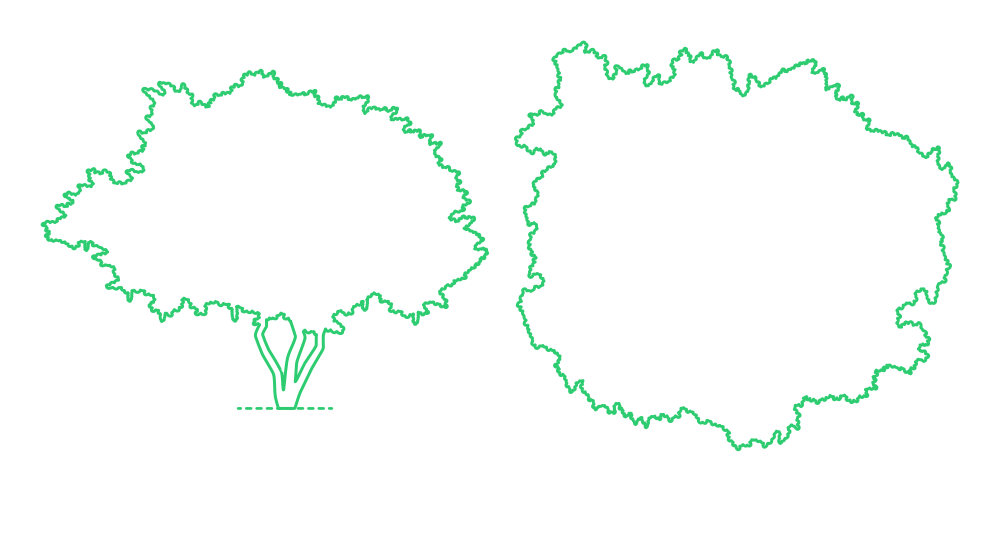
Texas Mountain Laurel (Large) (Dermatophyllum secundiflorum)
Texas Mountain Laurel (Large) (Dermatophyllum secundiflorum)

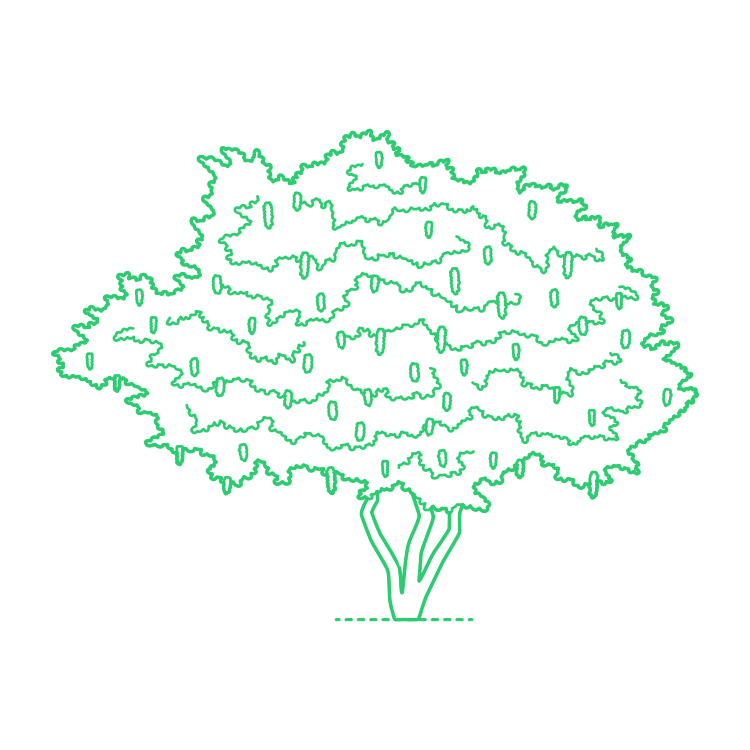
Texas mountain laurel (Dermatophyllum secundiflorum) in a large form is a dense evergreen flowering tree distinguished by its heavy branching structure, glossy compound foliage, and pendulous clusters of intensely fragrant purple blossoms. Thick woody limbs spread outward from the trunk to create a broad rounded canopy with substantial visual mass. The leaves are composed of leathery oval leaflets arranged in paired formations along rigid stems, producing a dark green and highly textured evergreen crown.
During flowering periods, dense grape-like clusters of violet blooms emerge prominently beneath the foliage and release a strong sweet fragrance. Native to the limestone hills, dry canyons, and scrublands of Texas and northern Mexico, Dermatophyllum secundiflorum is highly adapted to drought, heat, and rocky soils. The species is biologically notable for its extremely hard wood and bright red toxic seeds. In large form, the tree emphasizes broad evergreen density, rugged architectural branching, and dramatic floral abundance, creating one of the most sculptural flowering trees associated with arid landscapes.
Texas Mountain Laurel (Large) have a typical overall height between 10’-15’ (3.05-4.57 m) and spread diameter of 15’-20’ (4.57-6.1 m). The leaves have a typical length between 3”-5” (8-13 cm).
Texas mountain laurel (Dermatophyllum secundiflorum) in a large form is a dense evergreen flowering tree distinguished by its heavy branching structure, glossy compound foliage, and pendulous clusters of intensely fragrant purple blossoms. Thick woody limbs spread outward from the trunk to create a broad rounded canopy with substantial visual mass. The leaves are composed of leathery oval leaflets arranged in paired formations along rigid stems, producing a dark green and highly textured evergreen crown.
During flowering periods, dense grape-like clusters of violet blooms emerge prominently beneath the foliage and release a strong sweet fragrance. Native to the limestone hills, dry canyons, and scrublands of Texas and northern Mexico, Dermatophyllum secundiflorum is highly adapted to drought, heat, and rocky soils. The species is biologically notable for its extremely hard wood and bright red toxic seeds. In large form, the tree emphasizes broad evergreen density, rugged architectural branching, and dramatic floral abundance, creating one of the most sculptural flowering trees associated with arid landscapes.
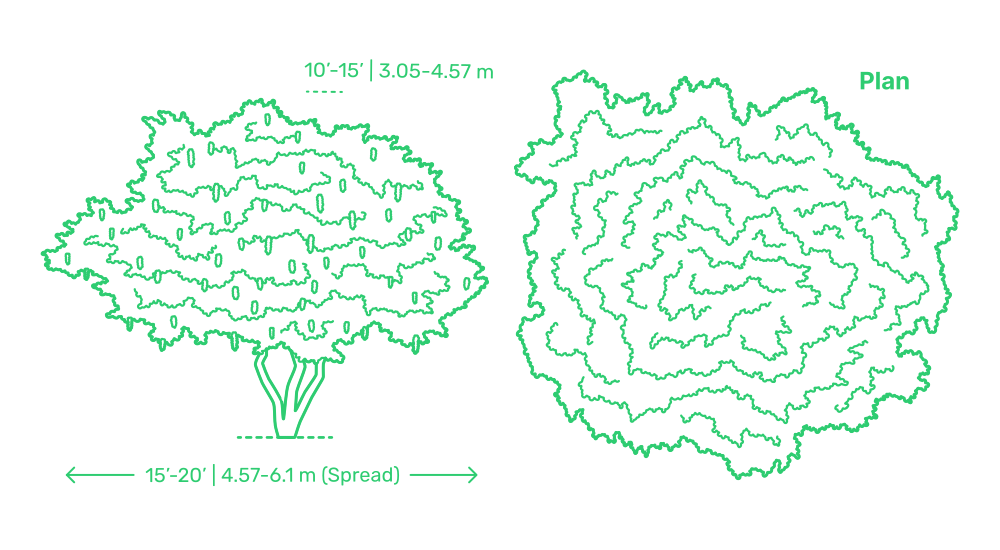
Texas Mountain Laurel (Large) have a typical overall height between 10’-15’ (3.05-4.57 m) and spread diameter of 15’-20’ (4.57-6.1 m). The leaves have a typical length between 3”-5” (8-13 cm).