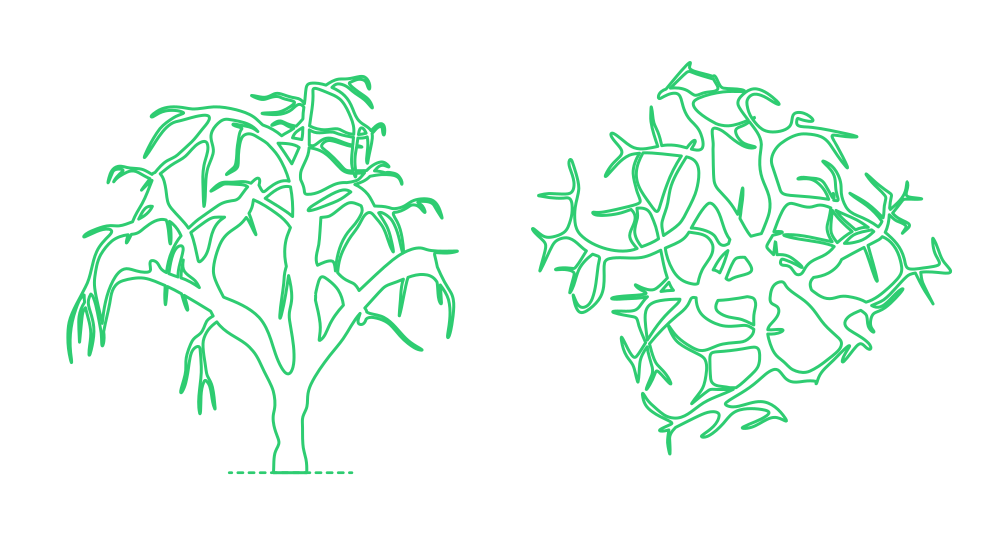
Weeping Willow (Leafless) (Salix babylonica)
Weeping Willow (Leafless) (Salix babylonica)
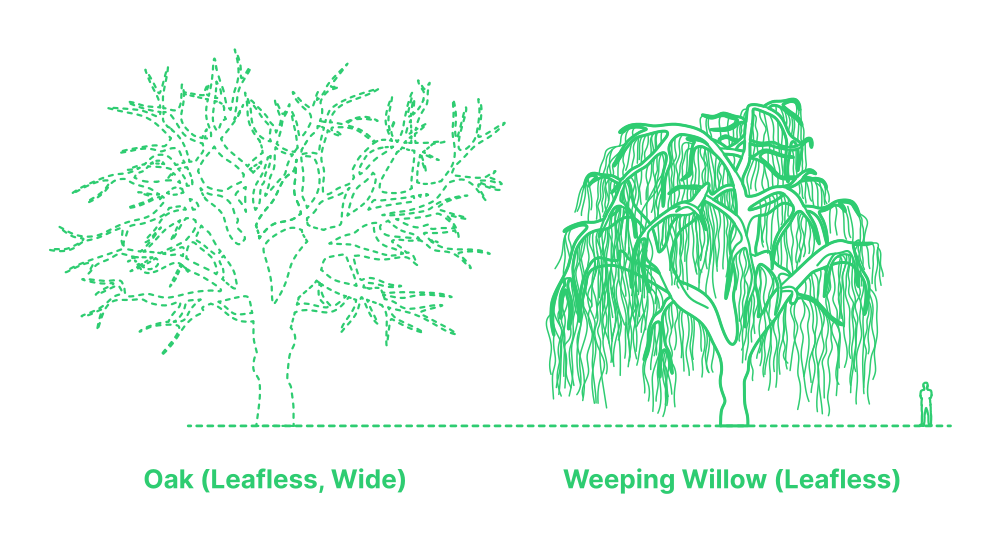

Leafless weeping willows, classified within the genus Salix, are deciduous trees defined by long, slender branches that descend in cascading arcs from elevated limbs. In the absence of leaves, the tree’s distinctive drooping architecture becomes fully exposed, creating a flowing, curtain-like structure. The trunk often divides early, supporting an umbrella-shaped framework from which flexible branchlets hang downward.
Salix species are strongly associated with riparian habitats, wetlands, and other moisture-rich environments across temperate regions of the world. Biologically, the genus is notable for rapid growth, high water tolerance, and the ability to regenerate from broken stems. In leafless condition, weeping willows emphasize flexibility, responsiveness to water dynamics, and an evolutionary adaptation to environments shaped by seasonal flooding and shifting soils.
Weeping Willow (Leafless) has a typical overall height between 30’-50’ (9.14-15.24 m) and spread diameter of 30’-50’ (9.14-15.24 m).
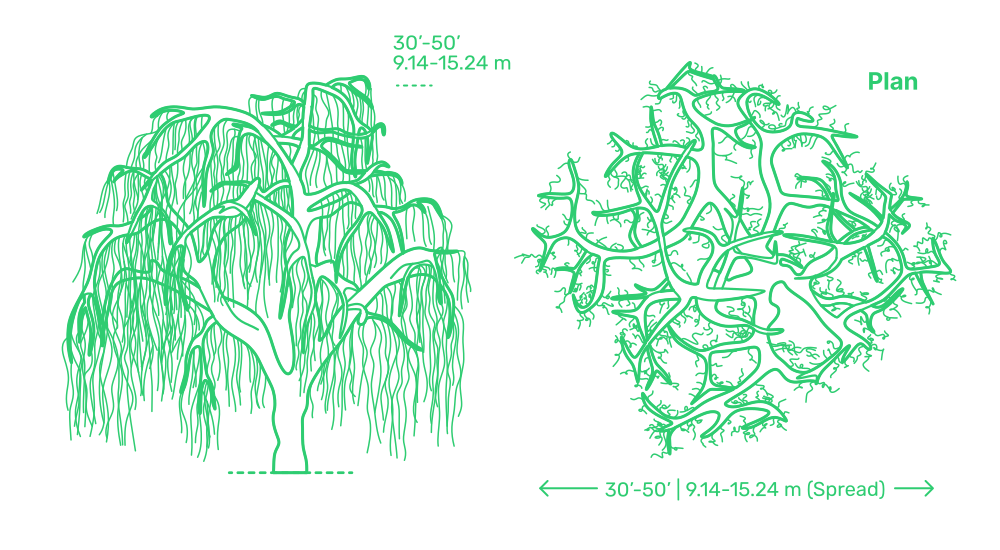
Leafless weeping willows, classified within the genus Salix, are deciduous trees defined by long, slender branches that descend in cascading arcs from elevated limbs. In the absence of leaves, the tree’s distinctive drooping architecture becomes fully exposed, creating a flowing, curtain-like structure. The trunk often divides early, supporting an umbrella-shaped framework from which flexible branchlets hang downward.
Salix species are strongly associated with riparian habitats, wetlands, and other moisture-rich environments across temperate regions of the world. Biologically, the genus is notable for rapid growth, high water tolerance, and the ability to regenerate from broken stems. In leafless condition, weeping willows emphasize flexibility, responsiveness to water dynamics, and an evolutionary adaptation to environments shaped by seasonal flooding and shifting soils.
Weeping Willow (Leafless) has a typical overall height between 30’-50’ (9.14-15.24 m) and spread diameter of 30’-50’ (9.14-15.24 m).