The Baird’s Tapir (Tapirus bairdii) is one of the most versatile land mammals in the family Tapiridae. In its native home of Central and South America, it is considered the largest animal. Its close relatives are horses, zebras, and donkeys. It has a tube-like nose made of soft tissues for snatching leaves and stems. The body is covered in dark brown fur and white patches or cream color patches on the throat, tip or ears, and face. It can swim, is agile on land, and can even stand on steep slopes untroubled. This herbivore can be found in grasslands, distributed forests, and rugged mountains. It is solitary with females giving birth to young ones after a 13-month gestation period.
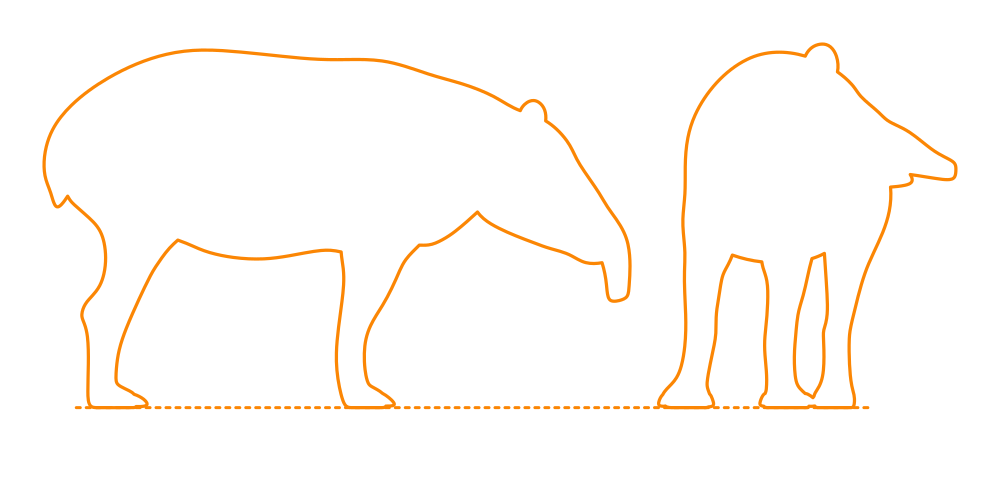
Baird's Tapirs have a total body length between 70.9”-98.4” (180-250 cm), standing shoulder height of 39.4”-51.2” (100-130 cm), and body width of 16.5”-22.4” (42-57 cm). The typical weight of the Baird's Tapir is in the range of 331-661 lb (150-300 kg). Baird's Tapir have lifespans between 20-30 years.

The Baird’s Tapir (Tapirus bairdii) is one of the most versatile land mammals in the family Tapiridae. In its native home of Central and South America, it is considered the largest animal. Its close relatives are horses, zebras, and donkeys. It has a tube-like nose made of soft tissues for snatching leaves and stems. The body is covered in dark brown fur and white patches or cream color patches on the throat, tip or ears, and face. It can swim, is agile on land, and can even stand on steep slopes untroubled. This herbivore can be found in grasslands, distributed forests, and rugged mountains. It is solitary with females giving birth to young ones after a 13-month gestation period.
Baird's Tapirs have a total body length between 70.9”-98.4” (180-250 cm), standing shoulder height of 39.4”-51.2” (100-130 cm), and body width of 16.5”-22.4” (42-57 cm). The typical weight of the Baird's Tapir is in the range of 331-661 lb (150-300 kg). Baird's Tapir have lifespans between 20-30 years.