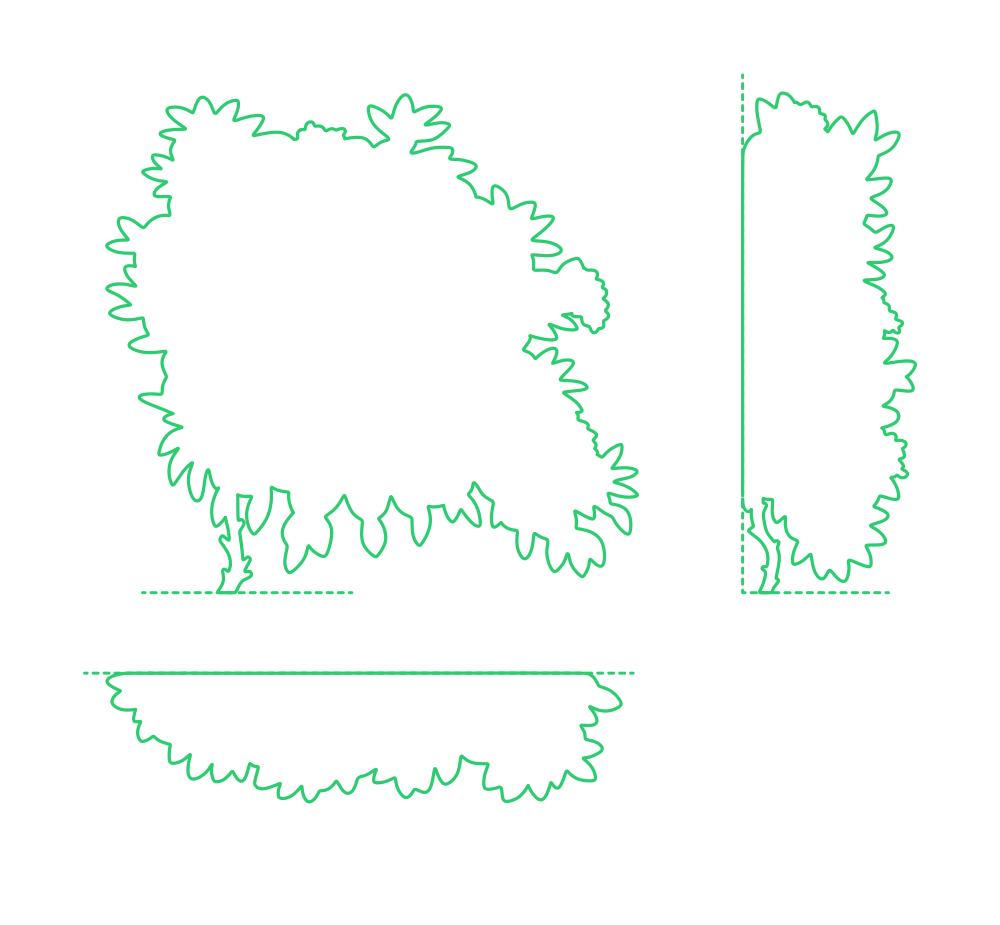
Climbing Hydrangea (Small) (Hydrangea anomala)
Climbing Hydrangea (Small) (Hydrangea anomala)
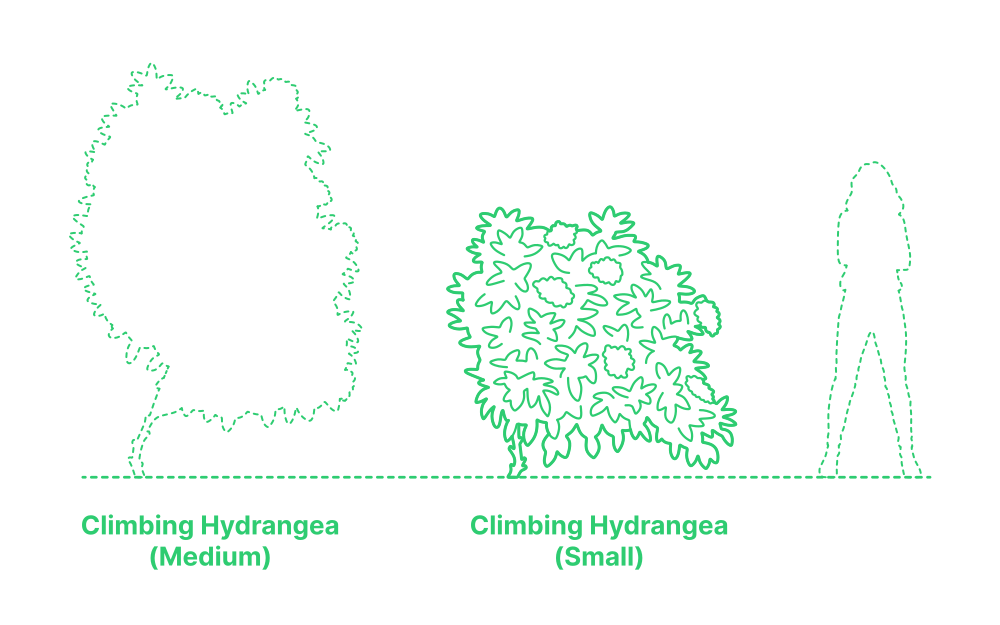

Climbing hydrangea (Hydrangea anomala) in a small form develops as a young or early-stage woody vine with slender stems and limited branching. The plant produces small, oval leaves arranged oppositely along the stems, creating a light and open foliage pattern. Aerial rootlets begin to form along the stems, allowing the vine to attach to vertical surfaces even at this reduced scale.
Flowering may be minimal or absent, as reproductive development typically increases with maturity. Native to East Asia, Hydrangea anomala naturally grows in forested environments where it climbs along trees and shaded rock faces. The species is biologically notable for its ability to transition from slow initial growth to strong vertical expansion. In its small form, the plant emphasizes early attachment behavior, developing structure, and the foundational traits of a climbing vine before reaching full maturity.
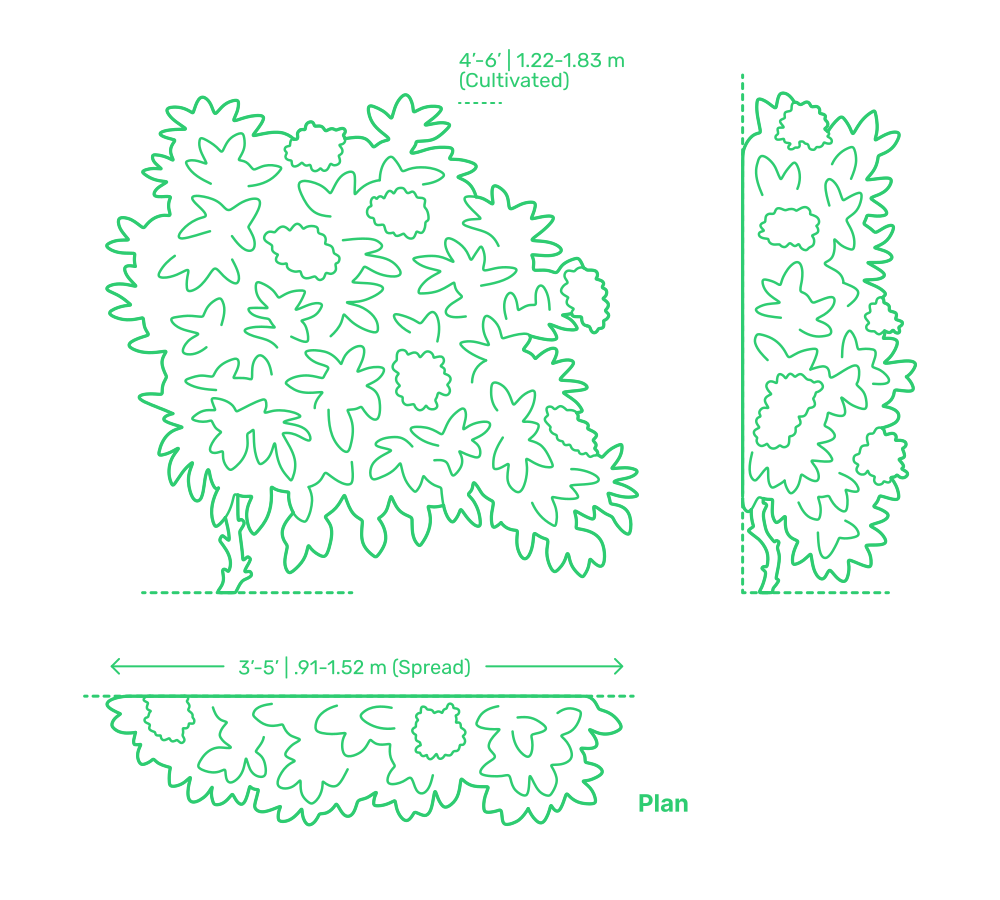
Climbing Hydrangea (Small) has a typical cultivated vine length/height between 4’-6’ (1.22-1.83 m) and spread of 3’-5’ (.91-1.52 m). The leaf length is between 2”-5” (5-13 cm).
Climbing hydrangea (Hydrangea anomala) in a small form develops as a young or early-stage woody vine with slender stems and limited branching. The plant produces small, oval leaves arranged oppositely along the stems, creating a light and open foliage pattern. Aerial rootlets begin to form along the stems, allowing the vine to attach to vertical surfaces even at this reduced scale.
Flowering may be minimal or absent, as reproductive development typically increases with maturity. Native to East Asia, Hydrangea anomala naturally grows in forested environments where it climbs along trees and shaded rock faces. The species is biologically notable for its ability to transition from slow initial growth to strong vertical expansion. In its small form, the plant emphasizes early attachment behavior, developing structure, and the foundational traits of a climbing vine before reaching full maturity.
Climbing Hydrangea (Small) has a typical cultivated vine length/height between 4’-6’ (1.22-1.83 m) and spread of 3’-5’ (.91-1.52 m). The leaf length is between 2”-5” (5-13 cm).