

The Common Sandpiper (Actitis hypoleucos) is a small Palearctic shorebird and a sister species of the Spotted Sandpiper. They like to breed in temperate and subtropical Europe and Asia, and during migration season the species travels to Africa, southern Asia, and Australia. Using sight, they forage for food on the ground or in shallow water, and they mainly eat insects, crustaceans, and other invertebrates. They are characterized by their gray-brown coloration with white underparts, short and dark-yellowish legs and feet, and a pale bill with a dark tip. In the winter they have a duller plumage.
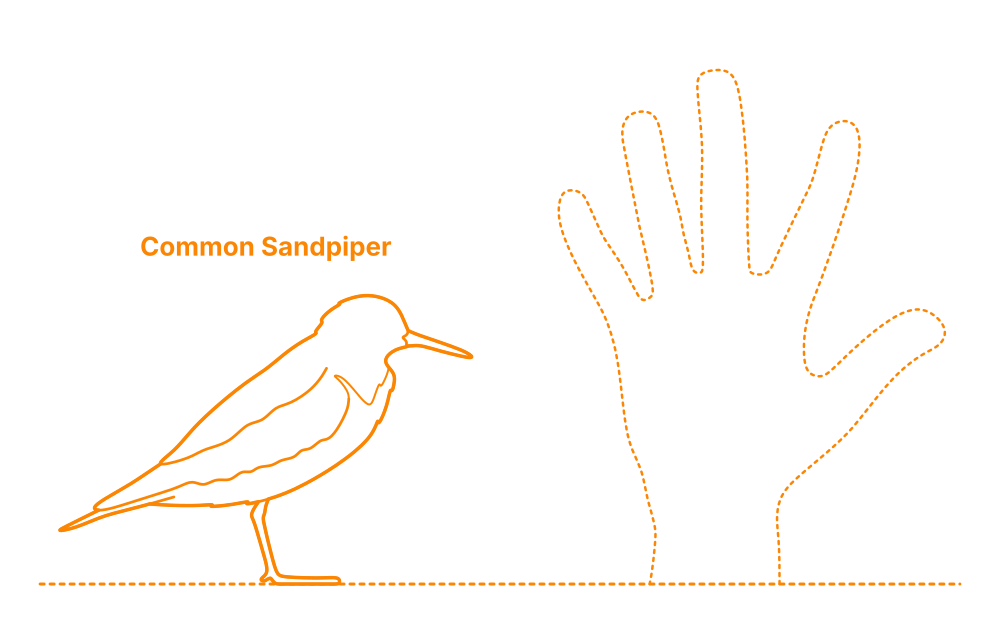
The Common Sandpiper has a wingspan in the range of 13.8”-15.75” (35-40 cm) and total weight of .09-.13 lb (.04-.06 kg). The body of the Common Sandpiper has an overall length between 7.5”-9.4” (19-24 cm), body width of 2.2”-2.75” (5.5-7 cm), and standing height of roughly 4.5”-5.7” (11.5-14.5 cm). The typical lifespan of the Common Sandpiper is between 10-15 years.

The Common Sandpiper (Actitis hypoleucos) is a small Palearctic shorebird and a sister species of the Spotted Sandpiper. They like to breed in temperate and subtropical Europe and Asia, and during migration season the species travels to Africa, southern Asia, and Australia. Using sight, they forage for food on the ground or in shallow water, and they mainly eat insects, crustaceans, and other invertebrates. They are characterized by their gray-brown coloration with white underparts, short and dark-yellowish legs and feet, and a pale bill with a dark tip. In the winter they have a duller plumage.
The Common Sandpiper has a wingspan in the range of 13.8”-15.75” (35-40 cm) and total weight of .09-.13 lb (.04-.06 kg). The body of the Common Sandpiper has an overall length between 7.5”-9.4” (19-24 cm), body width of 2.2”-2.75” (5.5-7 cm), and standing height of roughly 4.5”-5.7” (11.5-14.5 cm). The typical lifespan of the Common Sandpiper is between 10-15 years.

