
The Giant Otter, Pteronura brasiliensis, is a South American carnivorous mammal that lives mostly in and along the Amazon River and in the Pantanal. Atypical of mustelids, it is a social species that live in family groups of three to eight members. They are the noisiest otter species, and are active exclusively during daylight hours. The giant otters’ adaptations are suitable to an amphibious lifestyle with dense fur, a wing-like tail, and webbed feet. Its diet consists of mostly fish, particularly characins and catfish, but it may also eat crabs, turtles, snakes, and small caiman.
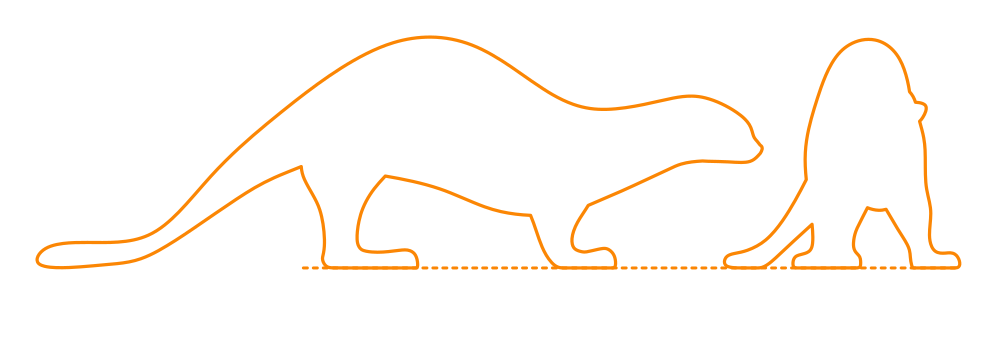
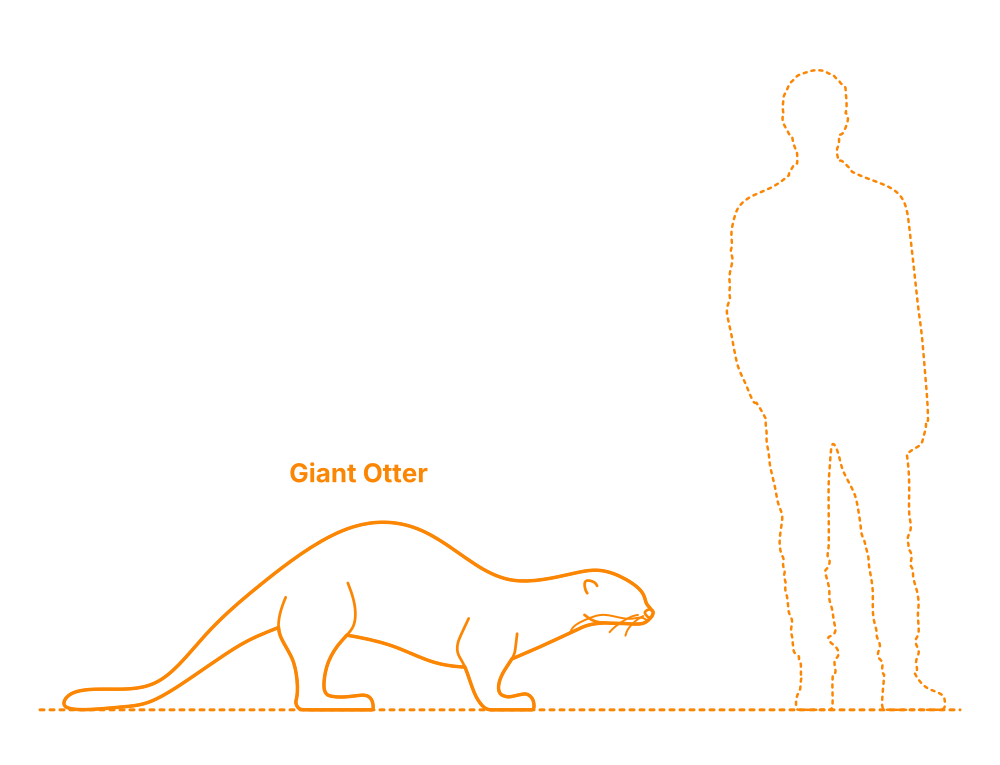
The Giant Otter has a body length in the range of 33.9”-47.2” (86-120 cm) and total weight of 48.5-75 lb (22-34 kg). Giant Otters have a shoulder height between 13.8”-19.7” (35-50 cm), body width of 8.7”-11.8” (22-30 cm), and tail length of 17.7”-25.6” (45-65 cm). The typical lifespan of the Giant Otter is between 8-20 years.

The Giant Otter, Pteronura brasiliensis, is a South American carnivorous mammal that lives mostly in and along the Amazon River and in the Pantanal. Atypical of mustelids, it is a social species that live in family groups of three to eight members. They are the noisiest otter species, and are active exclusively during daylight hours. The giant otters’ adaptations are suitable to an amphibious lifestyle with dense fur, a wing-like tail, and webbed feet. Its diet consists of mostly fish, particularly characins and catfish, but it may also eat crabs, turtles, snakes, and small caiman.
The Giant Otter has a body length in the range of 33.9”-47.2” (86-120 cm) and total weight of 48.5-75 lb (22-34 kg). Giant Otters have a shoulder height between 13.8”-19.7” (35-50 cm), body width of 8.7”-11.8” (22-30 cm), and tail length of 17.7”-25.6” (45-65 cm). The typical lifespan of the Giant Otter is between 8-20 years.