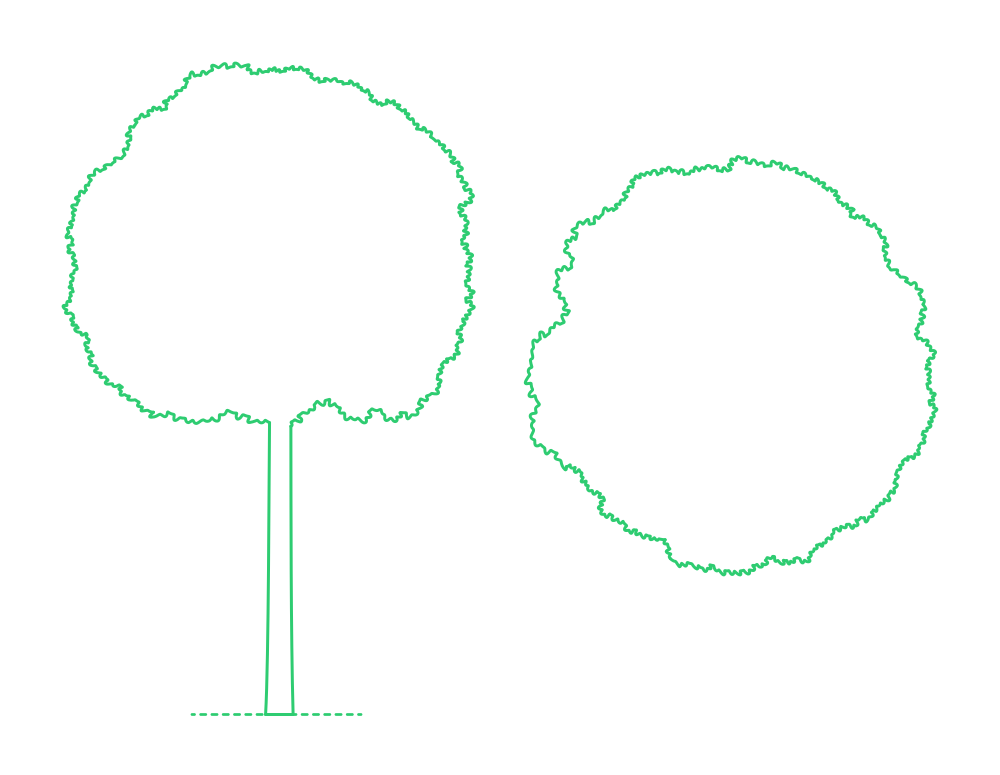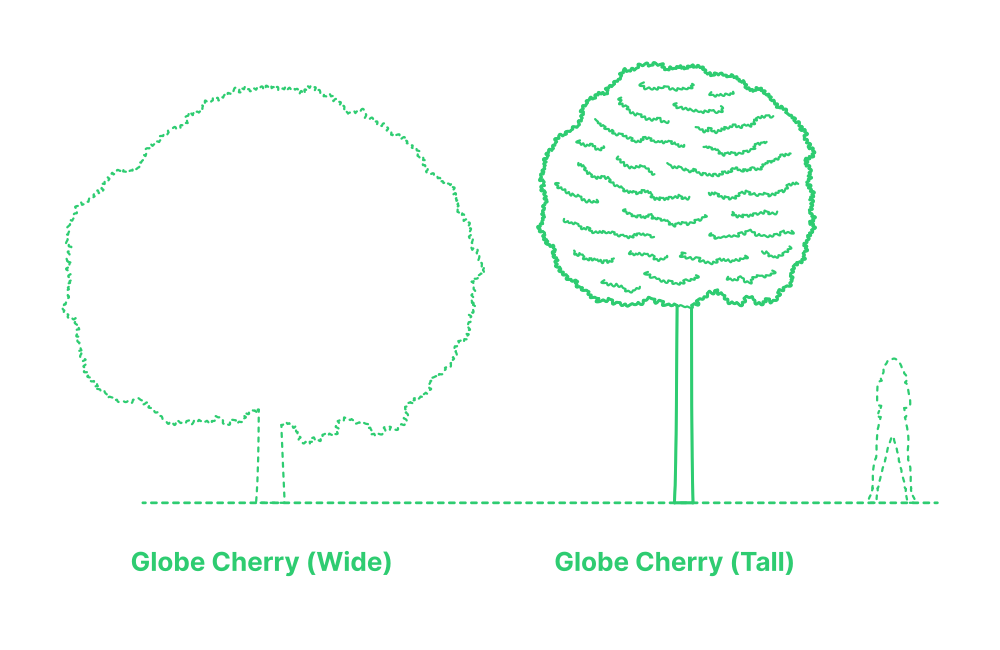
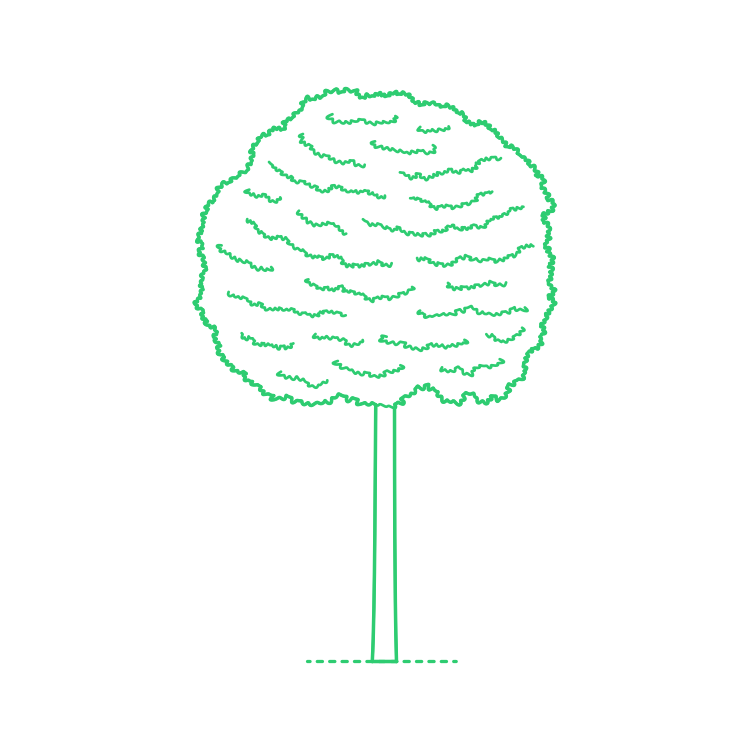
Globe cherry (Prunus fruticosa) in a tall form develops as a compact deciduous tree-like shrub with upright branching and a relatively narrow canopy. The stems rise vertically before dividing into finer branchlets covered in small oval leaves with serrated edges. Seasonal blossoms appear densely across the branches, creating clusters of pale flowers that contrast against the dark woody structure.
Native to central and eastern Europe as well as parts of Asia, Prunus fruticosa commonly inhabits grasslands, rocky slopes, and open woodland environments. The species is biologically notable for its cold tolerance and dense fruiting habit, producing small cherries consumed by birds and mammals. In this tall form, the plant emphasizes vertical branching rhythm and compact upward growth while maintaining the species’ characteristic dense flowering and fine-textured deciduous canopy.
Globe Cherry (Tall) have a typical overall height between 10’-20’ (3.05-6.1 m) and spread diameter of 10’-20’ (3.05-6.1 m). The leaves have a typical length between 1”-2” (3-5 cm).
Globe cherry (Prunus fruticosa) in a tall form develops as a compact deciduous tree-like shrub with upright branching and a relatively narrow canopy. The stems rise vertically before dividing into finer branchlets covered in small oval leaves with serrated edges. Seasonal blossoms appear densely across the branches, creating clusters of pale flowers that contrast against the dark woody structure.
Native to central and eastern Europe as well as parts of Asia, Prunus fruticosa commonly inhabits grasslands, rocky slopes, and open woodland environments. The species is biologically notable for its cold tolerance and dense fruiting habit, producing small cherries consumed by birds and mammals. In this tall form, the plant emphasizes vertical branching rhythm and compact upward growth while maintaining the species’ characteristic dense flowering and fine-textured deciduous canopy.
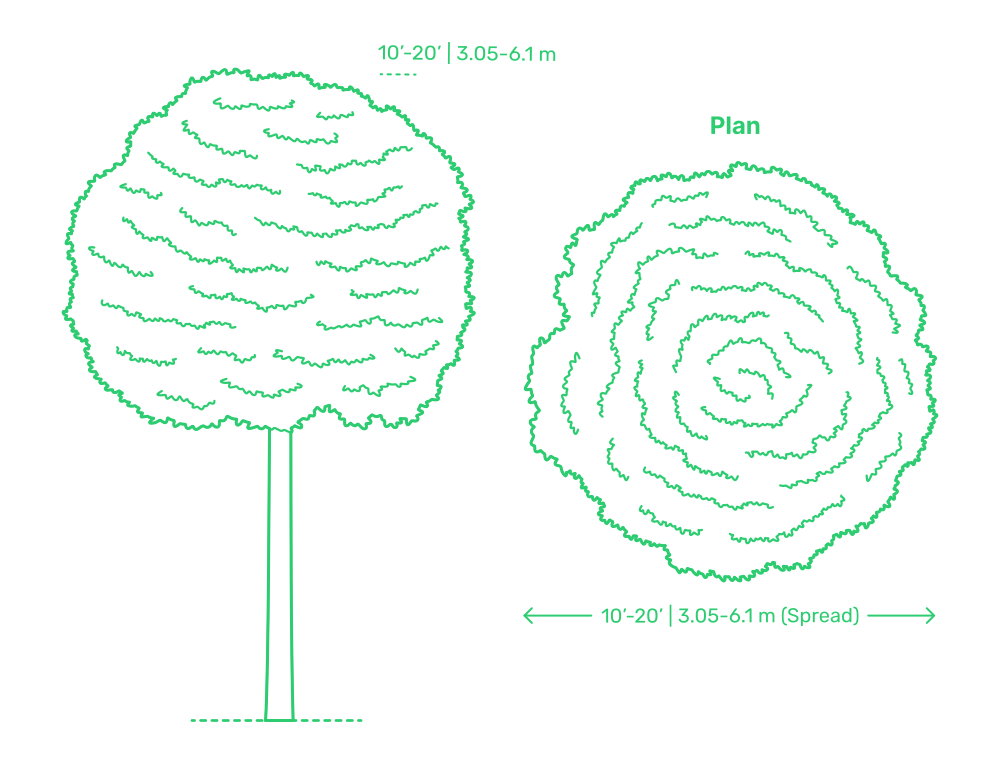
Globe Cherry (Tall) have a typical overall height between 10’-20’ (3.05-6.1 m) and spread diameter of 10’-20’ (3.05-6.1 m). The leaves have a typical length between 1”-2” (3-5 cm).