The Wandering Albatross (Diomedea exulans) also known as the snowy albatross, is a seabird with white plumage. Wandering albatrosses have the largest wingspan of any bird ranging from 98”-138” (250–350 cm). They can be found in all oceans except for the Atlantic Ocean. They spend most of their lives in flight and almost have no natural predators. Some have been known to circumnavigate the Southern Ocean. Wandering albatrosses make shallow dives to feed on cephalopods, small fish, and crustaceans. Wandering albatrosses are considered vulnerable to extinction.
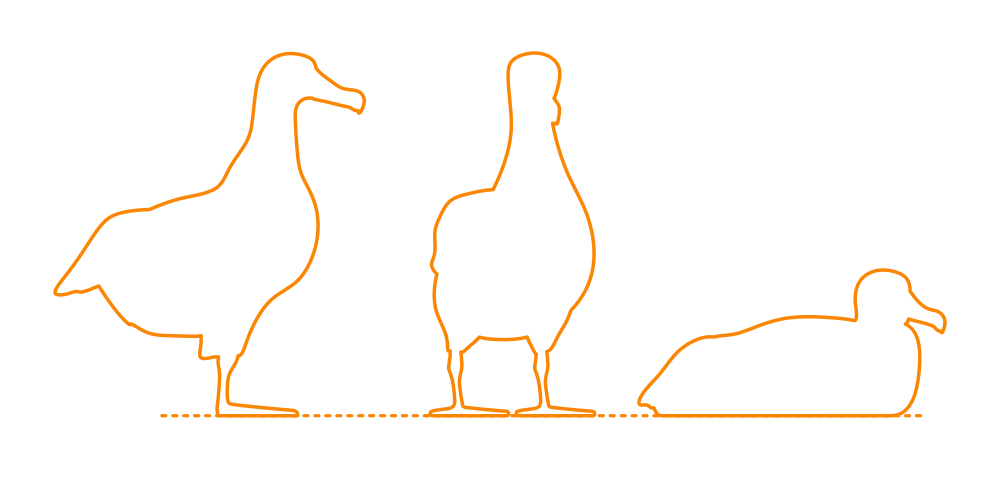
The Wandering Albatross has a wingspan in the range of 98”-138” (250–350 cm) and total weight of 13-28 lb (5.9-12.7 kg). The body of the Wandering Albatross has an overall length between 42.1”-53.1” (107-135 cm), body width of 16.3”-20.5” (41.5-52 cm), and standing height of roughly 39.4”-49.6” (100-126 cm). The typical lifespan of the Wandering Albatross is between 50-80 years.

The Wandering Albatross (Diomedea exulans) also known as the snowy albatross, is a seabird with white plumage. Wandering albatrosses have the largest wingspan of any bird ranging from 98”-138” (250–350 cm). They can be found in all oceans except for the Atlantic Ocean. They spend most of their lives in flight and almost have no natural predators. Some have been known to circumnavigate the Southern Ocean. Wandering albatrosses make shallow dives to feed on cephalopods, small fish, and crustaceans. Wandering albatrosses are considered vulnerable to extinction.
The Wandering Albatross has a wingspan in the range of 98”-138” (250–350 cm) and total weight of 13-28 lb (5.9-12.7 kg). The body of the Wandering Albatross has an overall length between 42.1”-53.1” (107-135 cm), body width of 16.3”-20.5” (41.5-52 cm), and standing height of roughly 39.4”-49.6” (100-126 cm). The typical lifespan of the Wandering Albatross is between 50-80 years.