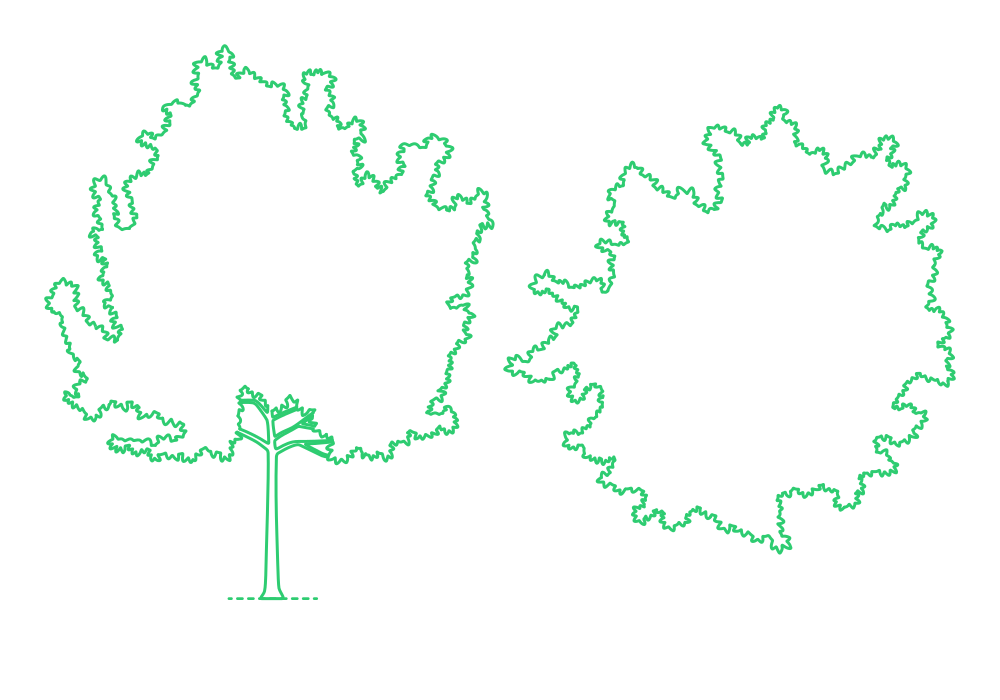
Yellow pear (Pyrus nivalis) in a large form develops as a broad deciduous tree with a rounded canopy, sturdy branching framework, and silvery-toned foliage. The leaves are oval and lightly textured, often displaying a muted gray-green coloration that distinguishes the species from many other pears. Branches extend outward from a strong trunk, forming a substantial crown with layered seasonal foliage and flowering clusters.
Native to southern and central Europe, Pyrus nivalis commonly inhabits dry slopes, open woodlands, and Mediterranean-influenced landscapes. The species is biologically notable for its drought tolerance and production of small yellowish pear fruits. In large form, the tree emphasizes canopy breadth, textured deciduous foliage, and rugged orchard-like branching architecture, creating a visually soft yet structurally resilient silhouette among temperate fruit trees.
Yellow Pear (Large) have a typical cultivated height between 15’-20’ (4.57-6.1 m) and spread diameter of 10’-15’ (3.05-4.57 m). The leaves have a typical length between 2”-3” (5-8 cm).
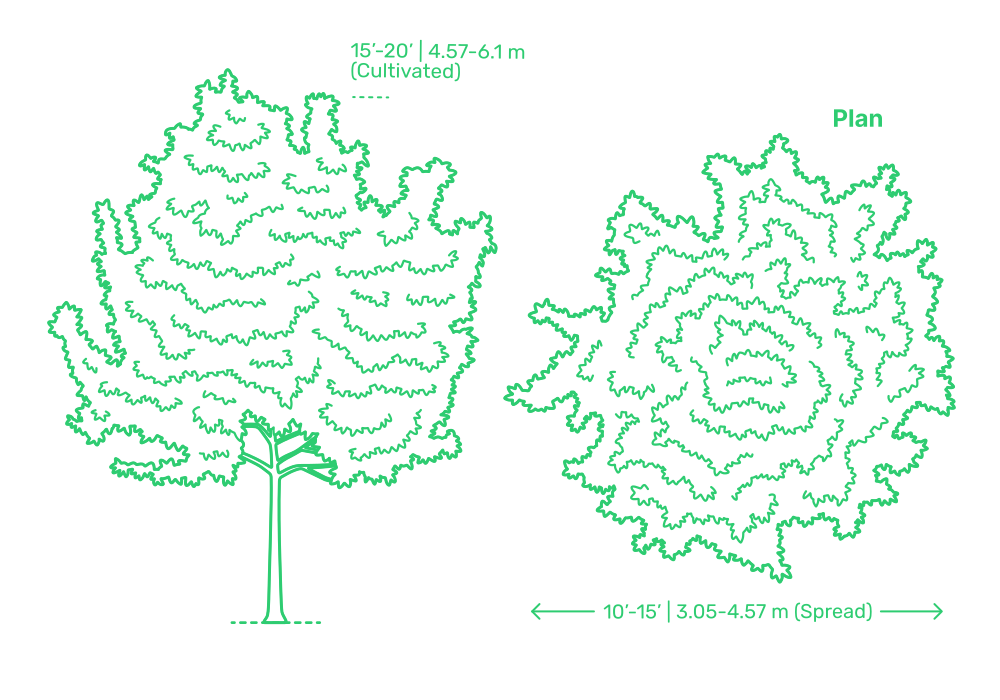
Yellow pear (Pyrus nivalis) in a large form develops as a broad deciduous tree with a rounded canopy, sturdy branching framework, and silvery-toned foliage. The leaves are oval and lightly textured, often displaying a muted gray-green coloration that distinguishes the species from many other pears. Branches extend outward from a strong trunk, forming a substantial crown with layered seasonal foliage and flowering clusters.
Native to southern and central Europe, Pyrus nivalis commonly inhabits dry slopes, open woodlands, and Mediterranean-influenced landscapes. The species is biologically notable for its drought tolerance and production of small yellowish pear fruits. In large form, the tree emphasizes canopy breadth, textured deciduous foliage, and rugged orchard-like branching architecture, creating a visually soft yet structurally resilient silhouette among temperate fruit trees.
Yellow Pear (Large) have a typical cultivated height between 15’-20’ (4.57-6.1 m) and spread diameter of 10’-15’ (3.05-4.57 m). The leaves have a typical length between 2”-3” (5-8 cm).