
The European Mink, Mustela lutreola, is a European native semiaquatic mustelid species. It is also known as the Russian mink or the Eurasian mink. It is slightly smaller with a less specialized skull than that of the American mink, but despite a similar name, the two species are not closely related. The European mink lives in forest streams that are not likely to freeze in winter, and they primarily feed on voles, frogs, fish, crustaceans, and insects. Due to climate change, habitat destruction, decline in crayfish numbers, and competition with the American mink, the European mink is classified as a critically endangered species by the IUCN.
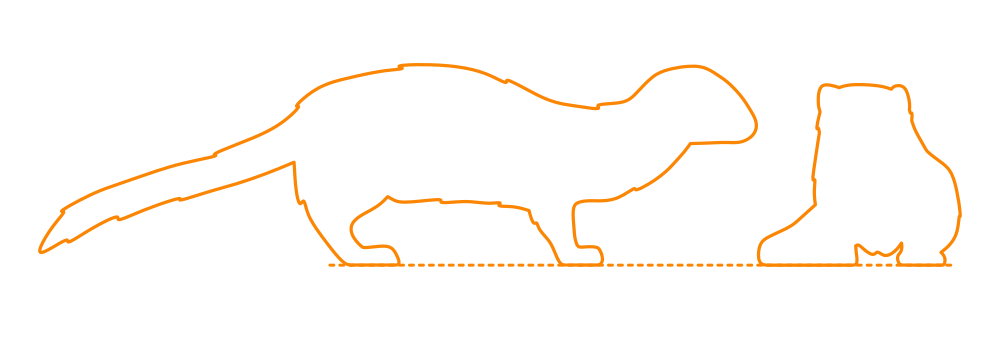
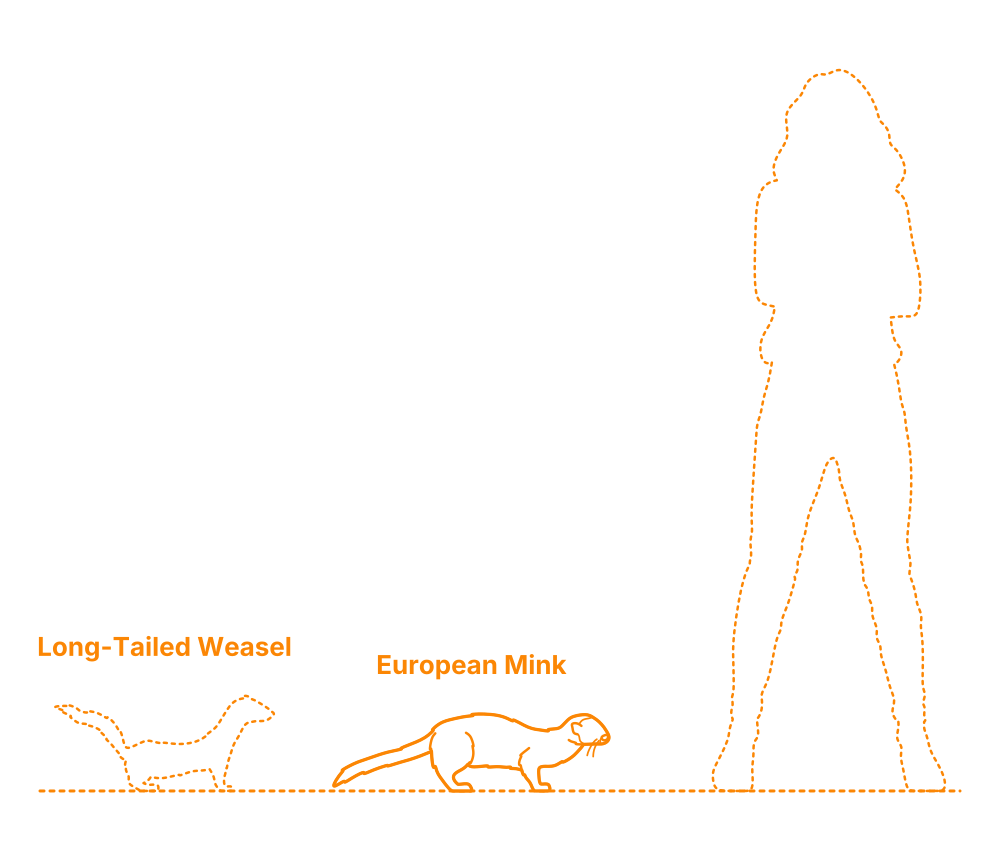
The European Mink has a body length in the range of 14.2”-16.9” (36-43 cm) and total weight of 1.2-1.8 lb (.55-.8 kg). European Minks have a shoulder height between 5.5”-6.7” (14-17 cm), body width of 3.9”-4.7” (10-12 cm), and tail length of 5.9”-8.7” (15-22 cm). The typical lifespan of the European Mink is between 6-10 years.

The European Mink, Mustela lutreola, is a European native semiaquatic mustelid species. It is also known as the Russian mink or the Eurasian mink. It is slightly smaller with a less specialized skull than that of the American mink, but despite a similar name, the two species are not closely related. The European mink lives in forest streams that are not likely to freeze in winter, and they primarily feed on voles, frogs, fish, crustaceans, and insects. Due to climate change, habitat destruction, decline in crayfish numbers, and competition with the American mink, the European mink is classified as a critically endangered species by the IUCN.
The European Mink has a body length in the range of 14.2”-16.9” (36-43 cm) and total weight of 1.2-1.8 lb (.55-.8 kg). European Minks have a shoulder height between 5.5”-6.7” (14-17 cm), body width of 3.9”-4.7” (10-12 cm), and tail length of 5.9”-8.7” (15-22 cm). The typical lifespan of the European Mink is between 6-10 years.