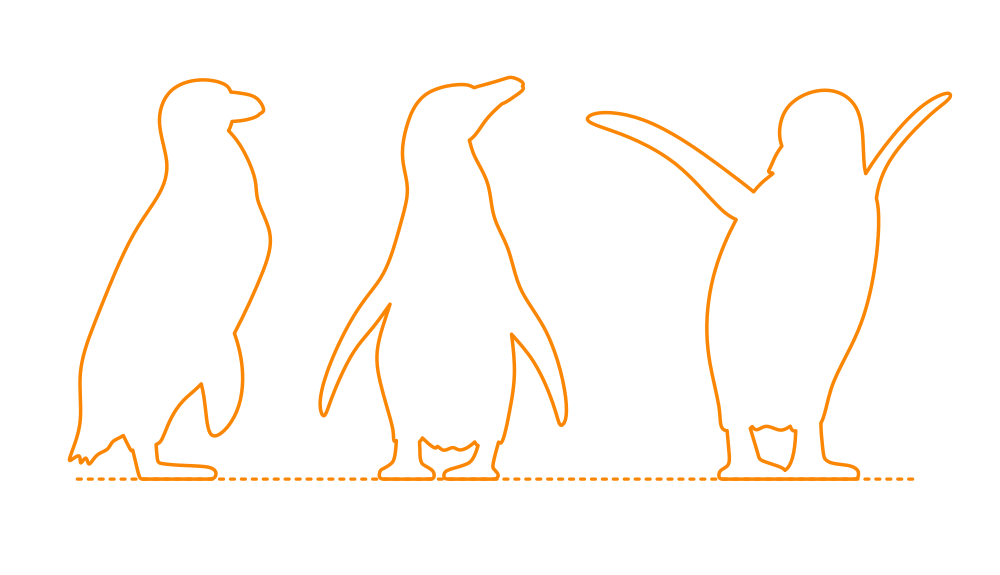
The migrant Humboldt Penguin (Spheniscus humboldti) got its name from the German explorer Alexander von Humboldt. It is medium-sized and endemic to South America, especially on the western side. Male and females are differentiated by head width, and bill length as males possess longer bills. The feathers on the chest are white, and those on the back are blackish-grey. The head is black but with white stripes under the eyes. These stripes also wrap around the head and connect at the chin. It is differentiated from other species that it co-exists with, like the Magellan penguin by a solid, black breast band. This feature also separates it from juveniles that have no breast-bands. The Humboldt penguin shows different vocalizations for communicating in different ways.
Humboldt Penguins have an overall height between 24”-28” (61-71 cm) and body width of 7.9”-9.4” (20-24 cm). The typical weight of the Humboldt Penguin is in the range of 8-13 lb (3.6-6 kg). Humboldt Penguins have lifespans between 10-20 years.

The migrant Humboldt Penguin (Spheniscus humboldti) got its name from the German explorer Alexander von Humboldt. It is medium-sized and endemic to South America, especially on the western side. Male and females are differentiated by head width, and bill length as males possess longer bills. The feathers on the chest are white, and those on the back are blackish-grey. The head is black but with white stripes under the eyes. These stripes also wrap around the head and connect at the chin. It is differentiated from other species that it co-exists with, like the Magellan penguin by a solid, black breast band. This feature also separates it from juveniles that have no breast-bands. The Humboldt penguin shows different vocalizations for communicating in different ways.
Humboldt Penguins have an overall height between 24”-28” (61-71 cm) and body width of 7.9”-9.4” (20-24 cm). The typical weight of the Humboldt Penguin is in the range of 8-13 lb (3.6-6 kg). Humboldt Penguins have lifespans between 10-20 years.