Bearded seals are classified under the family Phocidae and are among the many known largest seals inhabiting the Arctic polar regions. They are identified by small heads, large bodies, dark grey or greyish-brown color, square fore-flippers, preference for ice floes, and very distinguishing whiskers used for detecting or feeling prey on the soft bottom sediments. Female bearded seals are generally larger than males, however, either sex shares some resemblances such as skin color. Bearded seals live in solitary and invest most of their time relaxing on sea ice or foliage for food along the shallow waters of the ocean.
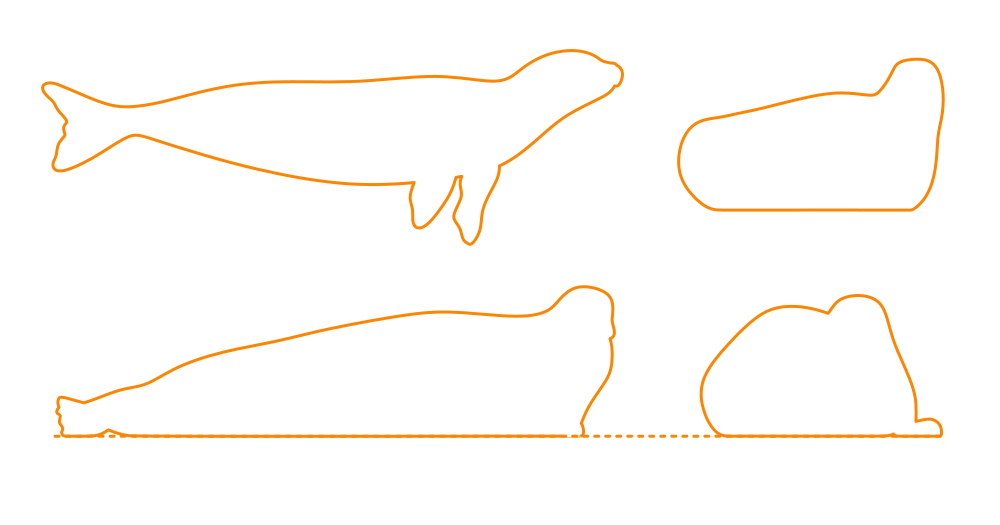
Bearded Seals have a total length between 6.92’-8.83’ (2.1-2.7 m), body height of 17.7”-21.25” (45-54 cm), and width of 21.25”-23.6” (54-60 cm). The typical weight of the bearded seal is in the range of 440-550 lb (200-250 kg). Bearded seals have lifespans between 20-31 years.

Bearded seals are classified under the family Phocidae and are among the many known largest seals inhabiting the Arctic polar regions. They are identified by small heads, large bodies, dark grey or greyish-brown color, square fore-flippers, preference for ice floes, and very distinguishing whiskers used for detecting or feeling prey on the soft bottom sediments. Female bearded seals are generally larger than males, however, either sex shares some resemblances such as skin color. Bearded seals live in solitary and invest most of their time relaxing on sea ice or foliage for food along the shallow waters of the ocean.
Bearded Seals have a total length between 6.92’-8.83’ (2.1-2.7 m), body height of 17.7”-21.25” (45-54 cm), and width of 21.25”-23.6” (54-60 cm). The typical weight of the bearded seal is in the range of 440-550 lb (200-250 kg). Bearded seals have lifespans between 20-31 years.