The Cave Bear (Ursus spelaeus) was a bear species that lived in the Pleistocene region of Europe and Asia and died in the Last Glacial Maximums about 24,000 years ago. The Cave Bear had a very wide and dome-skull with a steep forehead. Its sturdy body had long thighs, large frame, and turning paws, which made it the ancestor to the Brown Bear in its skeletal form. The size of Cave Bears was like those of the largest modern bears.
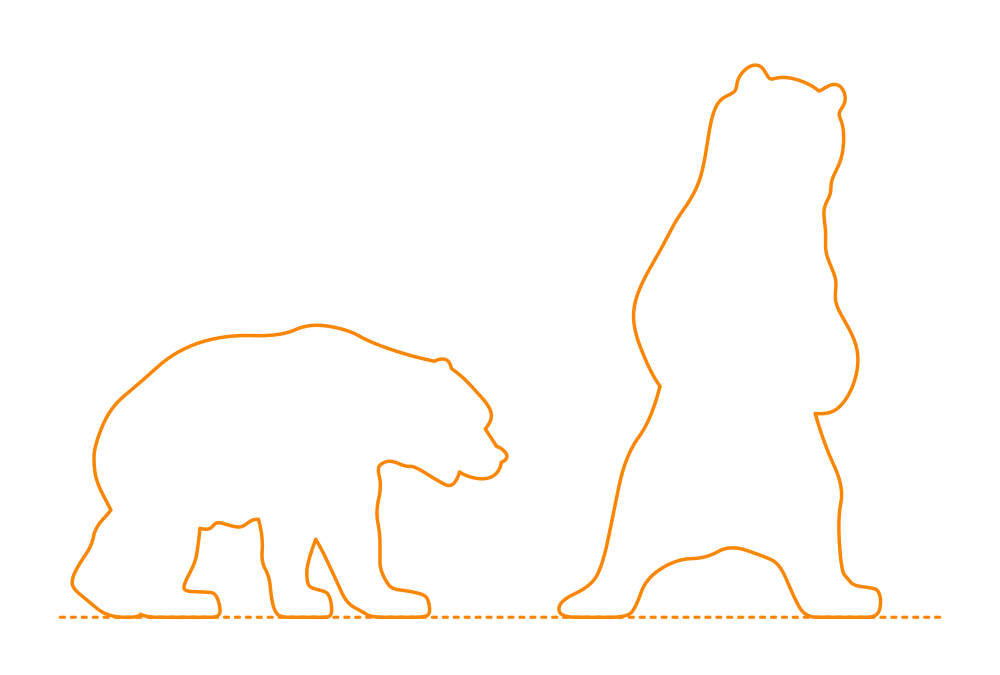
Male Cave Bears had a shoulder height between 5’-5’7” (1.52-1.7 m) and a weight in the range of 750-1300 lb (340-590 kg). The shoulder heights of females was between 4’7”-5’2” (1.4-1.57 m) with weights from 500-550 lb (227-250 kg). The Cave Bear had an overall body length of roughly 8’8”-11’6” (2.7-3.5 m) and giant upright standing height of 10’-11’6” (3.05-3.5 m).

The Cave Bear (Ursus spelaeus) was a bear species that lived in the Pleistocene region of Europe and Asia and died in the Last Glacial Maximums about 24,000 years ago. The Cave Bear had a very wide and dome-skull with a steep forehead. Its sturdy body had long thighs, large frame, and turning paws, which made it the ancestor to the Brown Bear in its skeletal form. The size of Cave Bears was like those of the largest modern bears.
Male Cave Bears had a shoulder height between 5’-5’7” (1.52-1.7 m) and a weight in the range of 750-1300 lb (340-590 kg). The shoulder heights of females was between 4’7”-5’2” (1.4-1.57 m) with weights from 500-550 lb (227-250 kg). The Cave Bear had an overall body length of roughly 8’8”-11’6” (2.7-3.5 m) and giant upright standing height of 10’-11’6” (3.05-3.5 m).