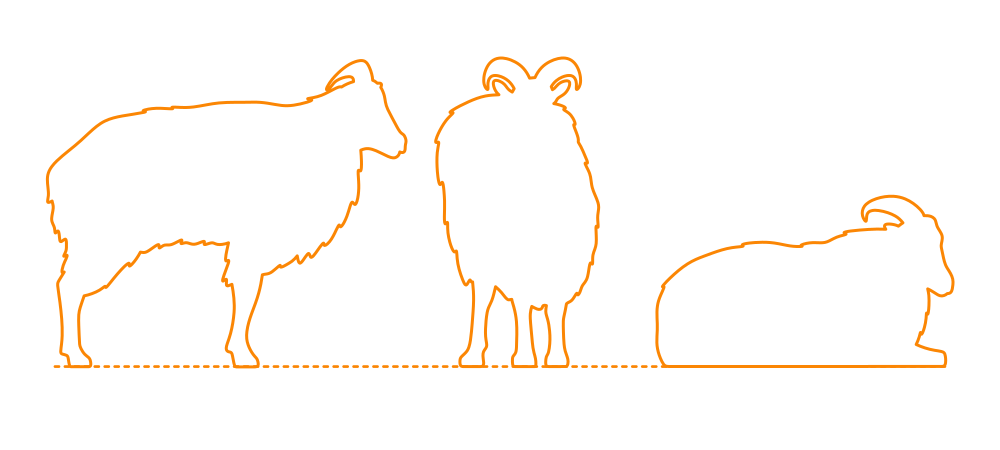
Hunting and habitable loss have been the major threat to the population of the Himalayan Tahr (Hemitragus jemlahicus) in its native habitat of northern India, southern Tibet, and even western Nepal. In these areas, it prefers mountain slopes and rugged wooded hills. Males are larger than females and also have large backward-curved horns. The head and ears are small while the eyes are large. The Himalayan tahr has strong declawed hooves and thick but reddish coats and undercoats. Males show a dark face, muzzle, and mane during winter. It is social, although males and females live in different social groupings. The Himalayan tahr consumes alpine grass and subalpine scrubs.
Himalayan Tahrs have a standing shoulder height between 25.6”-39.4” (65-100 cm), overall body length from 35.4”-55.1” (90-140 cm), standing height of roughly 28.3”-44.9” (72-114 cm), and a body width of 12.2”-18.9” (31-48 cm). The weight of a Himalayan Tahr is between 121-198 lb (55-90 kg). Himalayan Tahrs have a typical lifespan of 12-22 years.

Hunting and habitable loss have been the major threat to the population of the Himalayan Tahr (Hemitragus jemlahicus) in its native habitat of northern India, southern Tibet, and even western Nepal. In these areas, it prefers mountain slopes and rugged wooded hills. Males are larger than females and also have large backward-curved horns. The head and ears are small while the eyes are large. The Himalayan tahr has strong declawed hooves and thick but reddish coats and undercoats. Males show a dark face, muzzle, and mane during winter. It is social, although males and females live in different social groupings. The Himalayan tahr consumes alpine grass and subalpine scrubs.
Himalayan Tahrs have a standing shoulder height between 25.6”-39.4” (65-100 cm), overall body length from 35.4”-55.1” (90-140 cm), standing height of roughly 28.3”-44.9” (72-114 cm), and a body width of 12.2”-18.9” (31-48 cm). The weight of a Himalayan Tahr is between 121-198 lb (55-90 kg). Himalayan Tahrs have a typical lifespan of 12-22 years.