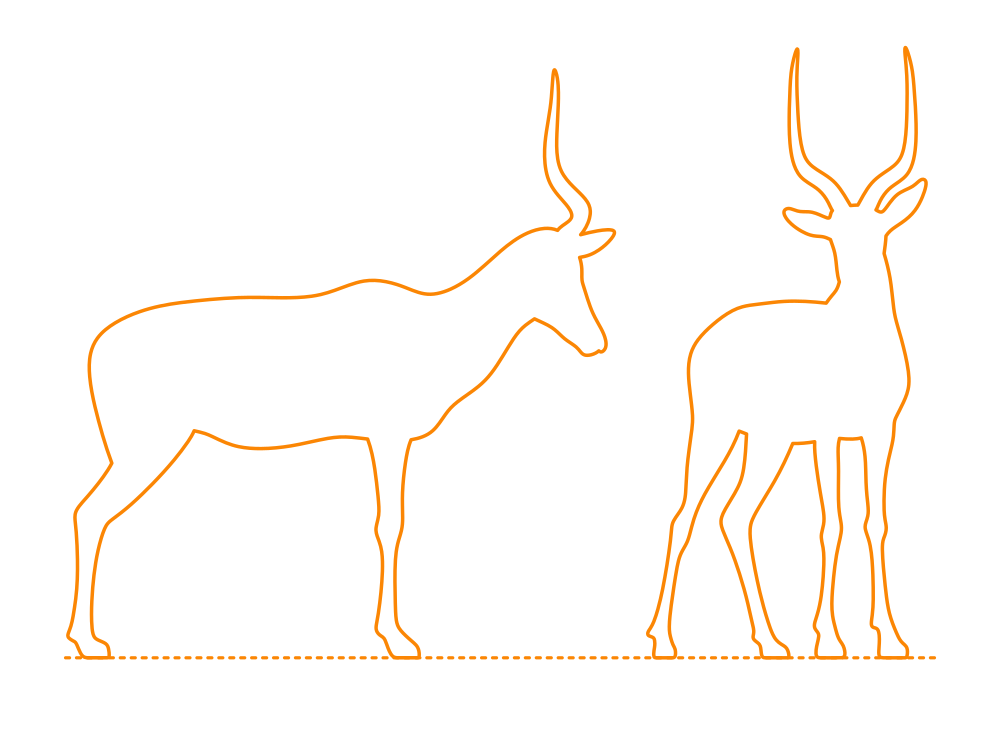
The only way to distinguish between male and female Hirola (Beatragus hunteri) is that males have thicker horns and darker coats. You can find this critically endangered grazer in regions bordering Kenya and Somalia in grasslands, scrub forests, or tropical arid areas. It is also called the Hunter’s antelope, or Hunter’s hartebeest. The body, face, and legs are long, but the neck is short. The soft or coarse coat hair can be tan or rufous-tawny while the tails white and ears and bellies lighter. Males and females have ringed, angular, and curved horns. The hirola are social, living in male, female, and bachelor harems.
Hirolas have a standing shoulder height between 31.5”-49.2” (80-125 cm), overall body length from 47.2”-80.7” (120-205 cm), standing height of roughly 39.4”-65.4” (100-166 cm), and a body width of 9.8”-15.75” (25-40 cm). The weight of a Hirola is between 154-254 lb (70-115 kg). Hirolas have a typical lifespan of 10-15 years.

The only way to distinguish between male and female Hirola (Beatragus hunteri) is that males have thicker horns and darker coats. You can find this critically endangered grazer in regions bordering Kenya and Somalia in grasslands, scrub forests, or tropical arid areas. It is also called the Hunter’s antelope, or Hunter’s hartebeest. The body, face, and legs are long, but the neck is short. The soft or coarse coat hair can be tan or rufous-tawny while the tails white and ears and bellies lighter. Males and females have ringed, angular, and curved horns. The hirola are social, living in male, female, and bachelor harems.
Hirolas have a standing shoulder height between 31.5”-49.2” (80-125 cm), overall body length from 47.2”-80.7” (120-205 cm), standing height of roughly 39.4”-65.4” (100-166 cm), and a body width of 9.8”-15.75” (25-40 cm). The weight of a Hirola is between 154-254 lb (70-115 kg). Hirolas have a typical lifespan of 10-15 years.