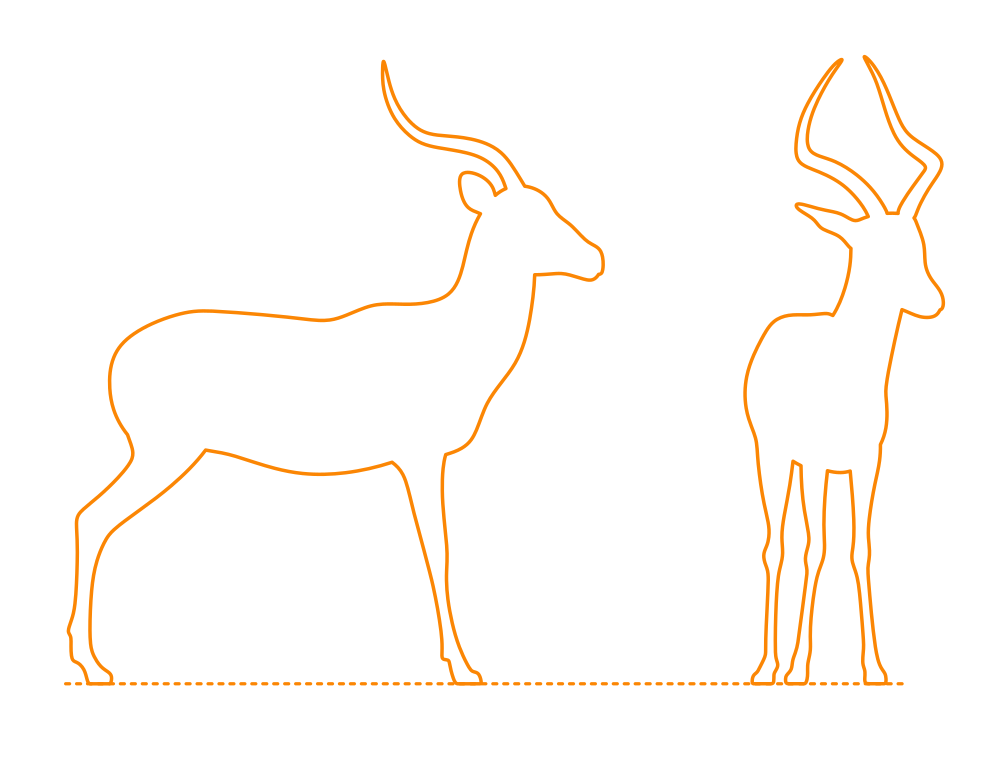
Eastern and Southern Africa are the ideal places to find the Impala (Aepyceros melampus). This is in the savannas and woodlands, but these places should be near a water source. Male impalas are larger and grow slender, lyre-shaped horns. Otherwise, all have glossy, reddish brown coats. Impalas have a black streak on the upper part of the buttocks, a white underbelly, white rings around the eye, and a bushy tail. They are usually diurnal and browsers, and form or live in three distinct herds: female herds, bachelor herds, and territorial males. A common feature it is known for is its anti-predator strategy of leaping.
Impalas have a standing shoulder height between 27.6”-36.2” (70-92 cm), overall body length from 47.2”-63” (120-160 cm), standing height of roughly 41.7”-55.5” (106-141 cm), and a body width of 8.7”-11.8” (22-30 cm). The weight of a Impala is between 88-168 lb (40-76 kg). Impalas have a typical lifespan of 10-25 years.

Eastern and Southern Africa are the ideal places to find the Impala (Aepyceros melampus). This is in the savannas and woodlands, but these places should be near a water source. Male impalas are larger and grow slender, lyre-shaped horns. Otherwise, all have glossy, reddish brown coats. Impalas have a black streak on the upper part of the buttocks, a white underbelly, white rings around the eye, and a bushy tail. They are usually diurnal and browsers, and form or live in three distinct herds: female herds, bachelor herds, and territorial males. A common feature it is known for is its anti-predator strategy of leaping.
Impalas have a standing shoulder height between 27.6”-36.2” (70-92 cm), overall body length from 47.2”-63” (120-160 cm), standing height of roughly 41.7”-55.5” (106-141 cm), and a body width of 8.7”-11.8” (22-30 cm). The weight of a Impala is between 88-168 lb (40-76 kg). Impalas have a typical lifespan of 10-25 years.