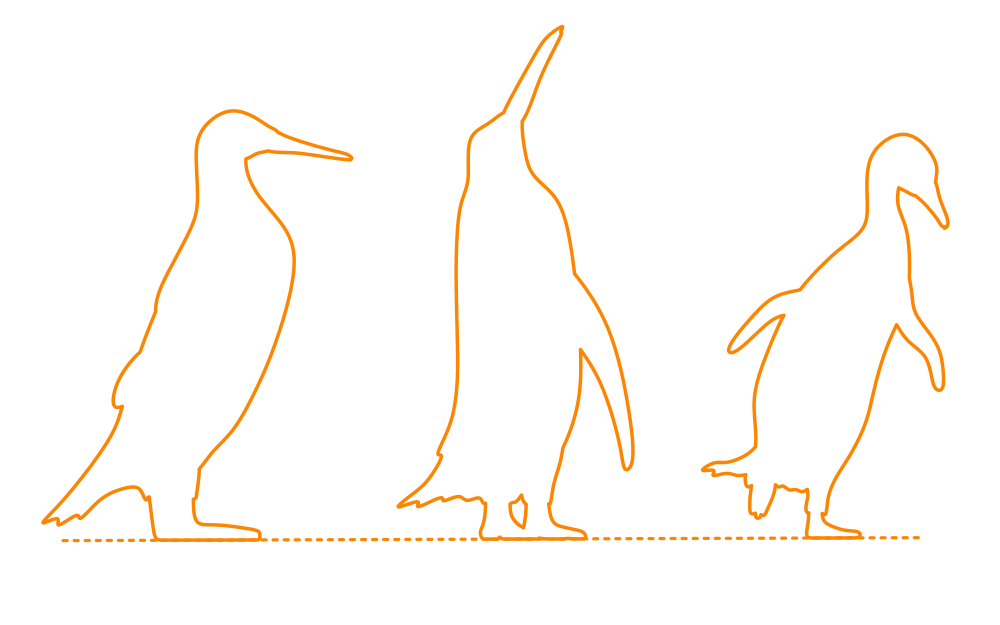
The name Kumimanu (Kumimanu biceae) means monster bird. The fossil of this giant penguin was discovered in New Zealand and is currently used to understand the evolution of birds. Records show Kumimanu was enormous, almost the size of an average adult male and heavier than modern penguins. The flippers, legs, and body were extremely large. It is also thought to have much longer beaks compared to modern penguins. However, it still had typical penguin features like flipper-like wings and an upright stance. Unlike modern penguins that inhibit cold environments, Kumimanu lived in warm areas and was brown and not black and white.
Kumimanus have an overall height between 63”-67” (160-170 cm) and body width of 17.7”-19.3” (45-49 cm). The typical weight of the Kumimanu is in the range of 198-220 lb (90-100 kg).

The name Kumimanu (Kumimanu biceae) means monster bird. The fossil of this giant penguin was discovered in New Zealand and is currently used to understand the evolution of birds. Records show Kumimanu was enormous, almost the size of an average adult male and heavier than modern penguins. The flippers, legs, and body were extremely large. It is also thought to have much longer beaks compared to modern penguins. However, it still had typical penguin features like flipper-like wings and an upright stance. Unlike modern penguins that inhibit cold environments, Kumimanu lived in warm areas and was brown and not black and white.
Kumimanus have an overall height between 63”-67” (160-170 cm) and body width of 17.7”-19.3” (45-49 cm). The typical weight of the Kumimanu is in the range of 198-220 lb (90-100 kg).