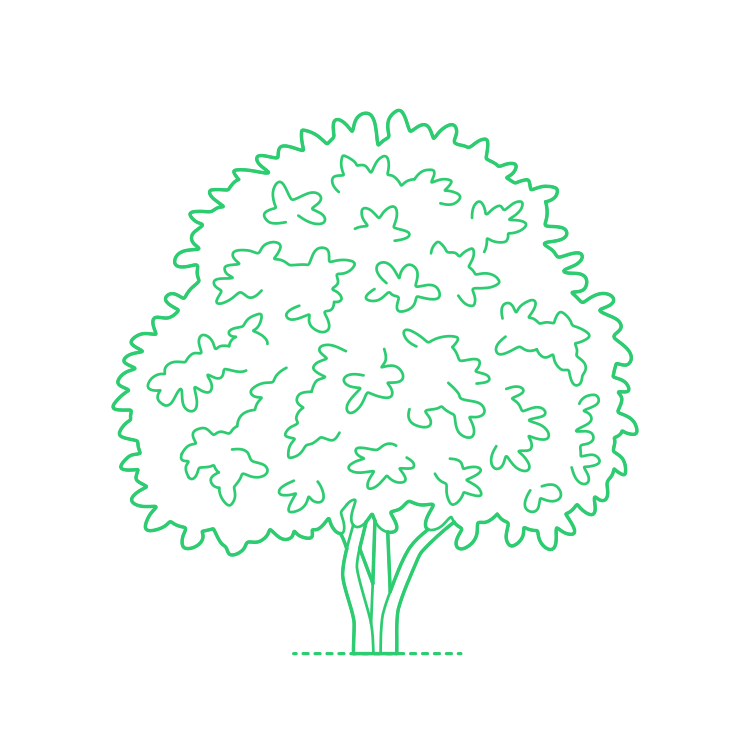
Boxwood (Buxus) in a small form develops as a compact evergreen shrub with finely branched stems and densely arranged leaves. The foliage consists of small, oval blades that grow in opposite pairs along short twigs, creating a tightly layered canopy. The leaves remain thick and glossy, allowing the plant to retain its green coloration throughout the year.
The genus Buxus includes numerous species distributed across Europe, Asia, Africa, and the Americas, where they inhabit temperate forests, rocky hillsides, and shaded woodland environments. A notable biological characteristic of Buxus is its extremely slow growth and long-lived woody framework. The small form emphasizes the plant’s natural density and compactness, highlighting the close spacing of leaves and the persistent evergreen structure typical of this genus.
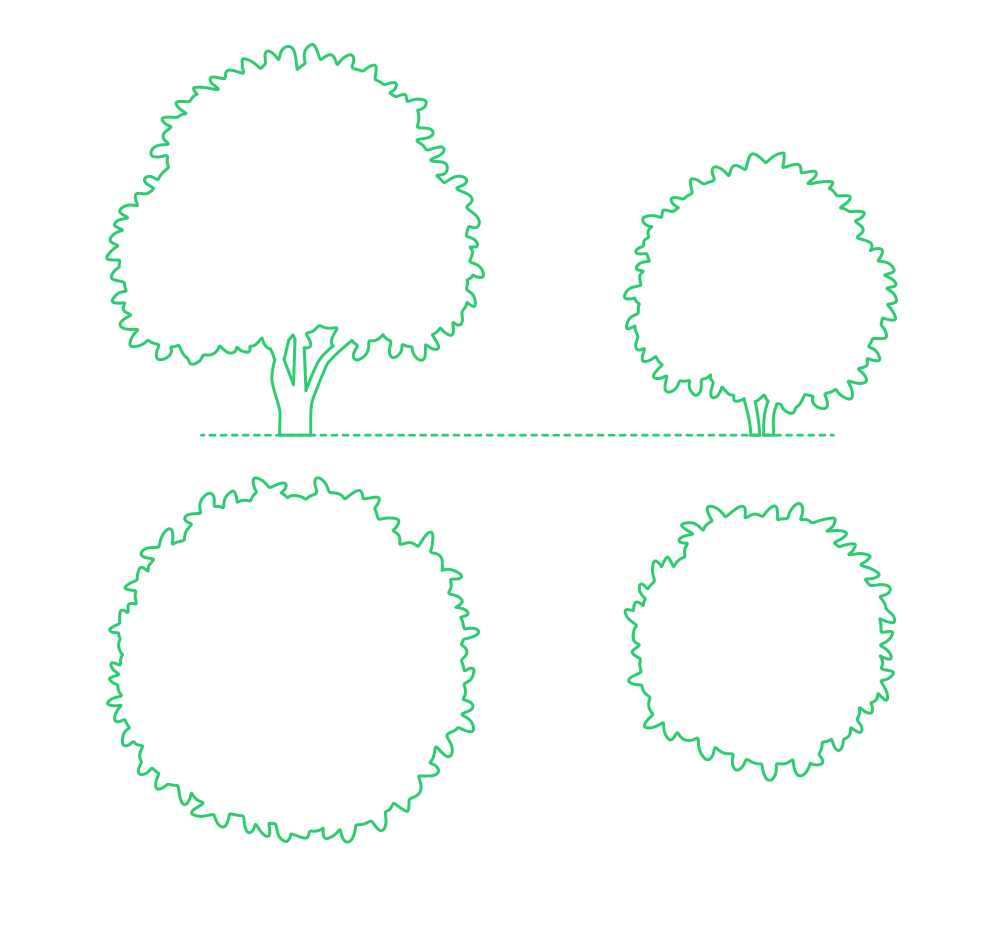
Boxwood (Small) has a typical overall cultivated height between 1’6”-3’ (.46-.91 m) and spread diameter of 1’6”-3’ (.46-.91 m).
Boxwood (Buxus) in a small form develops as a compact evergreen shrub with finely branched stems and densely arranged leaves. The foliage consists of small, oval blades that grow in opposite pairs along short twigs, creating a tightly layered canopy. The leaves remain thick and glossy, allowing the plant to retain its green coloration throughout the year.
The genus Buxus includes numerous species distributed across Europe, Asia, Africa, and the Americas, where they inhabit temperate forests, rocky hillsides, and shaded woodland environments. A notable biological characteristic of Buxus is its extremely slow growth and long-lived woody framework. The small form emphasizes the plant’s natural density and compactness, highlighting the close spacing of leaves and the persistent evergreen structure typical of this genus.
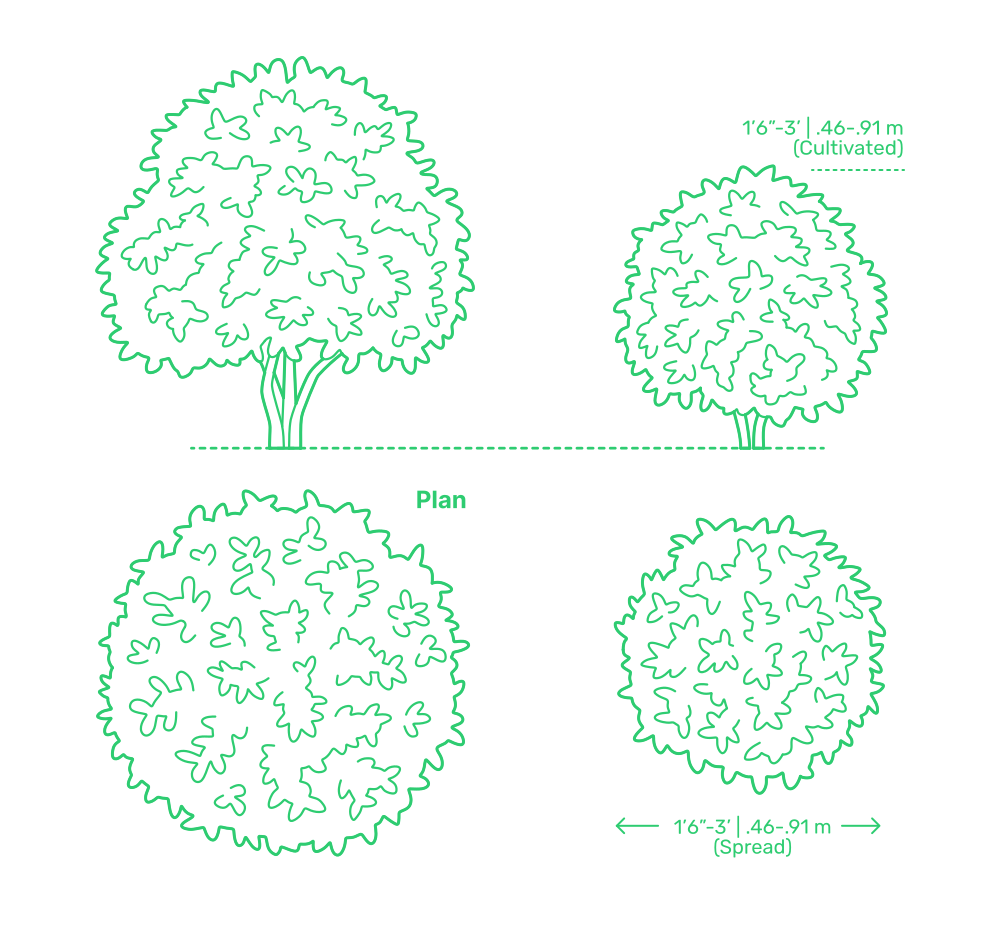
Boxwood (Small) has a typical overall cultivated height between 1’6”-3’ (.46-.91 m) and spread diameter of 1’6”-3’ (.46-.91 m).