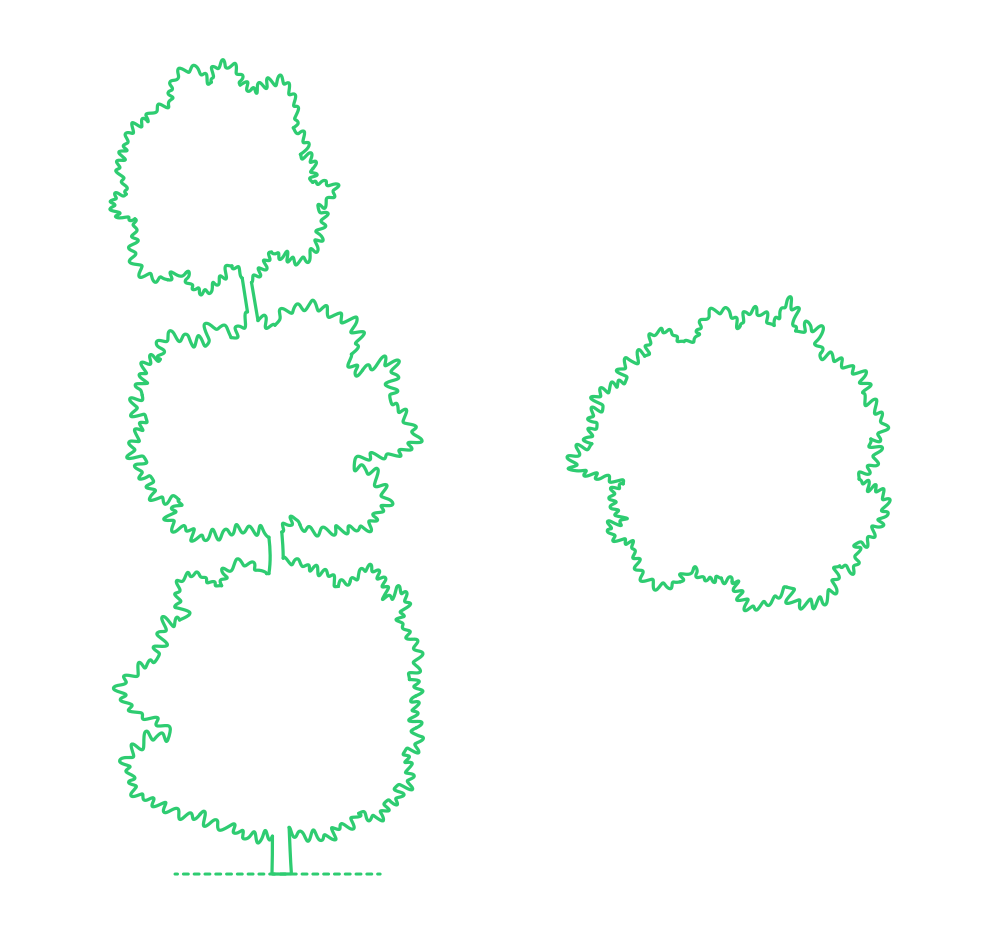
American Boxwood (Topiary, Triple) (Buxus sempervirens)
American Boxwood (Topiary, Triple) (Buxus sempervirens)
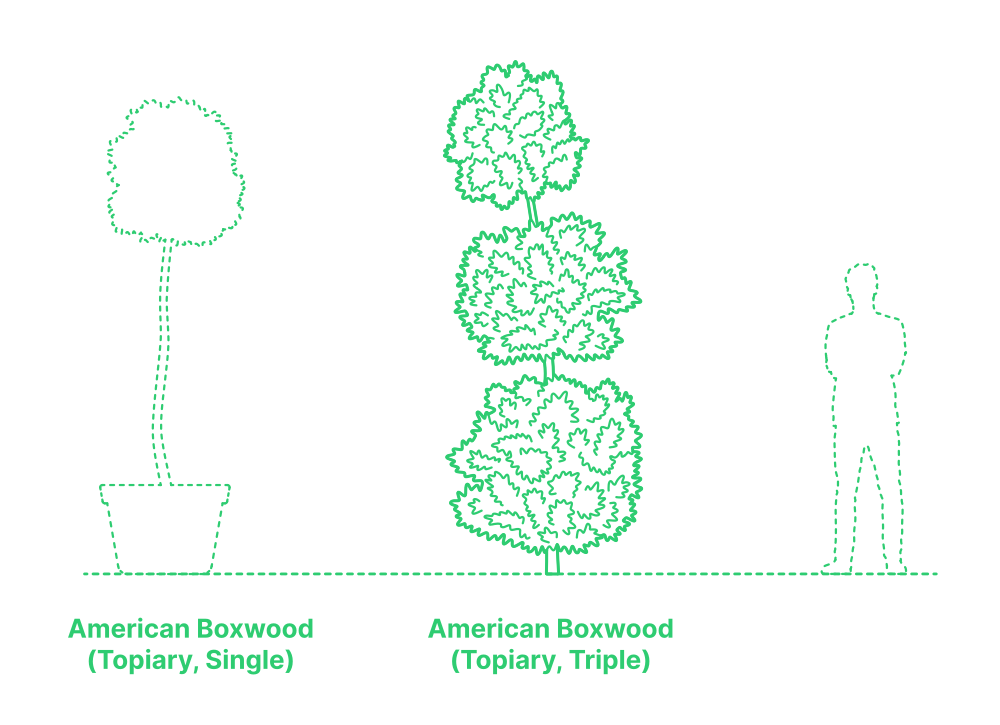
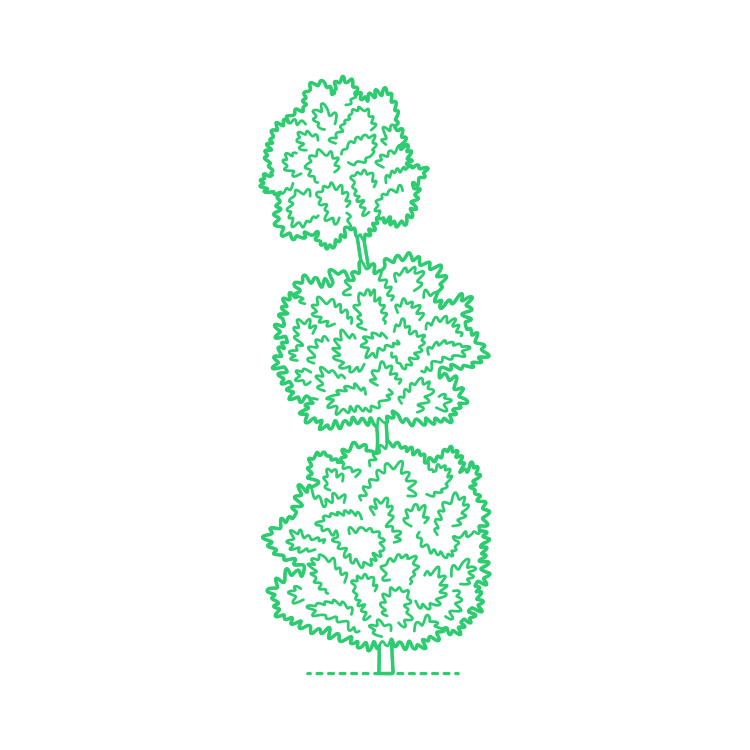
American boxwood (Buxus sempervirens) in a triple topiary form develops as three closely associated shrub structures emerging from a shared base or aligned stems. Each portion of the plant maintains dense branching and compact evergreen foliage, creating a layered arrangement of rounded masses. The leaves are small, smooth, and oval, arranged in opposite pairs along the stems and forming a thick canopy of persistent greenery.
Native to southern Europe and western Asia, Buxus sempervirens commonly inhabits forest edges and rocky slopes where soils are alkaline and well-drained. The species is biologically notable for its extremely fine branching system and long-lived woody structure. In the triple form, these traits allow multiple foliage clusters to coexist in close proximity without losing density. The plant maintains the same evergreen persistence and compact leaf arrangement that define the Buxus genus while presenting a tiered, multi-canopy structure.
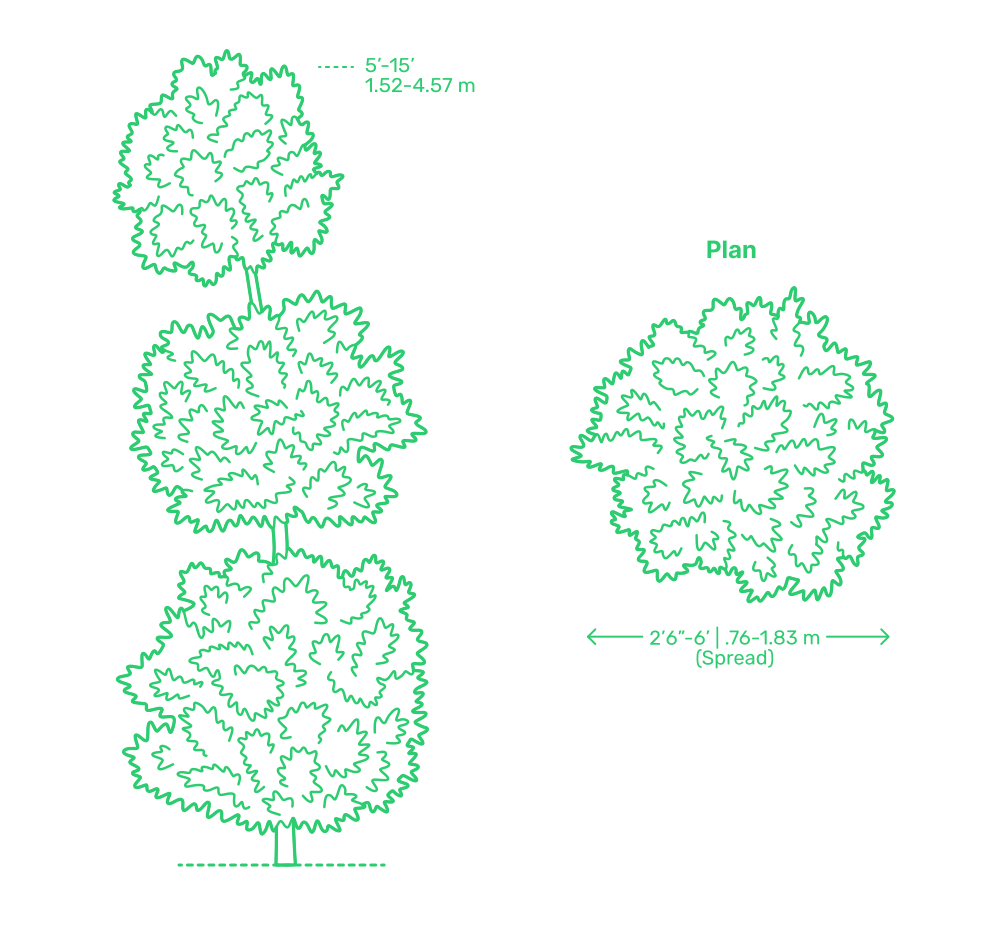
American Boxwood (Topiary, Triple) has a typical overall height between 5’-15’ (1.52-4.57 m) and spread diameter of 2’6”-6’ (.76-1.83 m).
American boxwood (Buxus sempervirens) in a triple topiary form develops as three closely associated shrub structures emerging from a shared base or aligned stems. Each portion of the plant maintains dense branching and compact evergreen foliage, creating a layered arrangement of rounded masses. The leaves are small, smooth, and oval, arranged in opposite pairs along the stems and forming a thick canopy of persistent greenery.
Native to southern Europe and western Asia, Buxus sempervirens commonly inhabits forest edges and rocky slopes where soils are alkaline and well-drained. The species is biologically notable for its extremely fine branching system and long-lived woody structure. In the triple form, these traits allow multiple foliage clusters to coexist in close proximity without losing density. The plant maintains the same evergreen persistence and compact leaf arrangement that define the Buxus genus while presenting a tiered, multi-canopy structure.
American Boxwood (Topiary, Triple) has a typical overall height between 5’-15’ (1.52-4.57 m) and spread diameter of 2’6”-6’ (.76-1.83 m).