Japanese Cheesewood (Small) (Pittosporum tobira)
Japanese Cheesewood (Small) (Pittosporum tobira)
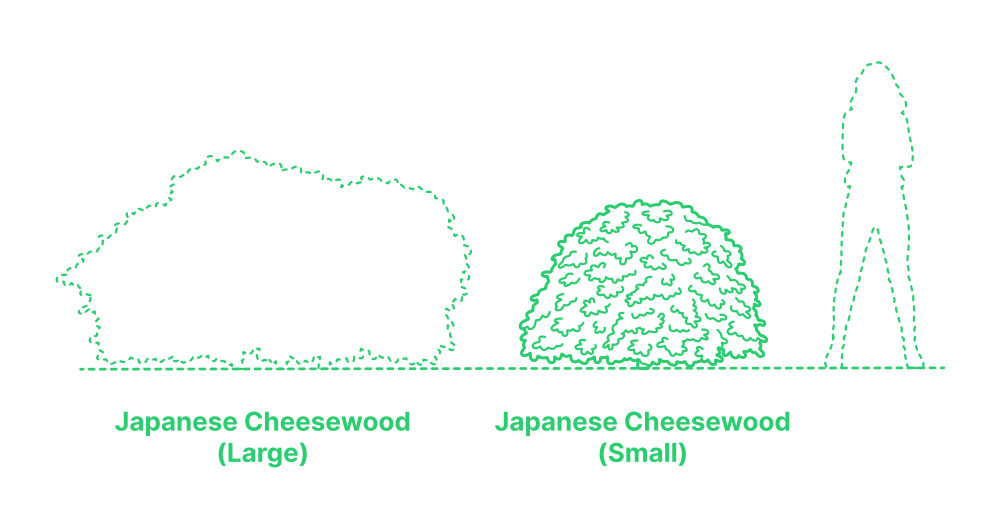

Japanese cheesewood (Pittosporum tobira) in a small form appears as a compact evergreen shrub with short, closely spaced branches and dense clusters of glossy leaves. The leaves remain thick and oval, arranged alternately along the stems but often appearing grouped at the branch tips. The plant maintains its evergreen foliage throughout the year, forming a cohesive canopy of dark green leaves.
Native to East Asia, particularly Japan and coastal China, Pittosporum tobira naturally inhabits seaside environments and woodland margins. The species is biologically notable for its leathery foliage and aromatic flower clusters that appear during blooming periods. In the small form, the plant emphasizes compact branching and tight foliage arrangement while maintaining the resilient evergreen characteristics typical of Pittosporum tobira.
Japanese Cheesewood (Small) has a typical overall height between 2’-4’ (.61-1.22 m) and spread diameter of 2’-4’ (.61-1.22 m).
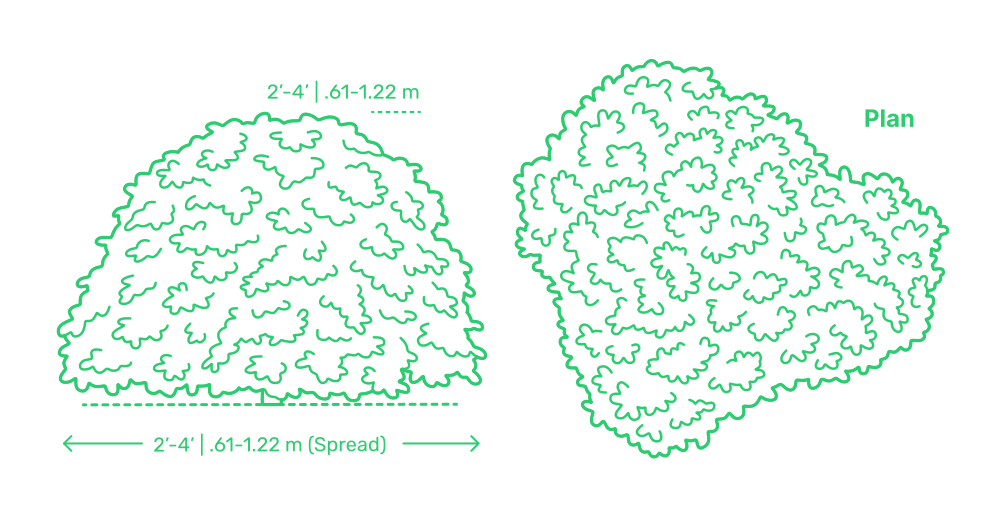
Japanese cheesewood (Pittosporum tobira) in a small form appears as a compact evergreen shrub with short, closely spaced branches and dense clusters of glossy leaves. The leaves remain thick and oval, arranged alternately along the stems but often appearing grouped at the branch tips. The plant maintains its evergreen foliage throughout the year, forming a cohesive canopy of dark green leaves.
Native to East Asia, particularly Japan and coastal China, Pittosporum tobira naturally inhabits seaside environments and woodland margins. The species is biologically notable for its leathery foliage and aromatic flower clusters that appear during blooming periods. In the small form, the plant emphasizes compact branching and tight foliage arrangement while maintaining the resilient evergreen characteristics typical of Pittosporum tobira.
Japanese Cheesewood (Small) has a typical overall height between 2’-4’ (.61-1.22 m) and spread diameter of 2’-4’ (.61-1.22 m).