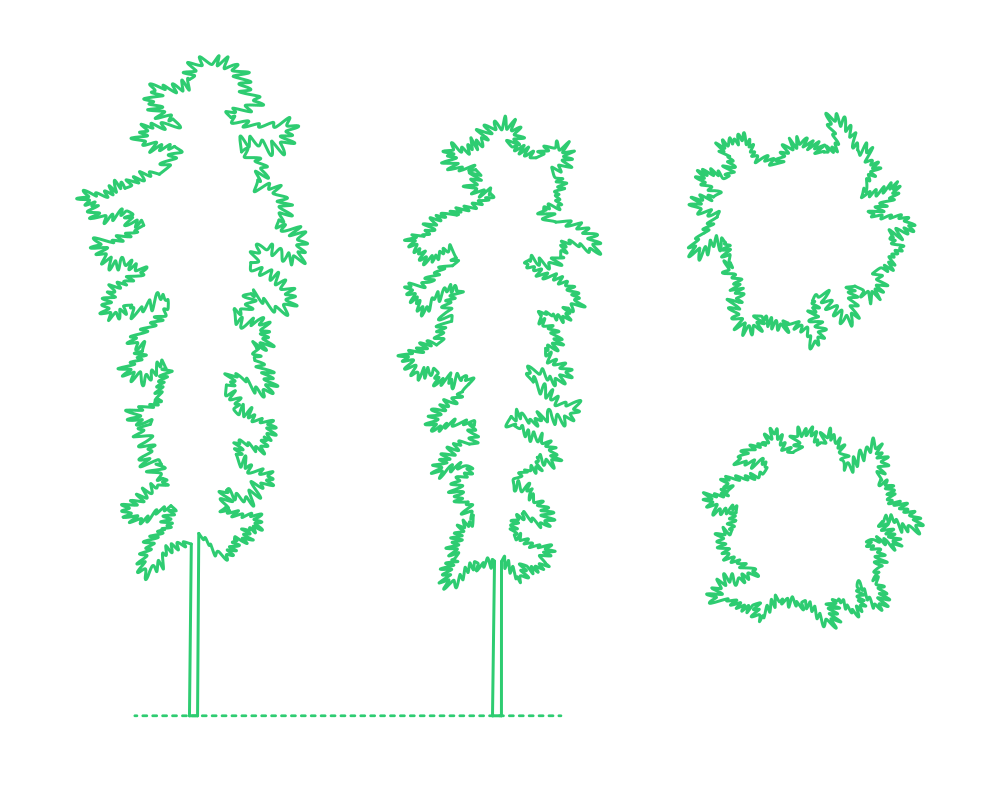
Temple Bamboo (Single) (Semiarundinaria fastuosa)
Temple Bamboo (Single) (Semiarundinaria fastuosa)
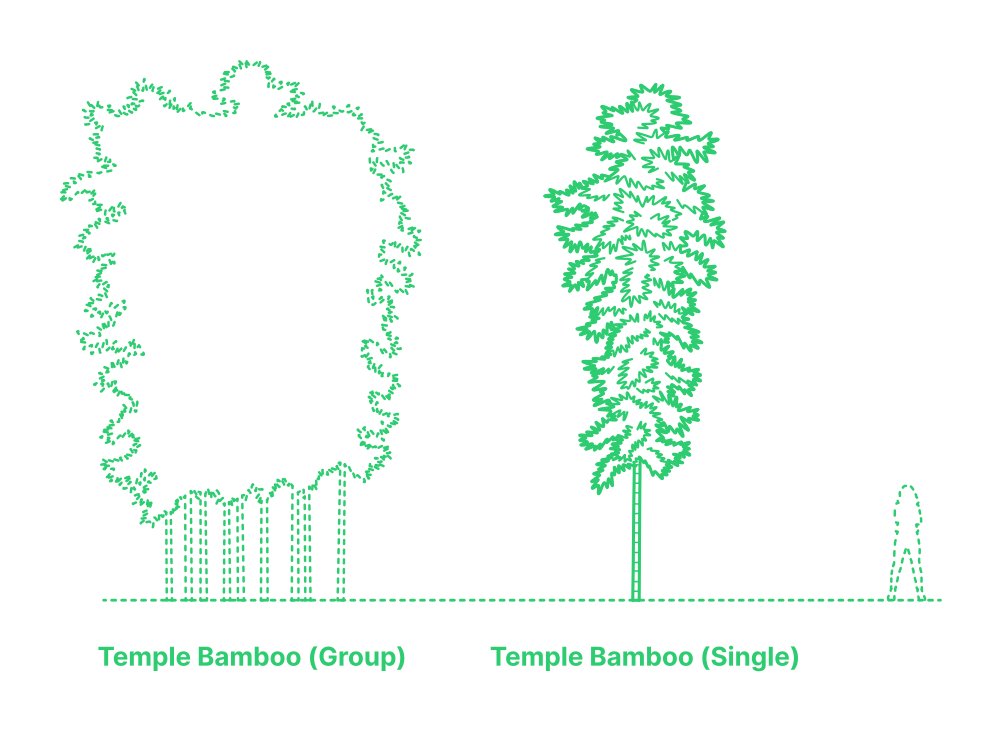
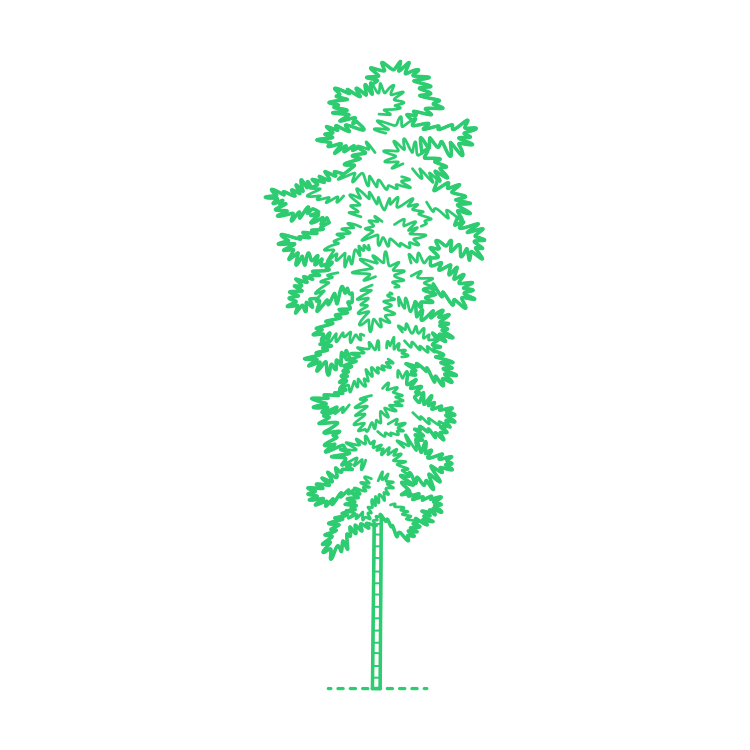
In a single form, temple bamboo (Semiarundinaria fastuosa) presents as a solitary, vertical culm with a clean, upright profile. The culm is straight and narrow, with subtle nodes and limited branching. Leaves emerge near the upper portions, creating a light crown that does not obscure the stem. Native to Japan, this species evolved in environments where vertical growth and light access were advantageous.
Biologically, Semiarundinaria fastuosa exhibits running rhizomes, allowing individual culms to emerge at intervals. The single form isolates the species’ defining verticality and restraint, highlighting its emphasis on height and linear structure rather than density. This expression reveals the bamboo’s disciplined growth pattern and distinctive, columnar character.
Temple Bamboo (Single) has a typical overall height between 20’-35’ (6.1-10.67 m) and spread diameter of 5’-10’ (1.52-3.05 m). The culm diameter is typically between 1”-2” (2.5-5 cm).
In a single form, temple bamboo (Semiarundinaria fastuosa) presents as a solitary, vertical culm with a clean, upright profile. The culm is straight and narrow, with subtle nodes and limited branching. Leaves emerge near the upper portions, creating a light crown that does not obscure the stem. Native to Japan, this species evolved in environments where vertical growth and light access were advantageous.
Biologically, Semiarundinaria fastuosa exhibits running rhizomes, allowing individual culms to emerge at intervals. The single form isolates the species’ defining verticality and restraint, highlighting its emphasis on height and linear structure rather than density. This expression reveals the bamboo’s disciplined growth pattern and distinctive, columnar character.
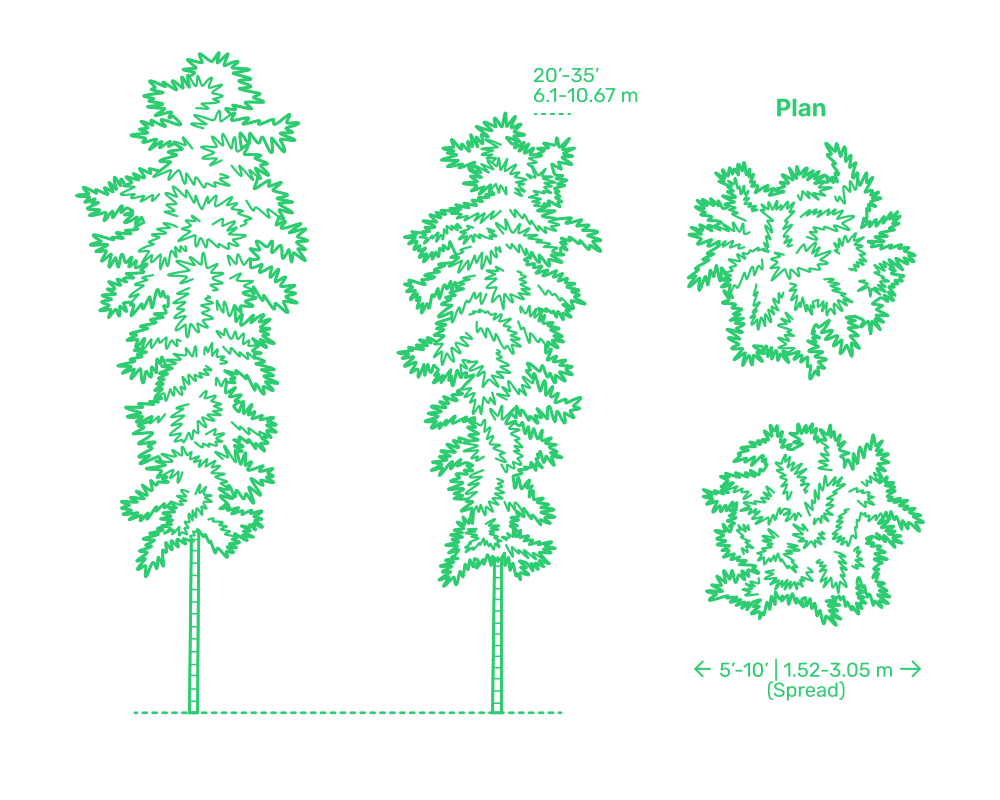
Temple Bamboo (Single) has a typical overall height between 20’-35’ (6.1-10.67 m) and spread diameter of 5’-10’ (1.52-3.05 m). The culm diameter is typically between 1”-2” (2.5-5 cm).