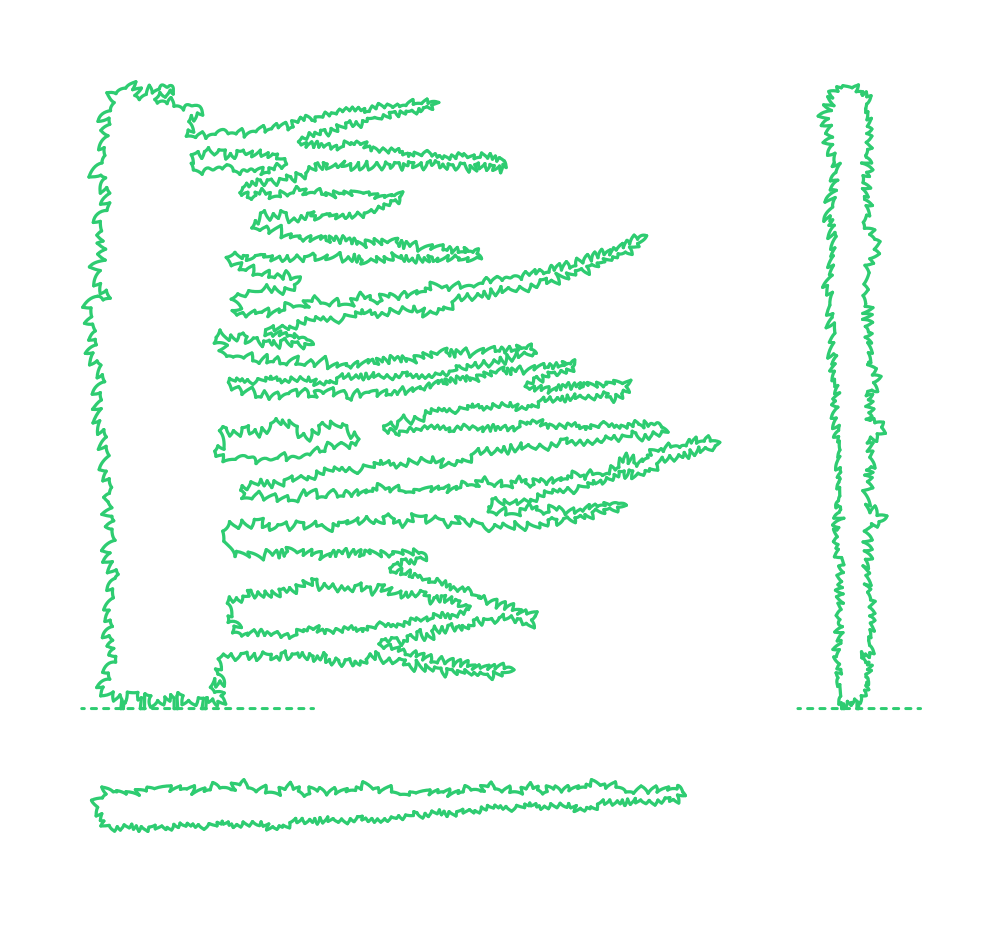
Boston Ivy (Wall, Horizontal) (Parthenocissus tricuspidata)
Boston Ivy (Wall, Horizontal) (Parthenocissus tricuspidata)
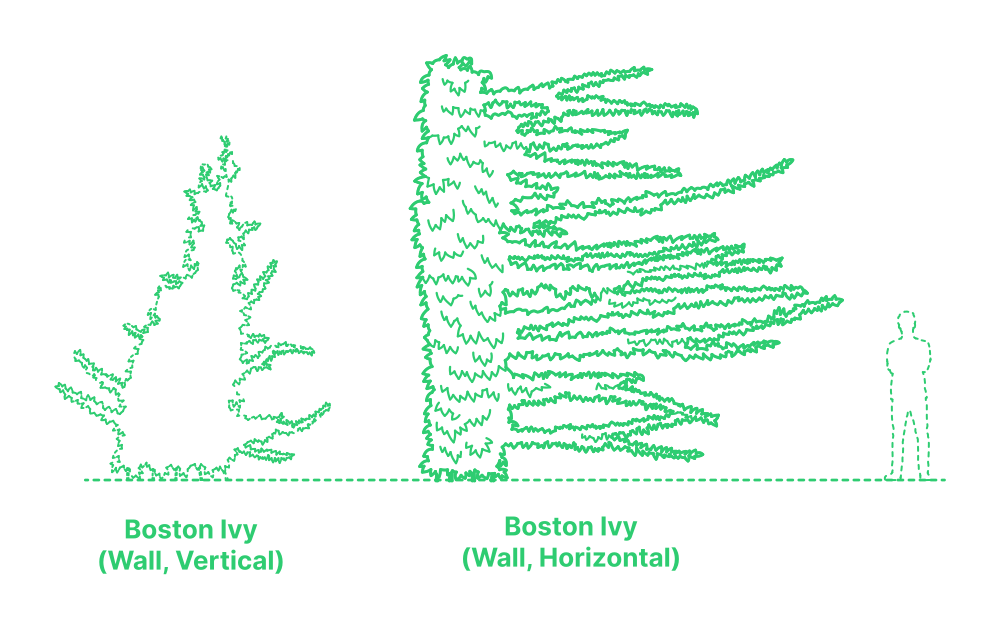
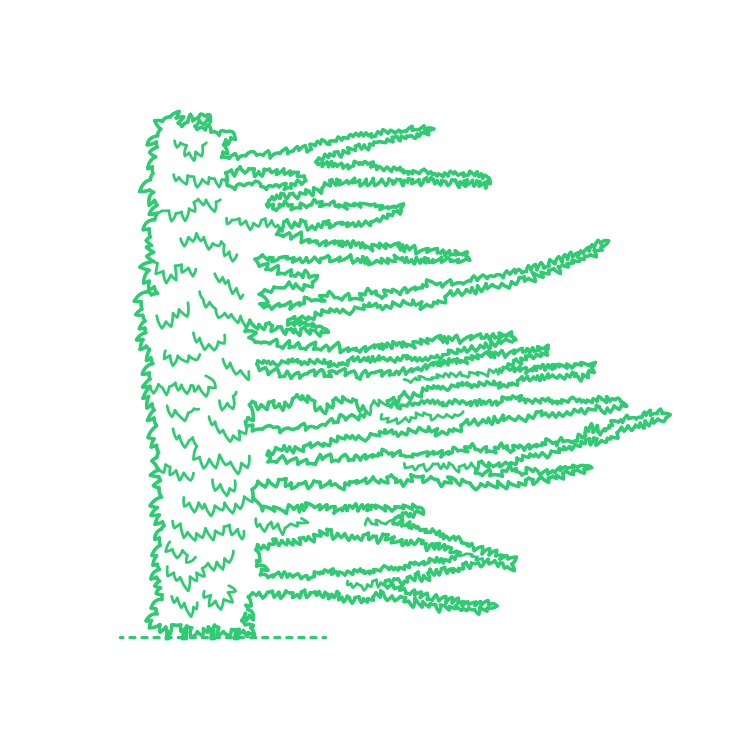
In a wall-horizontal form, Boston Ivy (Parthenocissus tricuspidata) grows laterally across vertical surfaces, extending stems sideways rather than upward or downward. The vine produces flattened branching patterns, with leaves arranged to maximize surface coverage along the horizontal plane. Adhesive tendrils with small disc-like tips allow the plant to attach securely to stone, brick, or bark.
Native to China, Korea, and Japan, Parthenocissus tricuspidata evolved in environments where spreading across rock faces and tree trunks provided competitive access to light. This horizontal growth emphasizes the vine’s ability to navigate surfaces strategically, filling gaps and expanding evenly rather than climbing aggressively. A key biological trait is its capacity for strong attachment without penetrating substrates. The wall-horizontal form highlights the species’ adaptive growth orientation and its role as a surface-covering deciduous climber rather than a strictly vertical vine.
Boston Ivy (Wall, Horizontal) has a typical overall length/height between 10’-20’ (3.05-6.1 m), maximum length/height of 30’-50’ (9.14-15.24 m), and spread of 10’-30’ (3.05-9.14 m). The leaf width is between 4”-8” (10-20 cm).
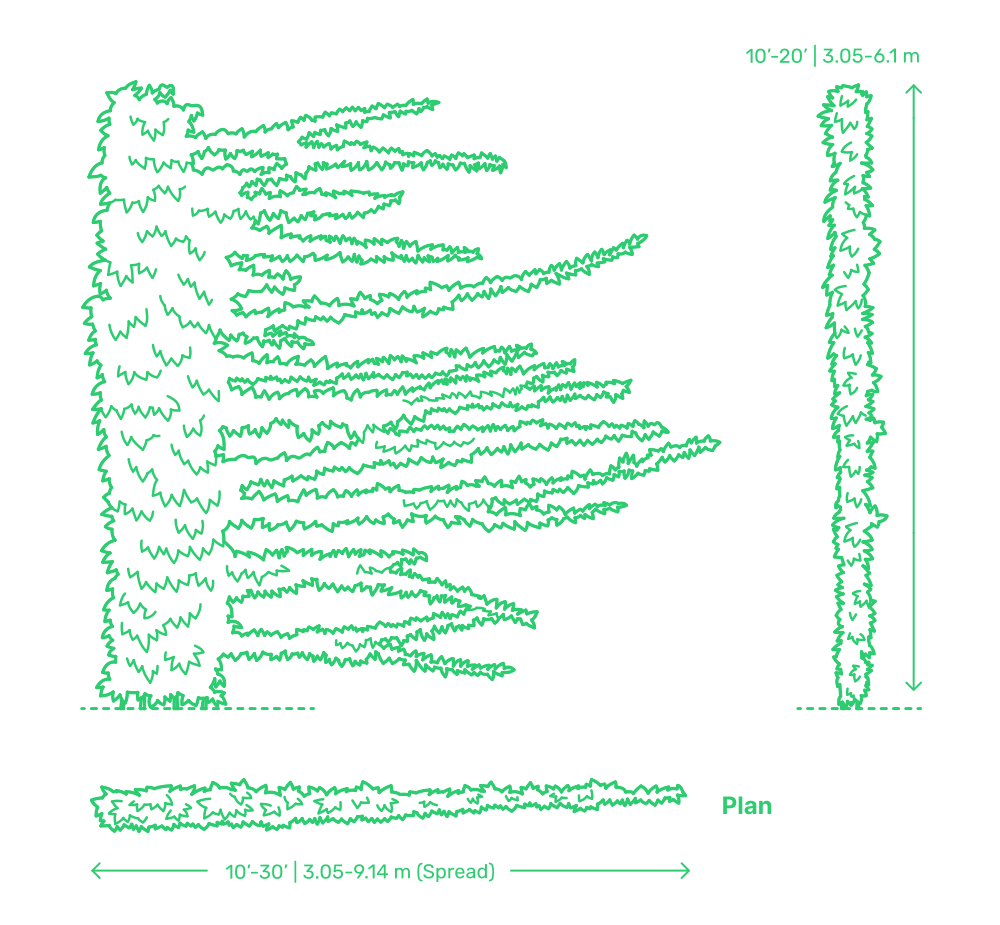
In a wall-horizontal form, Boston Ivy (Parthenocissus tricuspidata) grows laterally across vertical surfaces, extending stems sideways rather than upward or downward. The vine produces flattened branching patterns, with leaves arranged to maximize surface coverage along the horizontal plane. Adhesive tendrils with small disc-like tips allow the plant to attach securely to stone, brick, or bark.
Native to China, Korea, and Japan, Parthenocissus tricuspidata evolved in environments where spreading across rock faces and tree trunks provided competitive access to light. This horizontal growth emphasizes the vine’s ability to navigate surfaces strategically, filling gaps and expanding evenly rather than climbing aggressively. A key biological trait is its capacity for strong attachment without penetrating substrates. The wall-horizontal form highlights the species’ adaptive growth orientation and its role as a surface-covering deciduous climber rather than a strictly vertical vine.
Boston Ivy (Wall, Horizontal) has a typical overall length/height between 10’-20’ (3.05-6.1 m), maximum length/height of 30’-50’ (9.14-15.24 m), and spread of 10’-30’ (3.05-9.14 m). The leaf width is between 4”-8” (10-20 cm).