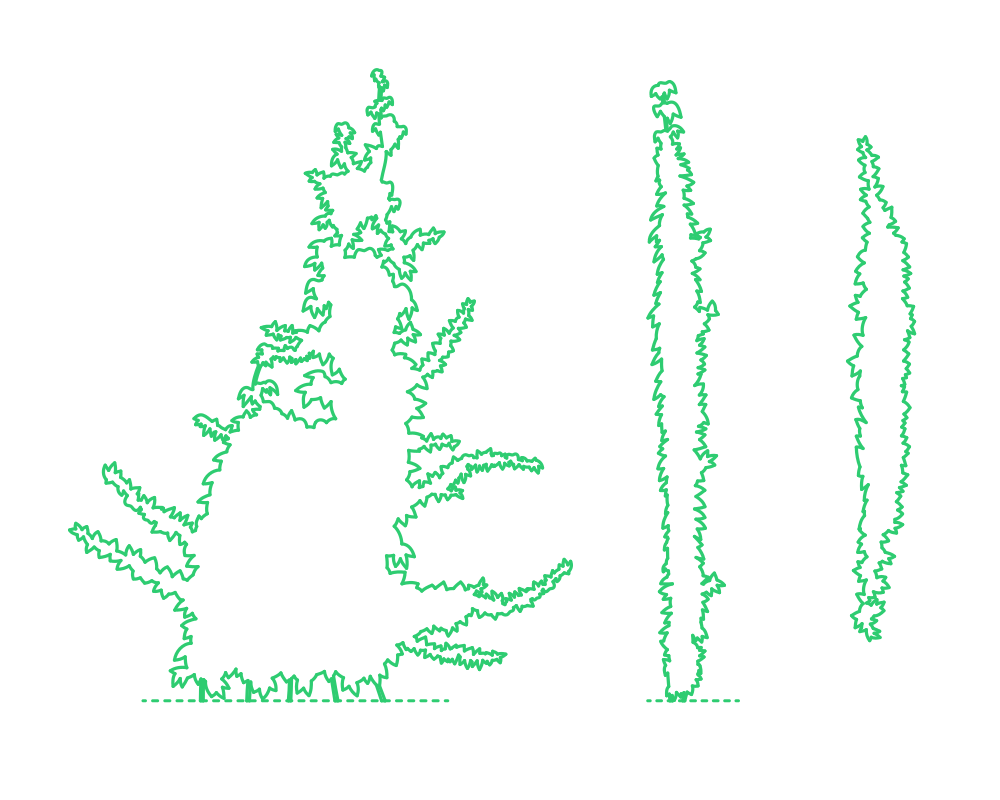
Boston Ivy (Wall, Vertical) (Parthenocissus tricuspidata)
Boston Ivy (Wall, Vertical) (Parthenocissus tricuspidata)
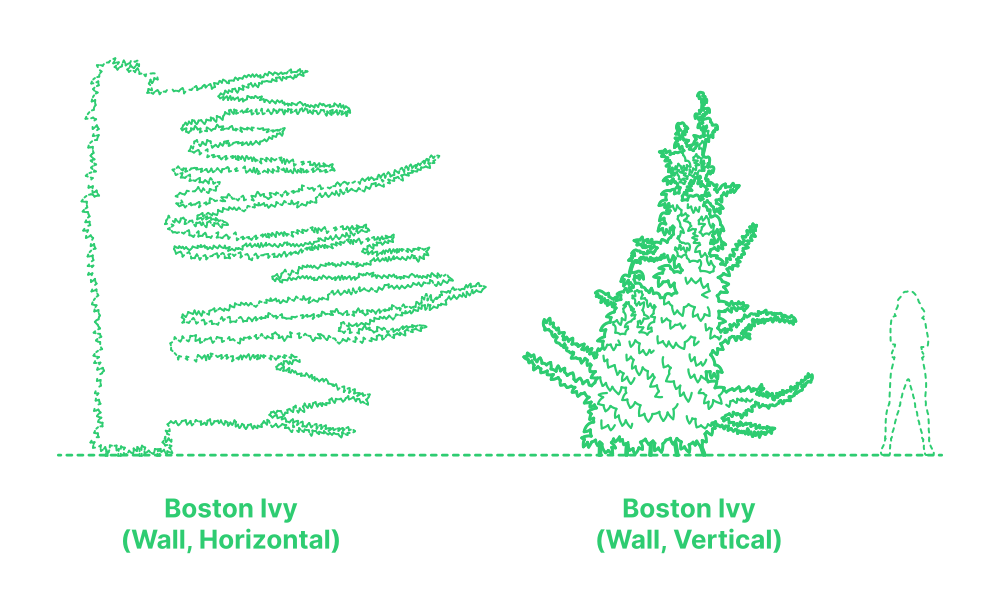
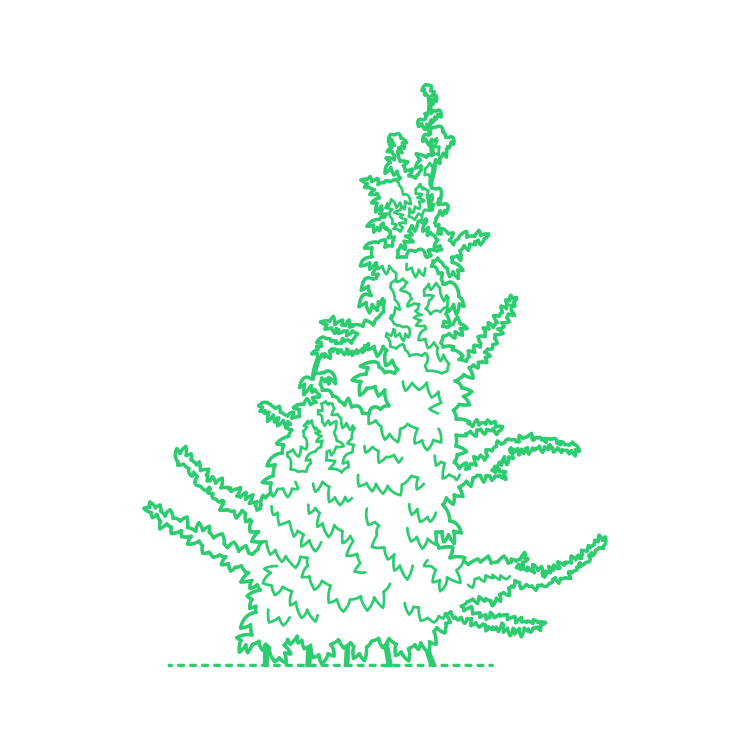
In a wall-vertical form, Boston Ivy (Parthenocissus tricuspidata) grows upward along vertical structures, producing stems that climb steadily using adhesive tendrils. The vine’s leaves are arranged along ascending stems, forming vertical bands of foliage that follow the direction of growth. Native to East Asia, Parthenocissus tricuspidata commonly climbs trees, cliffs, and built surfaces in its natural and introduced ranges.
This vertical orientation highlights the species’ strong phototropic response, as stems actively grow toward light sources above. A distinctive biological trait is the vine’s ability to attach securely without coiling, relying instead on specialized adhesive discs. The vertical wall form demonstrates the plant’s climbing capacity and rapid seasonal expansion, as well as its transformation from a leafy summer climber to a bare, branch-revealing structure in dormancy. This growth mode reflects the vine’s adaptability across multiple spatial orientations.
Boston Ivy (Wall, Vertical) has a typical overall vine length/height between 10’-20’ (3.05-6.1 m), maximum height/length of 30’-50’ (9.14-15.24 m), and spread of 5’-15’ (1.52-4.57 m). The leaf width is between 4”-8” (10-20 cm).
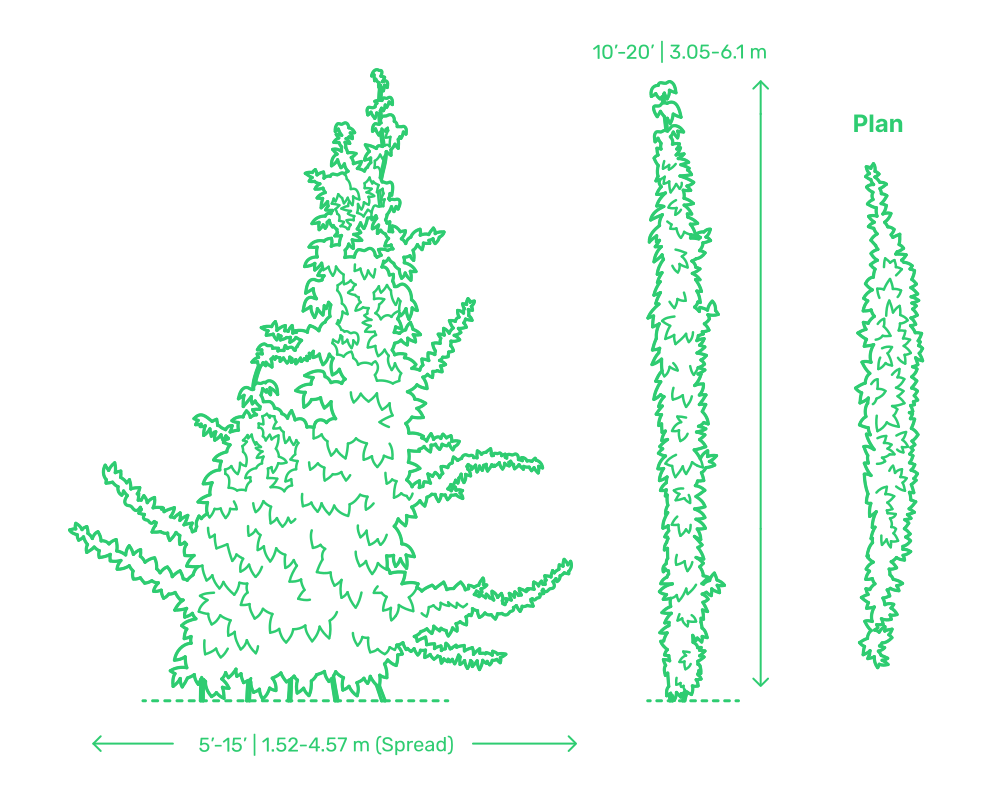
In a wall-vertical form, Boston Ivy (Parthenocissus tricuspidata) grows upward along vertical structures, producing stems that climb steadily using adhesive tendrils. The vine’s leaves are arranged along ascending stems, forming vertical bands of foliage that follow the direction of growth. Native to East Asia, Parthenocissus tricuspidata commonly climbs trees, cliffs, and built surfaces in its natural and introduced ranges.
This vertical orientation highlights the species’ strong phototropic response, as stems actively grow toward light sources above. A distinctive biological trait is the vine’s ability to attach securely without coiling, relying instead on specialized adhesive discs. The vertical wall form demonstrates the plant’s climbing capacity and rapid seasonal expansion, as well as its transformation from a leafy summer climber to a bare, branch-revealing structure in dormancy. This growth mode reflects the vine’s adaptability across multiple spatial orientations.
Boston Ivy (Wall, Vertical) has a typical overall vine length/height between 10’-20’ (3.05-6.1 m), maximum height/length of 30’-50’ (9.14-15.24 m), and spread of 5’-15’ (1.52-4.57 m). The leaf width is between 4”-8” (10-20 cm).