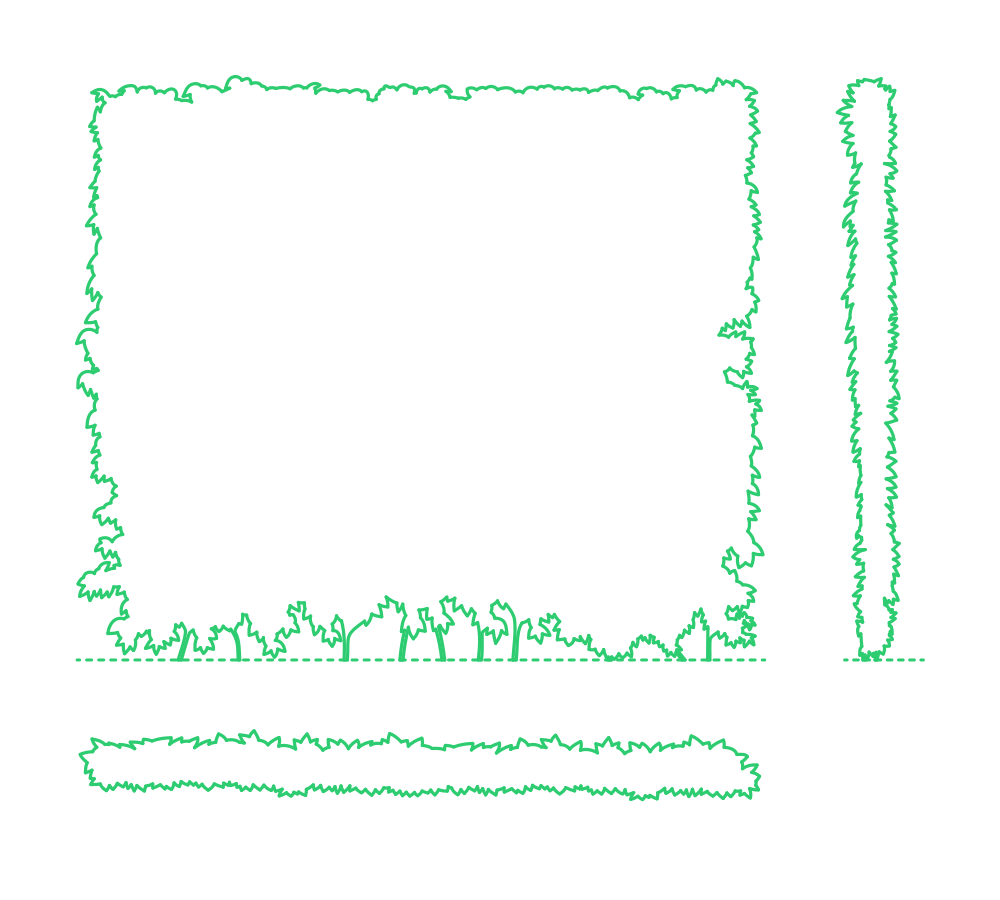
Boston Ivy (Wall, Surface) (Parthenocissus tricuspidata)
Boston Ivy (Wall, Surface) (Parthenocissus tricuspidata)
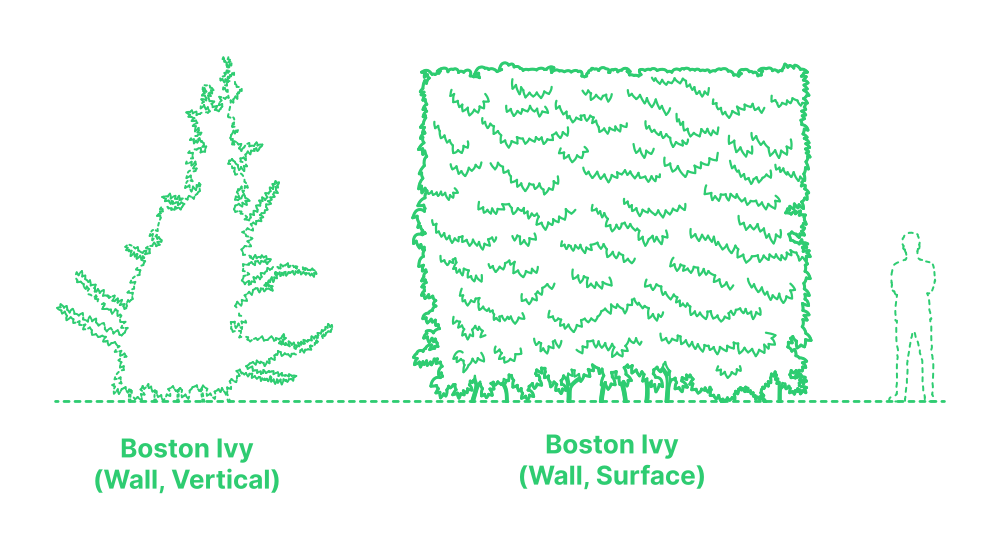
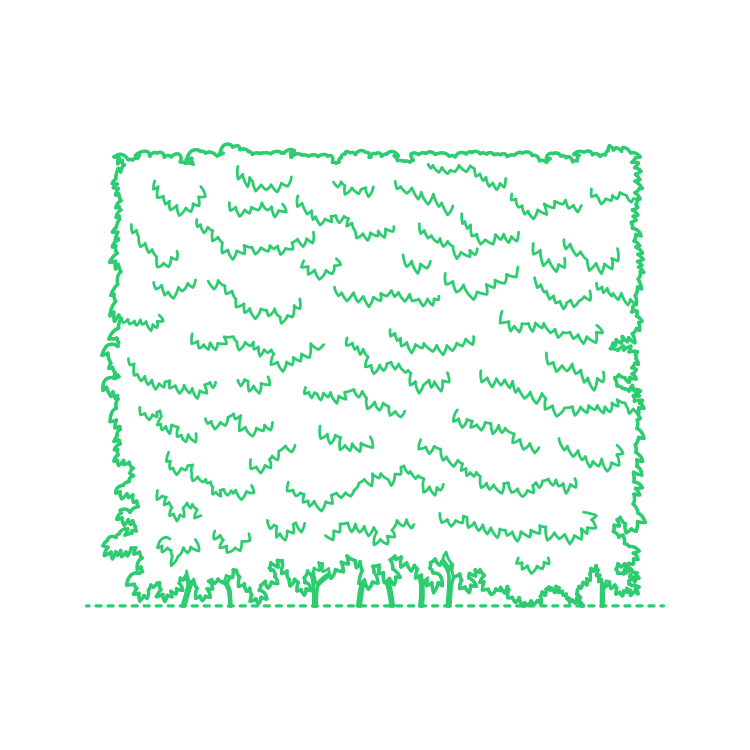
Boston Ivy (Parthenocissus tricuspidata) in a wall-surface form grows tightly adhered to vertical planes, forming a dense, flattened layer of overlapping leaves. The stems remain close to the surface, anchored by adhesive pads that press the vine firmly against walls. Leaves are closely spaced and often arranged in a shingled pattern, creating near-continuous coverage.
Also known as Japanese creeper, the species is native to temperate East Asia and commonly occupies rocky outcrops and forest margins. This surface-hugging growth reflects an evolutionary strategy focused on stability and exposure control, reducing wind stress while maintaining access to light. A notable feature of Parthenocissus tricuspidata is its deciduous habit, allowing seasonal light penetration once leaves are shed. The wall-surface form emphasizes the vine’s capacity for intimate surface interaction, transforming vertical planes into living, seasonal foliage systems.
Boston Ivy (Wall, Surface) has a typical overall height between 10’-20’ (3.05-6.1 m), maximum height of 30’-50’ (9.14-15.24 m), and spread of 15’-40’ (4.57-12.19 m). The leaf width is between 4”-8” (10-20 cm).
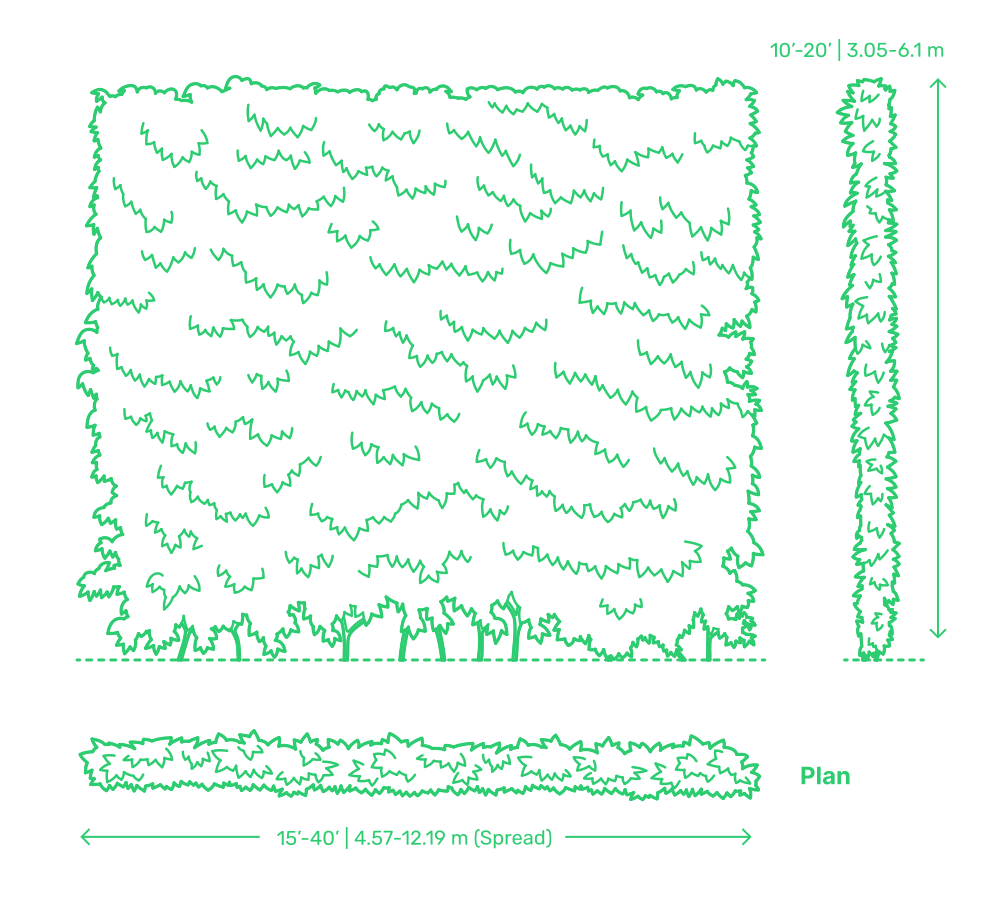
Boston Ivy (Parthenocissus tricuspidata) in a wall-surface form grows tightly adhered to vertical planes, forming a dense, flattened layer of overlapping leaves. The stems remain close to the surface, anchored by adhesive pads that press the vine firmly against walls. Leaves are closely spaced and often arranged in a shingled pattern, creating near-continuous coverage.
Also known as Japanese creeper, the species is native to temperate East Asia and commonly occupies rocky outcrops and forest margins. This surface-hugging growth reflects an evolutionary strategy focused on stability and exposure control, reducing wind stress while maintaining access to light. A notable feature of Parthenocissus tricuspidata is its deciduous habit, allowing seasonal light penetration once leaves are shed. The wall-surface form emphasizes the vine’s capacity for intimate surface interaction, transforming vertical planes into living, seasonal foliage systems.
Boston Ivy (Wall, Surface) has a typical overall height between 10’-20’ (3.05-6.1 m), maximum height of 30’-50’ (9.14-15.24 m), and spread of 15’-40’ (4.57-12.19 m). The leaf width is between 4”-8” (10-20 cm).