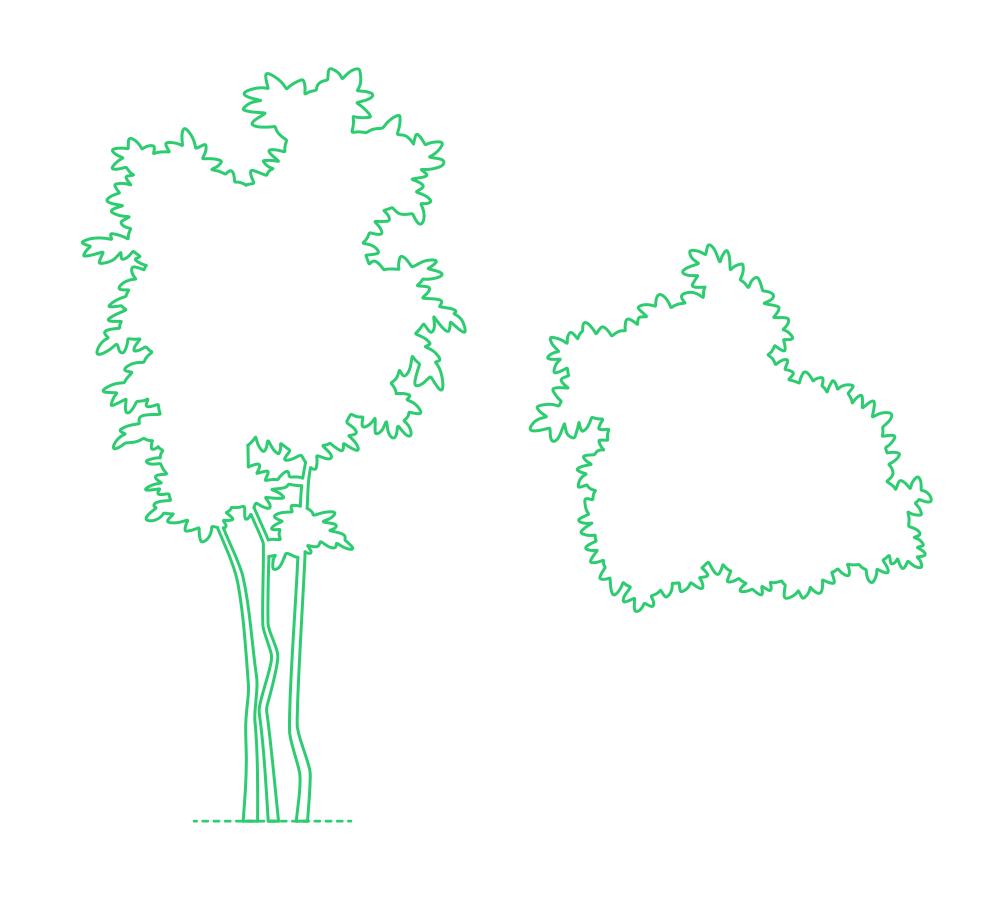
Japanese Sapphireberry (Small) (Symplocos myrtacea)
Japanese Sapphireberry (Small) (Symplocos myrtacea)
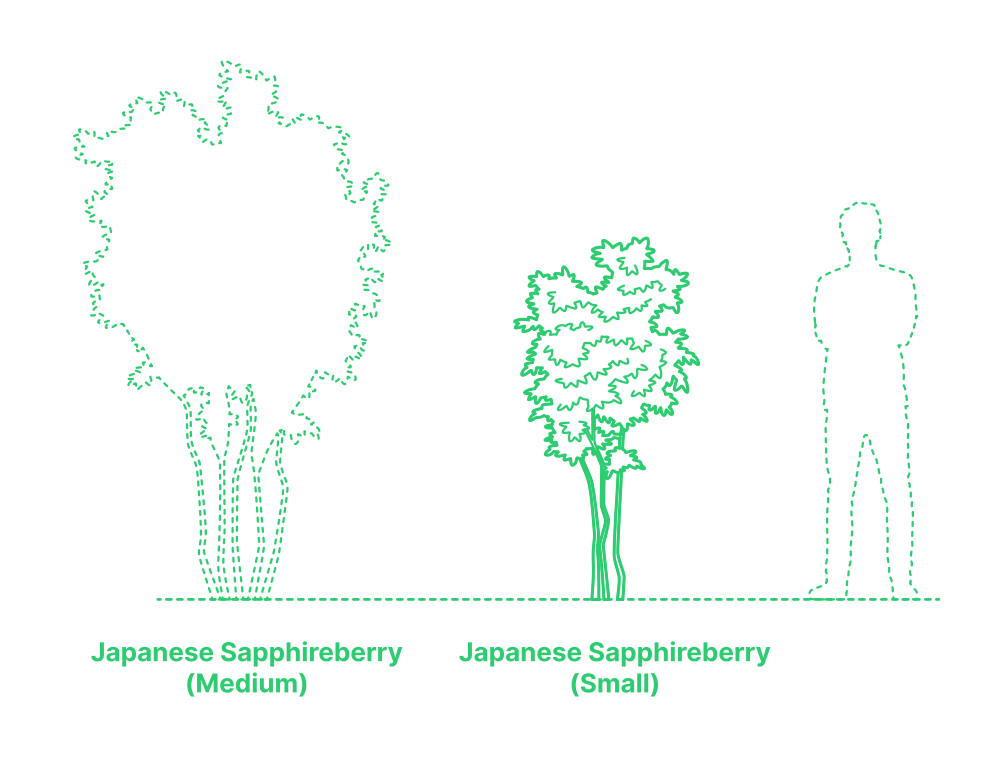
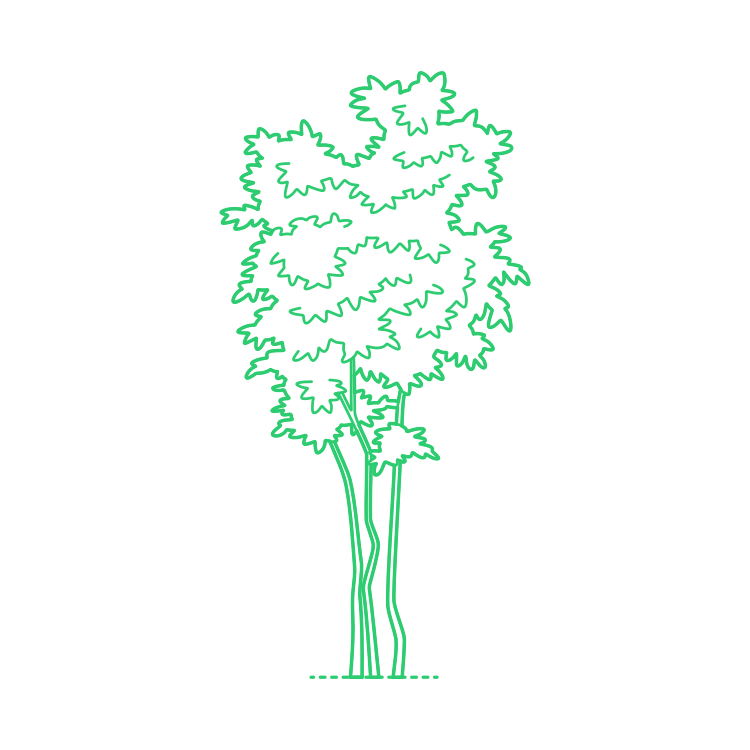
Japanese sapphireberry (Symplocos myrtacea) in a small form develops as a compact evergreen tree with fine branching and concentrated clusters of smooth dark green leaves. The canopy remains dense and rounded, with slender stems supporting small flowers that later mature into vivid sapphire-colored fruits.
Native to woodland habitats of Japan and East Asia, Symplocos myrtacea thrives in humid temperate environments beneath taller forest canopies. The species is biologically notable for its ornamental berries and evergreen foliage, which persist through seasonal transitions. In small form, the plant emphasizes compact structure, delicate branch layering, and concentrated fruit display while maintaining the species’ characteristic calm and refined visual presence.
Japanese Sapphireberry (Small) have a typical overall height between 5’-7’ (1.52-2.13 m) and spread diameter of 2’-3’ (.61-.91 m ). The leaves have a typical length between 1”-3” (3-8 cm).
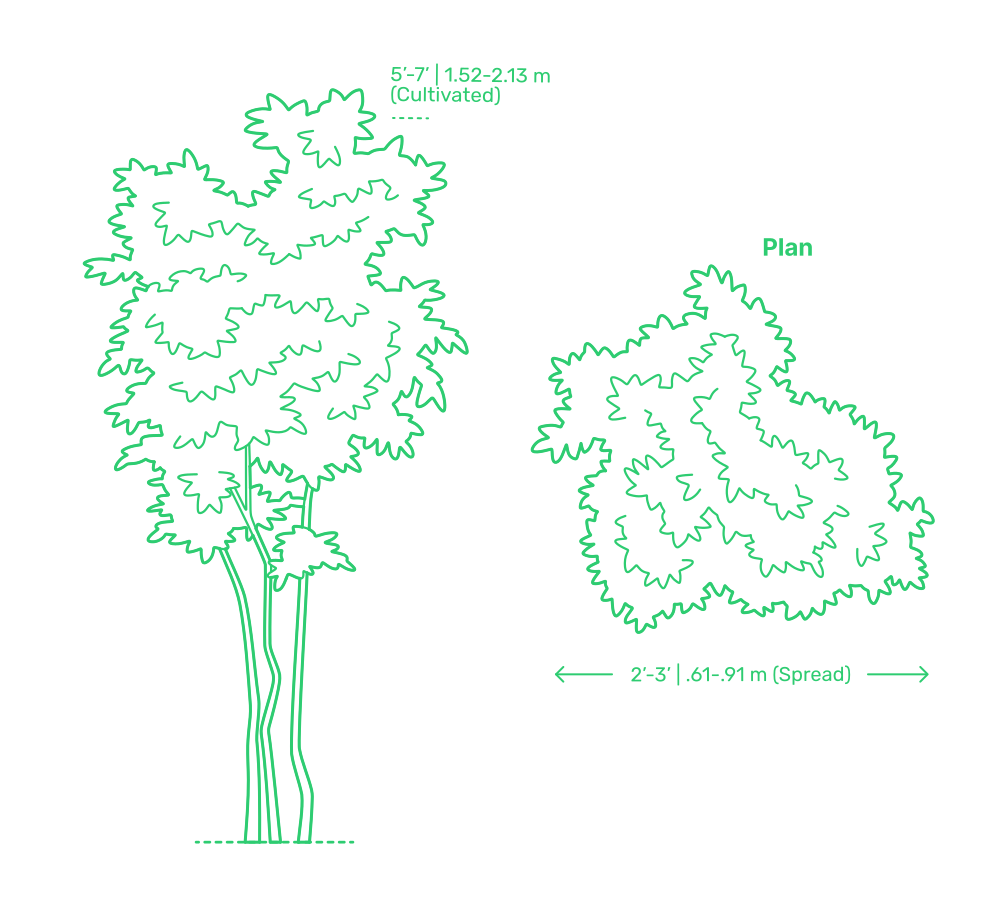
Japanese sapphireberry (Symplocos myrtacea) in a small form develops as a compact evergreen tree with fine branching and concentrated clusters of smooth dark green leaves. The canopy remains dense and rounded, with slender stems supporting small flowers that later mature into vivid sapphire-colored fruits.
Native to woodland habitats of Japan and East Asia, Symplocos myrtacea thrives in humid temperate environments beneath taller forest canopies. The species is biologically notable for its ornamental berries and evergreen foliage, which persist through seasonal transitions. In small form, the plant emphasizes compact structure, delicate branch layering, and concentrated fruit display while maintaining the species’ characteristic calm and refined visual presence.
Japanese Sapphireberry (Small) have a typical overall height between 5’-7’ (1.52-2.13 m) and spread diameter of 2’-3’ (.61-.91 m ). The leaves have a typical length between 1”-3” (3-8 cm).