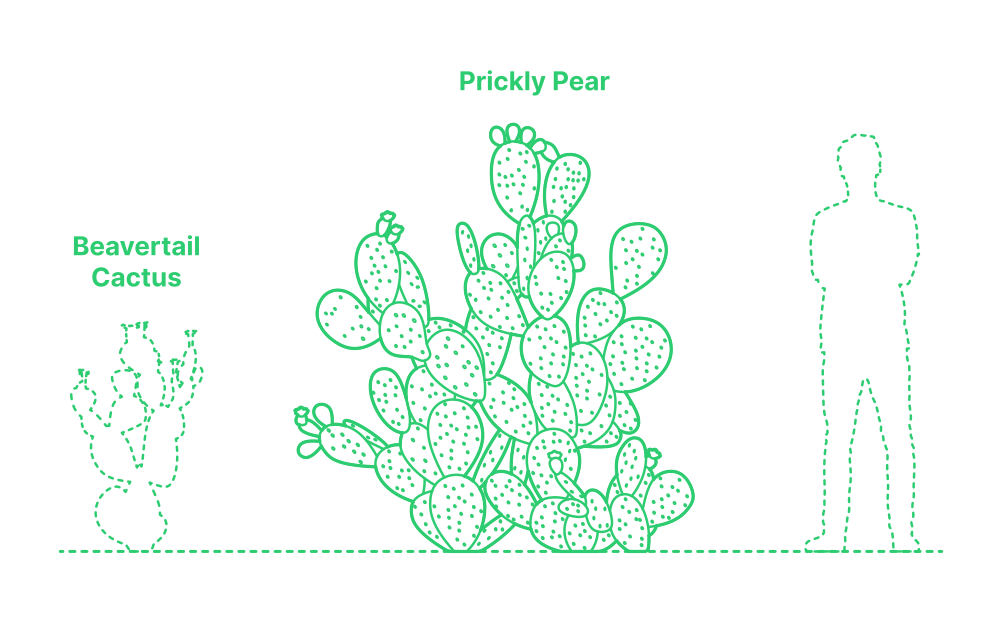
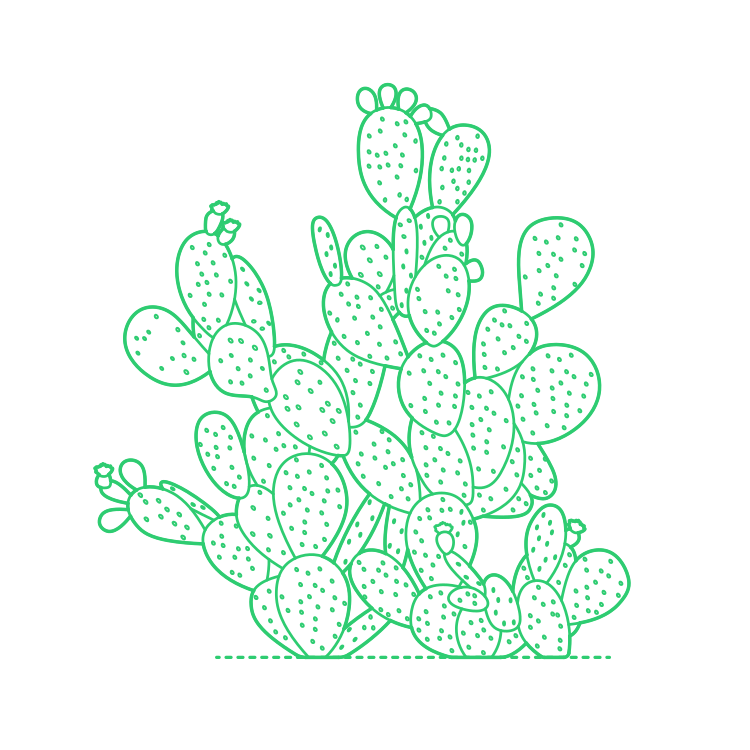
Prickly Pear (Opuntia ficus-indica) is a widespread and culturally significant cactus known for its distinctive flattened, oval pads called cladodes and its edible fruit, commonly known as "tunas." Also referred to as Indian Fig or Nopal Cactus, it originates from Mexico and has spread across arid and semi-arid regions worldwide. The plant features thick, green, paddle-shaped segments that are covered in clusters of spines or glochids, although some cultivated varieties are nearly spineless.
Its brightly colored flowers, usually yellow, orange, or red, give way to fleshy, pear-shaped fruits that vary in color from deep red to green. Prickly Pear thrives in desert, scrubland, and dry coastal habitats and is highly drought-tolerant. It has long been valued for both culinary and medicinal uses, as well as erosion control and livestock forage. Its resilience and adaptability make it an iconic symbol of desert flora and a staple in traditional agricultural systems.
Prickly Pear has a typical overall height between 3’-10’ (91-305 cm) and spread diameter of 2’6”-8’ (76-244 cm).
Prickly Pear (Opuntia ficus-indica) is a widespread and culturally significant cactus known for its distinctive flattened, oval pads called cladodes and its edible fruit, commonly known as "tunas." Also referred to as Indian Fig or Nopal Cactus, it originates from Mexico and has spread across arid and semi-arid regions worldwide. The plant features thick, green, paddle-shaped segments that are covered in clusters of spines or glochids, although some cultivated varieties are nearly spineless.
Its brightly colored flowers, usually yellow, orange, or red, give way to fleshy, pear-shaped fruits that vary in color from deep red to green. Prickly Pear thrives in desert, scrubland, and dry coastal habitats and is highly drought-tolerant. It has long been valued for both culinary and medicinal uses, as well as erosion control and livestock forage. Its resilience and adaptability make it an iconic symbol of desert flora and a staple in traditional agricultural systems.
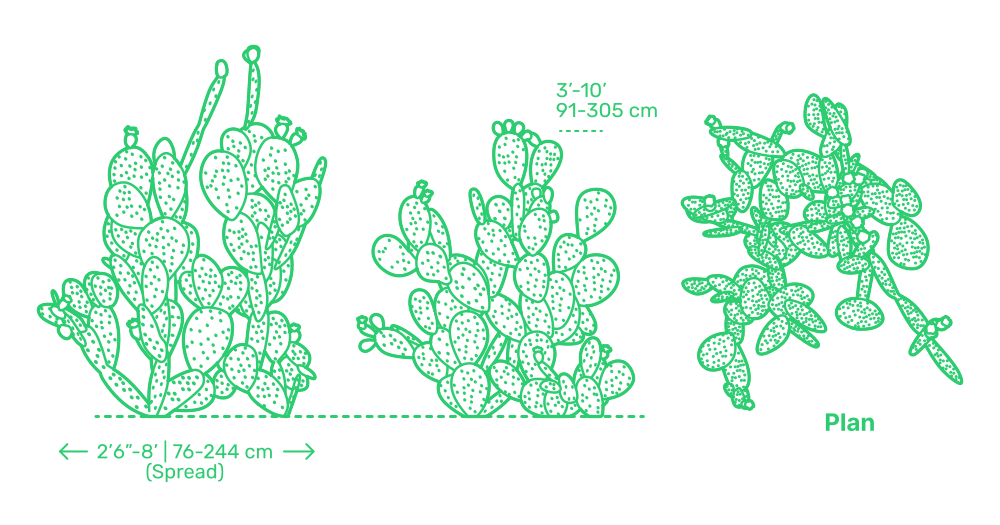
Prickly Pear has a typical overall height between 3’-10’ (91-305 cm) and spread diameter of 2’6”-8’ (76-244 cm).