

Public Spaces are places that are open and accessible to people. Typical examples include roads, public squares, parks, and beaches. Although government buildings may have some restrictions and closed off areas with limitations, some spaces such as public libraries can be considered public spaces.
While privately owned buildings and property are not considered public spaces, they may affect the public visual landscape. Shared spaces have been recently advanced to better accommodate a pedestrian’s experience in a public space jointly used by automobiles.
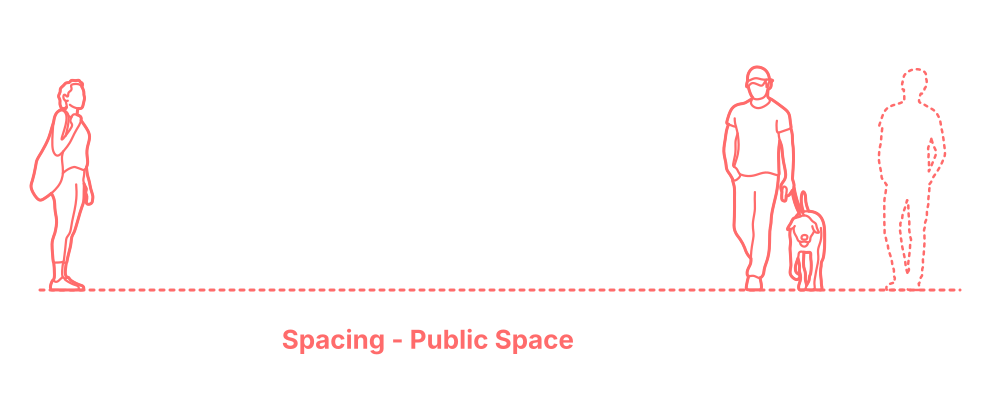
The perceived zones of public space are adjustable depending on the situation and the scenario, with a distance of 12’-25’ (3.66-7.62 m) being understand as a common comfortable distance in public between two people. A spacing of 0’-12’ (3.66 m) is considered being too close between strangers in public, while a distance of more than 25’ (7.62 m) is understood as far.

Public Spaces are places that are open and accessible to people. Typical examples include roads, public squares, parks, and beaches. Although government buildings may have some restrictions and closed off areas with limitations, some spaces such as public libraries can be considered public spaces.
While privately owned buildings and property are not considered public spaces, they may affect the public visual landscape. Shared spaces have been recently advanced to better accommodate a pedestrian’s experience in a public space jointly used by automobiles.
The perceived zones of public space are adjustable depending on the situation and the scenario, with a distance of 12’-25’ (3.66-7.62 m) being understand as a common comfortable distance in public between two people. A spacing of 0’-12’ (3.66 m) is considered being too close between strangers in public, while a distance of more than 25’ (7.62 m) is understood as far.